Owner’s manual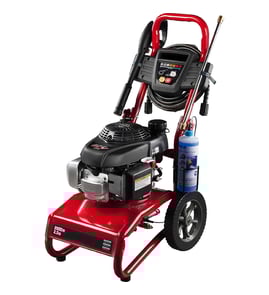


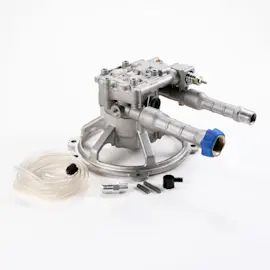
How to tell if your pressure washer pump is bad?
A bad pump on a Craftsman gas pressure washer model 580754980 usually shows up as weak or surging pressure even after you purge air from the system and confirm a solid water supply. Before condemning the pump, follow the priming and water-supply checks in the 580754980 owner's manual.
- Confirm the water is ON and you never run the pump dry (running without water can damage the pump).
- Purge air: press the red button on the gun and squeeze the trigger until flow is steady.
- Verify the supply meets typical requirements: cold water under 100°F, at least 20 PSI, and flow greater than 3.5 GPM.
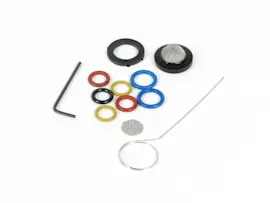
- Inspect and clean the inlet screen at the pump water inlet; replace it if damaged.
- Avoid vacuum breakers or check valves right at the inlet; keep at least 10 ft of unrestricted garden hose before any such device.
If the setup above is correct, these symptoms point to internal pump wear or valve issues:
- Pressure spikes, then quickly drops while you keep the trigger pulled
- Pulsing pressure that does not improve after purging air
- Water leaking from the pump body (not just fittings)
- Excessive noise or vibration from the pump area
- Poor pressure with multiple spray tips/nozzles
| What you see | Most likely cause | What to do next |
|---|---|---|
| Steady low pressure | Clogged inlet screen or restricted supply | Clean screen, shorten/straighten hose, verify PSI/GPM |
| Pressure surges | Air in system or inlet restriction | Purge air, check inlet screen, check hose for kinks |
| Pressure drops to a trickle | Internal pump valves/seals worn | Consider replacing the pump |
| Warm water dumps to ground after idling | Thermal relief (cool down) activating | Avoid idling 3 to 5 minutes without spraying |
When the pump is confirmed bad, replacement is typically the most practical repair.
A restricted water supply or trapped air can look like a failed pump, and running the unit without water can permanently damage the pump. Verifying supply, purging, and inlet-screen condition prevents unnecessary parts replacement.
Last updated: January 2026
What is a good PSI for a gas pressure washer?
A good PSI for a gas pressure washer depends on what you’re cleaning; most homeowners get great results in the 1,300 to 3,100 PSI range. Craftsman model 580754980 is rated for up to 3100 PSI (and 2400 PSI at 2.5 GPM), so it covers most residential jobs when you use the right nozzle and technique. See the 580754980 operator’s manual for the model’s performance ratings and safe operating guidance.
- 1,300 to 2,000 PSI: cars, patio furniture, grills, delicate siding
- 2,000 to 2,800 PSI: decks, fences, general concrete cleaning
- 2,800 to 3,100 PSI: tougher concrete, heavy soil, paint prep (use care)
- Above 3,100 PSI: typically pro-grade; higher risk of surface damage
PSI is “cutting power” and GPM is “rinsing power”; you get the best results when both match the job.
| Spec | What it affects | What you’ll notice |
|---|---|---|
| PSI | How aggressively it strips dirt | More chance of etching wood or concrete if too close |
| GPM | How fast it rinses and flushes | Faster cleaning on large areas |
| Nozzle angle | How concentrated the spray is | Narrow patterns hit harder than wide patterns |
- Start with a wider spray pattern and stand farther back; move closer only as needed.
- Keep the wand moving; holding the spray in one spot can gouge wood or mark concrete.
- Test on a small hidden area first, especially on painted surfaces and soft wood.
- Use only pressure-washer-safe detergents when applying soap.
- Feed the pump with steady water supply; the manual calls for more than 3.5 GPM and at least 20 PSI at the garden hose.
Choosing the right PSI protects surfaces and helps your pump, hose, spray gun, and nozzle last longer while still cleaning efficiently.
Last updated: January 2026
What kind of gas goes in a Craftsman 3000 PSI pressure washer?
For the Craftsman gas pressure washer model 580754980, use clean, fresh, unleaded gasoline with a minimum 87 octane (87 AKI / 91 RON). Gasoline with up to 10% ethanol is acceptable; do not use higher-ethanol fuels.
Use the right fuel to protect the engine and keep starting and performance consistent.
- Use unleaded gasoline, 87 octane minimum
- Up to 10% ethanol (E10) is OK
- Do not use E15 or E85
- Do not mix oil into the gasoline
- Do not modify the engine to run alternate fuels
For the exact wording and safety notes for your unit, follow the 580754980 owner's manual.
Fuel vapors can ignite easily, so we recommend these basics every time:
- Shut the engine off and let it cool at least 2 minutes
- Fuel outdoors, away from sparks, pilot lights, and open flames
- Loosen the fuel cap slowly to relieve tank pressure
- Do not overfill; leave room for fuel expansion
- If fuel spills, wait until it evaporates before starting
| Item | What to use | What to avoid |
|---|---|---|
| Gasoline | Unleaded, clean, fresh | Stale/contaminated fuel |
| Octane | 87 AKI (91 RON) minimum | Lower than 87 |
| Ethanol content | Up to 10% (E10) | E15, E85 |
Using the correct gasoline helps prevent hard starting, rough running, and fuel-system damage. It also supports reliable pressure washer performance when you are using the spray gun, extension wand, and pump under load.
Last updated: January 2026