Error Codes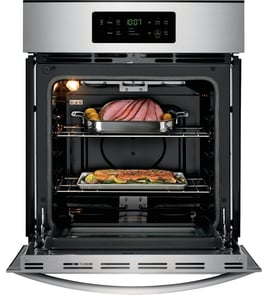





How do I reset a whirlpool convection oven?
To reset your Whirlpool WOS51EC0AB04 electric wall oven, we recommend doing a simple power reset: turn the breaker OFF for 1 minute, then turn it back ON. This clears many control glitches and restores normal convection and bake operation.
Quick reset steps (most effective)
- Turn the oven OFF at the control panel (press Cancel/Off).
- Switch the oven’s circuit breaker OFF (or remove the fuse).
- Wait 60 seconds.
- Turn the breaker back ON.
- Set the clock if it flashes or shows a power loss.
- Test Bake and Convection Bake at a normal temperature (for example, 350°F).
If the oven still will not heat after a reset
A reset fixes software or keypad lockups; it will not fix a failed heating circuit. If the oven powers on but does not heat, check these common causes:
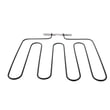
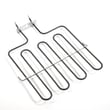
- Burned-out bake element (often no heat or weak heat): consider the range bake element W11545804.
- Failed broil element (can affect preheat and overall performance): consider the range broil element WPW10260252.
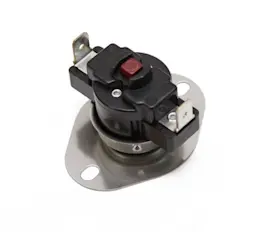
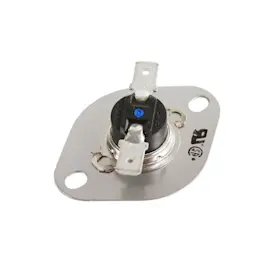
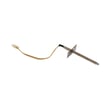
- Overheat protection tripped or thermostat issue: consider the oven safety thermostat WPW10545255 or range high-limit thermostat WP4449751.
- Loose or damaged wiring connections (especially at the element terminals).
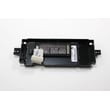
- Control not sending power to the elements.
What to expect after a successful reset
| What you see | What it usually means | What to do |
|---|---|---|
| Display returns to normal | Control rebooted correctly | Run a short bake test |
| Clock flashing | Power was interrupted | Set the time |
| Oven heats normally | Issue was a temporary glitch | No parts needed |
| Still no heat | Likely a component or wiring problem | Inspect and test heating circuit |
Why it matters
A breaker reset is the fastest safe way to clear a stuck control and confirm whether you have a control issue or a true heating failure (bake element, broil element, thermostat, or wiring).
Last updated: January 2026
What is the best whirlpool oven?
The best Whirlpool oven is the one that fits how you cook and the space you have; for built-in wall ovens like Whirlpool model WOS51EC0AB04, “best” usually means even baking, reliable temperature control, and easy service with the right replacement parts when needed.
How we recommend choosing the “best” Whirlpool oven
Focus on the features that change day-to-day results and ownership cost:
- Oven type and size: single wall oven vs double wall oven vs range
- Cooking performance: convection fan (if equipped), consistent preheat, even browning
- Cleaning style: self-clean vs steam clean (varies by model line)
- Controls: touch controls vs knobs, and how easy the display is to read
- Serviceability: availability of common wear parts like elements, thermostats, and hinges
What “best” looks like for a Whirlpool wall oven (like WOS51EC0AB04)
For an electric built-in oven, the best experience usually comes down to stable heat and a door that seals and operates correctly.
| What you notice | Common cause when it is not “best” | Example part that often fixes it |
|---|---|---|
| Uneven baking or slow preheat | Weak bake heating circuit | Range bake element W11545804 |
| Broil is weak or will not heat | Failed broil element | Range broil element WPW10260252 |
| Oven overheats or shuts down | Temperature safety device issue | Oven safety thermostat WPW10545255 |
Quick troubleshooting checklist (before you shop for a new oven)
If your current Whirlpool oven is not performing well, these checks often restore “like-new” results:
- Confirm the oven is on a dedicated, correct-voltage circuit (electric wall ovens typically use 240V)
- Test bake and broil separately to see if one heating function is failing
- Look for visible damage: blistered element spots, cracks, or burned terminals
- Check for a door that does not close squarely (hinge wear can cause heat loss)
- If you are comfortable testing, use a meter to check continuity on heating components
Why it matters
Most “best oven” complaints are really performance issues from a failed heating part or temperature protection device. Replacing the correct Whirlpool part for WOS51EC0AB04 often costs far less than replacing the entire wall oven.
Last updated: January 2026
How long do Whirlpool wall ovens last?
Most Whirlpool wall ovens like model WOS51EC0AB04 last 13 to 15 years with normal household use and basic maintenance. Keeping airflow clear, avoiding heavy spills, and fixing heating or control issues early helps you reach the full expected lifespan.
Typical lifespan and what affects it
A wall oven’s life depends more on heat stress and electrical reliability than on “hours used.” These factors make the biggest difference:
- How often you run high-heat baking, broiling, or self-clean cycles
- Whether the oven door seals well and closes evenly
- Power quality (surges can damage the control board)
- How quickly you address slow preheat, uneven baking, or error symptoms
- Keeping vents and the door glass area free of grease buildup
Parts that commonly determine whether you repair or replace
When a wall oven stops heating or overheats, these parts are often involved:
- Bake heat problems: range bake element W11545804
- Broil heat problems: range broil element WPW10260252
- Overheating or shutdown issues: oven safety thermostat WPW10545255
- Temperature limit trips: range high-limit thermostat WP4449751
- Display, keypad, or temperature control issues: control W10839510
Quick “repair vs. replace” guide
Use this as a practical rule of thumb for a Whirlpool electric built-in oven.
| If your oven is… | Usually best to… | Why |
|---|---|---|
| Under 10 years old | Repair | Parts replacement often restores full performance |
| 10 to 15 years old | Compare cost | One major part can be worth it; multiple issues usually are not |
| Over 15 years old | Replace more often | Aging wiring, insulation, and electronics raise repeat-failure risk |
Why it matters
Knowing the typical lifespan helps you plan: if your WOS51EC0AB04 is near the 13 to 15 year range and you are seeing slow preheat, uneven baking, or intermittent control problems, it is smart to price the likely repair parts and labor before committing.
Last updated: January 2026