Installation guide
 Owner’s manual



What is the average life expectancy of a GE dishwasher?
Most GE dishwashers, including model GDWT668V00SS, typically last 10 to 12 years with normal household use. Consistent cleaning, correct detergent use, and fixing small leaks or drain issues early are the biggest factors that keep a dishwasher running longer.
What affects lifespan the most
- Water quality and hard water buildup (scale can stress the pump and heating system)
- Filter and sump cleanliness (clogs force the motor to work harder)
- Door sealing and leak prevention (protects wiring and components)
- Proper draining (standing water accelerates odors and corrosion)
- Installation quality (correct drain routing and secure connections reduce failures)
Maintenance checklist (best return for the effort)
Use these habits to help your GDWT668V00SS reach the upper end of the typical lifespan range:
- Clean the filter area regularly; replace a worn filter if it will not rinse clean
- Inspect the door seal for tears, flattening, or gaps; wipe it clean to prevent seepage
- Run hot water at the sink before starting a cycle to improve wash performance
- Keep spray arms clear of labels, seeds, and glass fragments
- Address slow draining quickly (often a hose routing or blockage issue)
Common wear items vs. major repairs
| What you’re dealing with | Typical symptom | Usual fix |
|---|---|---|
| Routine wear/maintenance | Odor, residue, poor cleaning | Clean filter, clear spray arms, adjust loading and detergent |
| Sealing/leak issues | Water at the front or corners | Inspect/replace door seal or tub gasket |
| Drain problems | Water left in tub | Clear drain path, verify disposer plug removed, check drain pump |
| Major mechanical/electrical | Loud grinding, no circulation, intermittent operation | Diagnose motor/pump or control issues |
Why it matters
A dishwasher that is kept clean and leak-free puts less strain on high-cost components like the pump and motor. Small fixes, such as replacing a failing seal, often prevent bigger problems later.
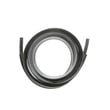
For model-specific care and operating guidance, follow the GDWT668V00SS owner’s manual. If you’re dealing with leaks at the door, the Dishwasher door seal WD08X10055 is a common wear item to inspect.
Last updated: February 2026
What is the most common problem with a GE dishwasher?
The most common GE dishwasher problem is a drain-related issue: the dishwasher will not drain fully, leaves water in the tub, or stops mid-cycle. On the GE GDWT668V00SS, the fastest wins are checking the filter area for debris, confirming the drain hose is routed correctly, and then testing the drain pump if symptoms persist (see the GDWT668V00SS installation guide).
Most common symptoms and what they usually mean
- Standing water after a cycle: clogged filter/sump area, blocked drain hose, or a weak drain pump
- Gurgling or slow drain: drain hose routing too low, missing high loop, or partial blockage
- Leaking at the door: worn door seal or tub gasket
- Will not start or stops quickly: door latch not closing, control issue, or error code condition
- Poor cleaning: restricted filter, spray arm blockage, or low incoming water temperature
Quick checks we recommend first (10 to 20 minutes)
- Power reset: turn the breaker off for 1 minute, then back on.
- Check the drain path: look for kinks and clogs under the sink and at the disposer inlet.
- Confirm proper drain routing: GE requires an air gap in some setups, or a 32-inch minimum high drain loop for proper draining.
- Verify hot water temperature: incoming water should be 120°F to 150°F for best wash performance.
Parts that commonly fix the issue on this model
If cleaning and hose routing do not solve it, these parts are frequent culprits on the GDWT668V00SS:
| Problem area | Common fix | Example part for GDWT668V00SS |
|---|---|---|
| Not draining | Replace drain pump | Dishwasher drain pump WD26X10048 |
| Leaking at door | Replace door seal | Dishwasher door seal WD08X10055 |
| Leaking at tub edge | Replace tub gasket | Dishwasher tub gasket WD08X10032 |
| Poor wash performance | Clean or replace filter | Dishwasher filter WD22X10077 |
Error codes can speed up the diagnosis
If the dishwasher beeps, flashes, or shows a fault pattern, match it to the code list before replacing parts. Use GE electronic dishwasher error codes to narrow the failure to draining, filling, heating, or a control problem.
Why it matters
Drain and leak problems can lead to repeat cycle failures, odors, and water damage. Correct drain hose height (high loop or air gap) and a clean filter area prevent many “won’t drain” service calls.
Last updated: February 2026
Can I replace dishwasher parts myself?
Yes, for the GE GDWT668V00SS dishwasher we see many customers successfully replace common wear parts themselves (filters, door seals, drain components) as long as power and water are shut off and the unit can be safely pulled for access. Use the GDWT668V00SS installation guide for safety steps, clearances, and leveling checks.
What you can usually replace yourself
These repairs are typically straightforward with basic hand tools and careful reassembly:
- Dishwasher filter (cleaning or replacement)
- Door sealing parts (leaks at the front)
- Drain-side parts (clogs, slow drain)
- Detergent dispenser issues (cup not opening, leaking)
- Small hardware and brackets
Repairs that often need more skill
These can still be DIY, but they involve more disassembly, wiring, or leak-risk:
- Pump and motor replacement
- Control module or button assembly troubleshooting
- Door hinge and latch alignment issues
Safety and installation checks that matter
The installation instructions for this GE dishwasher call out several items that directly affect DIY success and leak prevention:
- Keep the dishwasher fully enclosed in the cabinet opening and allow future removal for service.
- Avoid kinking the drain hose and avoid trapping the power cable, drain hose, or hot water line behind the unit.
- Level the dishwasher front-to-back and left-to-right; racks should not roll on their own.
- If you find a leak during testing, turn off power first, then tighten connections and retest.
Common DIY parts for GDWT668V00SS
| Symptom | Likely area to inspect | Example model-matched part |
|---|---|---|
| Water leaking at the door | Door seal, tub gasket, leveling | Dishwasher door seal WD08X10055 |
| Not draining well | Drain path, hose routing, drain pump | Dishwasher drain pump WD26X10048 |
| Poor cleaning | Filter and circulation | Dishwasher filter WD22X10077 |
Why it matters
A dishwasher that is not level or has a kinked drain hose can wash poorly, leak, or be hard to slide in and out for service. Doing the install checks while you replace parts helps prevent repeat problems.
Last updated: February 2026
Is it worth repairing a GE dishwasher?
Yes, repairing a GE dishwasher like model GDWT668V00SS is worth it when the fix is straightforward and the total repair cost stays well below the price of a comparable new dishwasher; it is especially smart when the unit has been reliable and the problem is a single failed part.
Our repair-or-replace rule of thumb
We use these practical checkpoints to decide:
- Age: If the dishwasher is under 10 years old, repairs usually make sense.
- Cost: If the repair is under 50% of replacement cost, repair is the better value.
- History: If it has had few prior repairs, it is a good candidate to fix.
- Problem type: One failed component (leak seal, drain pump, dispenser) is usually worth repairing.
- Installation reality: GE notes the dishwasher should be installed so it can be removed for service; see the GDWT668V00SS installation guide.
Common repairs that are often worth it on GDWT668V00SS
These are typical “high-impact” fixes that can restore normal washing, draining, or leak performance:
- Replace a leaking door seal such as the dishwasher door seal WD08X10055
- Replace a worn tub gasket such as the dishwasher tub gasket WD08X10032
- Fix draining issues by checking the drain path and, if needed, replacing the dishwasher drain pump WD26X10048
- Address detergent door problems with the dishwasher detergent dispenser assembly WD12X10163
- Restore wash pressure with the dishwasher pump and motor assembly WD26X10053 (higher-cost repair)
Quick cost comparison
| Scenario | Typical outcome | Usually worth repairing? |
|---|---|---|
| Leak at door or tub edge | Seal or gasket replacement | Yes |
| Won’t drain, pump hums or is noisy | Drain pump or drain restriction | Yes |
| Poor cleaning, weak spray | Filter or circulation issue | Often |
| Multiple failures or repeated breakdowns | Several parts plus labor | No |
Why it matters
A targeted repair can extend the life of your dishwasher and avoid the cost and hassle of replacement, but repeated failures or a major motor-related repair can push the total cost past the point where a new unit is the better long-term value.
Last updated: February 2026