





Do the lawn sweepers really work?
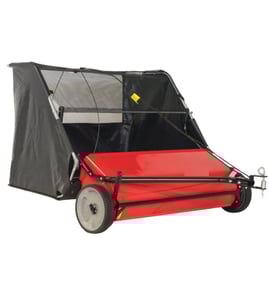
Yes, a lawn sweeper can really work well for the Craftsman 486242222 42-inch lawnsweeper when the brushes are set to the right height and you use it in the right conditions. It is best at picking up dry leaves, grass clippings, and light debris on relatively even turf; it is less effective on wet, matted material.
What you can expect from the Craftsman 486242222
A tow-behind sweeper like model 486242222 uses rotating brushes to lift debris into the hopper bag. Performance depends more on setup and lawn conditions than on raw towing speed.
- Best results on dry leaves, dry clippings, and small twigs
- Works well after mowing to reduce thatch-like clipping buildup
- May struggle with wet leaves, heavy acorns, or thick pine cone layers
- Can miss debris in deep ruts, scalped spots, or very uneven ground
- Usually needs 2 passes in heavy fall leaf drop
Setup tips that make the biggest difference
If your sweeper is leaving debris behind, the first thing we check is brush height and brush condition.
- Set brush height so the bristles just touch the grass tips; avoid digging into soil
- Sweep when debris is dry; wet material tends to smear and clump
- Use a steady, moderate pace; too fast can reduce pickup
- Overlap passes slightly, especially on turns
- Empty the hopper before it gets packed; airflow matters
Quick condition check
| Symptom | Likely cause | What to do |
|---|---|---|
| Leaves left in a thin line | Brush height too high | Lower the height slightly |
| Poor pickup everywhere | Worn or bent brushes | Inspect/replace the agri-fab lawn sweeper brush 46780 |
| Brushes stop turning | Drive/ratchet issue or pin problem | Inspect the lawn sweeper drive pin 47046 and wheel drive parts |
Why it matters
A properly adjusted lawn sweeper saves time and reduces raking, but it also helps keep clippings and leaves from smothering grass. That can improve airflow and reduce the chance of bare spots during heavy debris seasons.
Last updated: January 2026
How to adjust a lawn sweeper?
To adjust a Craftsman lawn sweeper model 486242222, set the brush height so the bristles just contact the grass (not digging into turf), then confirm the wheels and drive parts roll freely. If the height won’t hold or the sweep is uneven, inspect the height-adjust hardware and brush components.
Quick height adjustment steps
- Park on a flat surface and stop the tractor.
- Empty the hopper so the sweeper sits at normal ride height.
- Set the height lever/knob so the brush tips lightly touch the grass.
- Test-sweep a short pass; adjust up if it scalps, down if it leaves debris.
- Recheck after turning; uneven ground can change brush contact.
If the sweeper won’t stay adjusted
On model 486242222, the height setting is usually held by a tube/handle and fasteners. If it slips, look for looseness, wear, or bending in these common areas:
- Height-adjust tube or linkage play
- Loose knobs, bolts, or missing washers
- Brush shaft bushings worn, letting the brush sag
- Wheel bearings dragging, making the brush “bounce”
Helpful model-matched parts to check include the lawn tractor lawn sweeper attachment height adjustment tube 68202BL3 and the agri-fab lawn sweeper brush 46780.
Cleaning and maintenance that affects adjustment
Keeping the drive and brush area clean helps the sweeper maintain a consistent height and pickup.
- After each use, empty and shake out the hopper bag
- Remove wrapped grass/string from the brush and brush shaft
- Clean debris from wheel gear teeth and ratchet sprockets
- Check wheels for wobble and bearings for roughness
What “correct” brush height looks like
| Condition | What you’ll notice | What to do |
|---|---|---|
| Too low | Scalping, heavy drag, clumps | Raise height 1 notch and retest |
| Too high | Leaves/thatch left behind | Lower height 1 notch and retest |
| Correct | Light contact, even pickup | Keep setting; recheck periodically |
Why it matters
Proper adjustment protects your turf, reduces strain on the wheel drive and brush shaft, and improves pickup so you make fewer passes with your 42-inch sweeper.
Last updated: January 2026
Will a tow behind lawn sweeper pick up pine cones?
Yes, a tow-behind lawn sweeper like the Craftsman 486242222 can typically pick up pine cones, especially small to medium cones on relatively even turf. Pickup depends most on brush height, ground speed, and whether the brushes are in good condition.
What affects pine cone pickup
- Cone size and moisture: dry, smaller cones lift easier than large or wet cones.
- Brush height setting: set low enough to flick cones up, but not so low that it scalps turf.
- Tow speed: slower passes usually improve pickup and reduce “skipping.”
- Yard conditions: uneven ground, thick thatch, or deep ruts reduce performance.
- Brush wear: worn brushes lose sweep efficiency.
Quick setup tips for better results
- Start with the brush height just touching the grass tips; lower one notch if cones are left behind.
- Make two passes in heavy areas; the second pass often gets what the first pass rolls.
- Avoid sharp turns while sweeping; it can cause missed debris and extra wear.
- Empty the hopper before it gets overfull so airflow and brush action stay effective.
- If pickup has dropped off, inspect the brush and drive components.
Parts that commonly impact sweeping performance
If the sweeper is not picking up like it used to, these model-compatible parts are often involved:
| Symptom | What to check | Example compatible part |
|---|---|---|
| Leaves pick up, cones don’t | Brush bristles worn or bent | Agri-fab lawn sweeper brush 46780 |
| Brushes not spinning consistently | Drive pin or ratchet/sprocket slipping | Lawn sweeper drive pin 47046 |
| Poor pickup on one side | Wheel drive/ratchet issue | Agri-fab lawn tractor lawn sweeper ratchet sprocket 43889 |
Why it matters
Pine cones are heavier than leaves, so the sweeper needs solid brush contact and steady brush rotation to lift them into the hopper. Keeping the brush and drive parts in good shape helps maintain pickup performance across seasons.
Last updated: January 2026