Installation guide
 Owner’s manual
 Error Codes



What is the most common problem with GE dishwashers?
The most common GE dishwasher problem is a unit that will not start or run. On the GE ZBD7920P10SS, the first things we check are simple: the door must fully latch, power must be on (breaker, fuse, or wall switch), and the control must be able to begin a cycle; see the ZBD7920P10SS owner's manual for the exact checks.
- Confirm the door is fully closed and latched (a partially latched door prevents operation).
- Check the circuit breaker or fuse for the dishwasher circuit.
- Look for a wall switch that controls the dishwasher (some installations use one).
- Cancel and restart the cycle (some controls need a reset after an interruption).
- If the dishwasher starts but stops with water left behind, check for a clogged air gap (if your setup has one).
| Symptom | What it often means | What to check first |
|---|---|---|
| Won’t start/run | Door latch or power issue | Door latch, breaker/fuse, wall switch |
| Not draining | Drain restriction | Air gap, drain path, drain tube routing |
| Not cleaning well | Water temp, loading, filtration | 120°F inlet water, rack loading, filters |
| Dishes don’t dry | Settings or rinse aid | Heated dry option, rinse agent level |
If troubleshooting points to a failed or leaking component, these ZBD7920P10SS parts are commonly involved:
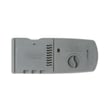
- Dishwasher detergent dispenser assembly WD12X10163 if detergent cup problems affect cleaning.
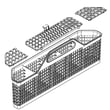
- Dishwasher filter WD12X10109 and sump filter WD22X10077 if wash performance drops from restricted filtration.
- Drain tube WD24X10045 if draining issues trace to a kinked, cracked, or restricted drain path.
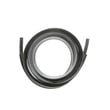
- Dishwasher door seal WD08X10055 if you see leaks around the door.
A “won’t start” complaint is often a simple latch or power supply issue; fixing that first prevents unnecessary part replacement. If the dishwasher runs but performance is poor, the manual’s guidance on water temperature (at least 120°F) and loading helps restore normal cleaning.
Last updated: February 2026
Can I replace dishwasher parts myself?
Yes, you can replace some parts on your GE ZBD7920P10SS dishwasher yourself, but we recommend sticking to user-maintenance tasks and simple, low-risk repairs. The ZBD7920P10SS owner's manual specifically advises not repairing or replacing parts unless the procedure is recommended in the manual, and to disconnect power before maintenance.
These tasks are typically safe for most homeowners when you follow the manual and basic electrical safety:
- Clean the filter area and remove debris that can cause poor cleaning or draining
- Inspect and clean spray arms and jets
- Check the float for free movement (helps prevent overfilling)
- Replace easy-access sealing parts if you can clearly see the leak source
- Tighten loose rack hardware and inspect rollers for wear
We recommend a qualified technician for repairs involving wiring, motors, or water connections under the unit:
- Pump, motor, or circulation system repairs (leak and electrical risk)
- Control and keypad troubleshooting
- Fill valve, drain routing, or under-dishwasher hose work
- Any repair requiring pulling the dishwasher out of the cabinet
Here are a few ZBD7920P10SS parts customers often replace, depending on symptoms:
| Symptom | Common part to check | Example part for this model |
|---|---|---|
| Water leaking at the door | Door seal | Dishwasher door seal WD08X10055 |
| Water leaking at the tub opening | Tub gasket | Dishwasher tub gasket WD08X10032 |
| Not draining well | Drain path and filters | Drain tube WD24X10045 |
| Poor wash performance | Filter and spray system | Dishwasher filter WD12X10109 |
Dishwashers combine electricity, hot water, and moving parts. Following the manual’s guidance and disconnecting power reduces the risk of electric shock, leaks, and repeat failures after a repair.
- Disconnect power (turning the dishwasher off is not the same as disconnecting power)
- Shut off the water supply if you will touch hoses or the fill system
- Take photos of wire and hose routing before removal
- Use the correct part ID for your model to avoid fit issues
- Run a short cycle and check for leaks after reassembly
Last updated: February 2026
What are the commonly replaced parts in a dishwasher?
On the GE ZBD7920P10SS dishwasher, the most commonly replaced parts are the ones that handle sealing, water movement, draining, and dispensing. If you have leaks, poor cleaning, or draining problems, these parts are the first places we check because they wear over time and directly affect performance.
- Door sealing parts: stop leaks at the door perimeter (for example, dishwasher door seal WD08X10055 and tub gaskets)
- Filters: prevent debris from recirculating and clogging the sump (for example, dishwasher filter WD12X10109)
- Spray system parts: spray arms, bearings, and hub nuts that keep arms spinning and spraying correctly
- Drain components: drain pump, drain tube, and drain hose routing that move dirty water out
- Wash motor and pump assembly: drives circulation and cleaning pressure
- Detergent dispenser: releases detergent at the right time (for example, dishwasher detergent dispenser assembly WD12X10163)
| Symptom | Most likely parts to inspect first | What to look for |
|---|---|---|
| Water on floor at front | Door seal, tub gasket | Tears, flattening, gaps, debris on sealing surfaces |
| Dishes not clean | Filter, spray arm, pump/motor | Clogged filter, cracked arm, weak spray, unusual noise |
| Won’t drain | Drain pump, drain tube | Standing water, blockage, kinked hose, pump hum |
| Detergent still in cup | Dispenser assembly | Warped door, broken latch, binding mechanism |
These are common wear items for this model family and are frequently involved in service calls:
- Dishwasher door seal WD08X10055
- Dishwasher tub gasket WD08X10032
- Dishwasher filter WD12X10109
- Sump filter WD22X10077
- Dishwasher detergent dispenser assembly WD12X10163
- Drain path parts such as the drain tube
Replacing the correct wear part early prevents secondary damage. For example, a leaking seal can lead to moisture issues, and a clogged filter can reduce wash pressure and leave grit on dishes.
We recommend matching parts by model and following the safety and service guidance in the ZBD7920P10SS owner’s manual.
Last updated: February 2026
How to remove the filter and spinner on GE dishwasher?
On the GE ZBD7920P10SS dishwasher, we remove the filter and spray arm (spinner) from inside the tub by pulling out the lower rack, lifting off the lower spray arm, then unlocking and lifting out the filter screens. This restores water flow and improves cleaning.
- Turn the dishwasher off at the control panel.
- Let the unit cool at least 20 minutes after a cycle before reaching near the heater.
- Pull the lower rack fully out for clear access.
- Keep a towel handy for drips and debris.
- Remove the lower rack: Slide it straight out and set it aside.
- Remove the lower spray arm (spinner): Lift the spray arm up from the hub area. If it resists, gently wiggle while lifting.
- Remove the filter assembly:
- Lift out the coarse screen (the larger screen piece).
- Unlock and lift out the finer filter screen(s) underneath (depending on the exact filter style in your tub).
- Clean and inspect:
- Rinse screens under hot water.
- Use a soft brush to remove grease and food particles.
- Check the sump area for glass, labels, or bones.
- Reinstall: Seat the filters flat, lock them in place, then press the spray arm back on and spin it by hand to confirm it turns freely.
- Spray arm clearance: Nothing should block the spray arm from spinning.
- Filter condition: Replace cracked or warped screens.
- Drain performance: If standing water remains, check for a clog and confirm the drain hose routing.
| Symptom | Most likely issue | What to do next |
|---|---|---|
| Grit on dishes | Filter clogged | Clean filters and run a hot cycle |
| Poor wash on lower rack | Spray arm blocked | Clear holes, confirm free spin |
| Water left in tub | Drain restriction | Check air gap/disposer and hose routing |
If your screens are damaged or missing, match the replacement to your model:
A clogged filter or a spray arm that cannot spin reduces circulation pressure; that leads to dirty dishes, longer cycles, and can contribute to drain problems over time.
For diagrams and the exact filter style used in your tub, use the ZBD7920P10SS owner’s manual.
Last updated: February 2026