Owner’s manual
 Error Codes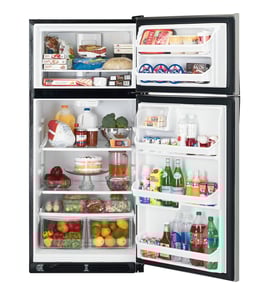


What are the disadvantages of a top mount fridge?
A top-mount refrigerator like Kenmore model 10673863302 puts the freezer on top and the fresh-food section below; the main disadvantages are less convenient access to everyday refrigerated items, fewer built-in organization features than many newer layouts, and fewer dispenser options on many models. See the 10673863302 owner's manual for model-specific features and setup guidance.
Common disadvantages (what most owners notice)
- More bending for fresh food: the refrigerator compartment is lower, so you reach down more often.
- Less “eye-level” organization: produce drawers and lower shelves can be harder to see and keep sorted.
- Fewer premium features on many top-mount designs: external water and ice dispensers are less common.
- Airflow can be easier to block: overpacking can block vents and cause temperature or moisture issues.
- Tighter installation clearances matter: door swing space and ventilation gaps can limit placement.
What to do to minimize the downsides
Top-mount fridges work best when you set them up to protect airflow and make the lower section easier to use.
- Keep frequently used items on the upper refrigerator shelves.
- Avoid blocking vents; blocked vents can lead to temperature and moisture problems.
- Use bins to group items so you do not “lose” food in the back.
- Leave recommended clearance for ventilation and door swing, especially if you have an ice maker water line.
- Level the refrigerator so doors close consistently and seals stay tight.
Quick comparison: top-mount vs bottom-freezer
| Feature | Top-mount refrigerator | Bottom-freezer refrigerator |
|---|---|---|
| Access to fresh food | Lower, more bending | Higher, less bending |
| Freezer access | Eye-level | Lower drawer style |
| Typical cost/complexity | Often simpler | Often more complex |
| Dispenser availability | Less common | More common |
Why it matters
Convenience and food preservation are tied to layout and airflow. On this Kenmore top-mount design, keeping vents clear helps maintain stable temperatures in both sections and reduces odor and moisture problems.
Last updated: January 2026
What's the average lifespan of a Kenmore refrigerator?
Most Kenmore refrigerators, including the Kenmore 10673863302 top-mount refrigerator, typically last 12 to 15 years with normal household use. Regular preventive maintenance (especially cleaning and airflow) is what most often determines whether you land closer to 12 years or push well beyond it.
What affects lifespan the most
- Condenser coil cleanliness: Dust buildup makes the compressor run hotter and longer.
- Door seal condition: Air leaks cause longer run times and moisture problems.
- Temperature settings: Over-cold settings can increase run time and frost issues.
- Vent and fan airflow: Blocked vents reduce cooling efficiency.
- Power quality: Frequent outages or surges can stress electrical components.
Maintenance checklist to help reach (or beat) 12 to 15 years
- Vacuum and brush condenser coils every 6 to 12 months.
- Keep food packages from blocking interior air vents.
- Clean door gaskets with mild soap and water; confirm a tight seal.
- Leave space around the cabinet for ventilation (especially at the back).
- After a power interruption, let temperatures stabilize before judging cooling performance.
Common “wear” items vs. long-life components
| Item type | Examples | What to expect |
|---|---|---|
| Wear/maintenance items | Light switch, door gaskets, icemaker parts | More likely to need attention during the refrigerator’s life |
| Major cooling system parts | Compressor, sealed system tubing | Designed to last many years; failures are less common but more impactful |
Why it matters
A refrigerator that runs hot, runs constantly, or leaks air uses more energy and puts extra strain on the sealed refrigeration system. Simple upkeep often prevents the early failures that shorten real-world lifespan.
For model-specific care and operating guidance, follow the maintenance and troubleshooting sections in the 10673863302 owner’s manual.
Last updated: January 2026
How big is the Kenmore refrigerator model 10673863302?
The Kenmore top-mount refrigerator model 10673863302 is a full-size household refrigerator; most Kenmore 106 top-freezer models are about 30 to 33 inches wide and roughly 18 to 22 cubic feet. For the exact dimensions and capacity for your unit, use the 10673863302 owner's manual.
What “big” usually means (dimensions vs. capacity)
When customers ask how big a refrigerator is, they typically mean one of these:
- Overall outside dimensions (width, height, depth)
- Total capacity (cubic feet)
- Clearance space needed for airflow and door swing
- Interior usable space (shelves, crisper pans, freezer space)
Installation clearances to plan for
Even if you are still confirming the exact cabinet dimensions, you can plan the required breathing room. The manual guidance for this style of refrigerator calls for:
- 1/2 inch clearance on each side
- 1/2 inch clearance at the top
- If installed next to a fixed wall, 2 inches minimum on the side(s) needed for door swing (varies by setup)
- If equipped with an ice maker, extra space behind for the water line connection
| What you are measuring | What to include | Why it matters |
|---|---|---|
| Width | Cabinet width plus side clearance | Prevents overheating and rubbing |
| Depth | Cabinet depth plus rear space (water line if used) | Helps avoid kinked lines and poor airflow |
| Door swing | Space near walls/cabinets | Prevents doors from binding and seals from leaking |
Quick measuring tips (so you get the right fit)
- Measure the opening width at the front and back (some alcoves taper).
- Measure height to the lowest cabinet/soffit above the refrigerator.
- Measure depth to the front edge of counters, then account for doors and handles.
- Confirm you can move it through doorways and around corners.
Why it matters
Correct sizing prevents installation headaches and helps the refrigerator cool properly. Adequate clearance improves ventilation, protects your flooring during moves, and helps the doors close squarely so the gaskets seal.
Last updated: January 2026