Owner’s manual
 Error Codes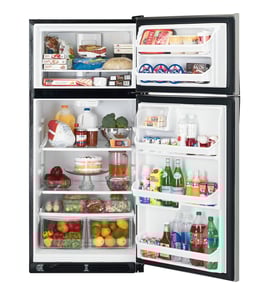


What is the lifespan of a 3 star fridge?
A “3 star” refrigerator typically lasts 10 to 20 years. For a Samsung top-mount refrigerator like RT21M6215WW, regular care (especially keeping airflow clear and cleaning) helps it reach the longer end of that range; see the rt21m* user manual for model-specific care and operating guidance.
Typical lifespan and what affects it
Most refrigerators wear out due to sealed-system strain, airflow problems, or control and fan issues. These factors have the biggest impact:
- Condenser cleanliness and airflow (dust buildup makes the compressor run hotter and longer)
- Door seal condition and door-opening habits (warm air intrusion increases run time)
- Stable power and proper grounding (helps protect electronic controls)
- Correct temperature settings (over-cooling can increase run time)
- Room temperature and ventilation around the cabinet
Quick maintenance checklist (high impact)
Use this routine to extend life and reduce breakdowns:
- Vacuum dust from the lower rear area and vents regularly
- Keep food from blocking interior air vents
- Confirm doors close fully and gaskets seal all the way around
- Avoid overloading shelves so air can circulate
- After a power outage, minimize door openings until temperatures recover
What “3 star” usually means (so expectations are realistic)
“3 star” is commonly used as an efficiency or rating label in some markets, not a direct durability grade. Lifespan is driven more by usage and maintenance than by the star label.
| Item | Typical range | What it means for lifespan |
|---|---|---|
| Refrigerator lifespan | 10 to 20 years | Normal household use with basic maintenance |
| Best-case outcome | 15 to 20 years | Clean airflow, good seals, stable power |
| Earlier replacement | 8 to 12 years | Heavy use, poor ventilation, neglected cleaning |
Why it matters
A refrigerator that runs longer cycles to hold temperature uses more energy and puts extra wear on the compressor and fans. Keeping airflow clear and seals tight is the simplest way to protect long-term reliability.
Last updated: February 2026
What are the disadvantages of a top mount fridge?
A top-mount refrigerator like the Samsung RT21M6215WW puts the freezer at eye level and the fresh-food section below, so the main tradeoffs are more bending for everyday items, fewer convenience features, and less flexible storage compared with many bottom-freezer designs. See the owner's manual for model-specific features and layout.
Common disadvantages (what you will notice day to day)
- More bending and reaching: fresh food is lower, so you crouch more for produce drawers and lower shelves.
- Less “grab-and-go” organization: many top-mounts have fewer adjustable bins, dividers, and specialty drawers than premium layouts.
- Fewer dispenser options: top-mount models often skip external water and ice dispensers.
- Smaller freezer usability: the freezer can feel tighter to organize, especially for bulky boxes.
- More frequent door opening for fresh food: because fresh food is used most, the lower position can be less ergonomic.
What to check on your RT21M6215WW before deciding
Use these quick checks to see whether the typical drawbacks matter for your kitchen and habits:
- Measure how often you access fresh food versus frozen food.
- Confirm shelf and bin adjustability and whether it fits tall bottles and meal-prep containers.
- Verify you have enough clearance and airflow; the manual calls for about 2 in./5 cm gap at the sides and rear for ventilation.
- Avoid overloading shelves and door bins; heavy loading can cause handling issues.
- Keep vents clear; blocked vents can lead to frost around vents and uneven cooling.
| Topic | Top-mount refrigerator | Bottom-freezer refrigerator |
|---|---|---|
| Ergonomics for fresh food | More bending | Easier access |
| Freezer access | Easier access | More bending |
| Feature availability | Often simpler | Often more feature-rich |
| Typical cost/complexity | Often lower | Often higher |
Why it matters
Choosing a layout is mostly about comfort and how you use the refrigerator. If you cook often and reach for fresh items all day, the lower fresh-food section is the biggest downside. If you use the freezer more, a top-mount can be a practical fit.
Last updated: February 2026
What is the most common problem with Samsung refrigerators?
The most common issue we see with Samsung refrigerators like model RT21M6215WW is a cooling problem: the fridge or freezer runs warm, temperatures swing, or frost builds up and blocks airflow. These symptoms usually trace back to airflow restrictions, defrost-system trouble, or a fan/control component that is not doing its job.
Most common symptoms customers notice
- Fridge section is warm but the freezer seems OK (or the reverse)
- Frost or ice buildup on the back wall or around the evaporator cover
- Loud fan noise, rattling, or a fan that stops and starts
- Water leaking inside the cabinet or puddling under the refrigerator
- Ice maker stops producing ice or makes small, hollow cubes
What to check first (fast, no-tools steps)
Use these checks before replacing parts; they solve a large share of “not cooling” complaints.
- Confirm the power cord is plugged in firmly and the outlet is working
- Set the temperature colder and give it time to stabilize (24 hours)
- Make sure interior air vents are not blocked by bags or tightly packed food (blocked vents can cause overcooling and other issues)
- Verify the refrigerator has clearance around the sides and rear (a common minimum is about 2 inches)
- If you unplugged it, wait at least 5 minutes before plugging it back in
Common causes and the parts that often relate
| Problem pattern | Likely area | Example parts for this model |
|---|---|---|
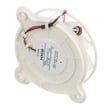
| Warm temps, weak airflow | Evaporator fan or iced-over evaporator | Refrigerator evaporator fan motor DA31-00287C |
| Heavy frost, recurring icing | Defrost heater or thermal fuse | Refrigerator defrost heater DA47-00460G, refrigerator defrost thermal fuse DA47-00301F |
| Temps fluctuate, odd readings | Temperature sensor | Refrigerator temperature sensor DA32-00070A |
| Ice maker not making ice | Water supply or ice maker module | Refrigerator water inlet valve DA97-13268A, refrigerator ice maker module DA59-00294B |
Why it matters
Cooling and ice-making problems usually get worse over time. A small airflow restriction can turn into heavy frost, warmer food temperatures, longer run times, and more strain on the sealed system.
Where to find model-specific troubleshooting steps
For RT21M6215WW, we recommend following the troubleshooting tables and safety guidance in the owner's manual.
Last updated: February 2026