

How to identify a Kenmore washer model?
Your Kenmore washer model number is the ID we use to match the correct parts and diagrams; for this washer, the model number format often starts with 110 and is typically found on the cabinet or frame, not on removable trim.
Where to look on Kenmore washers
Check these common locations first (top-load and direct-drive styles are especially likely to use these spots):
- Under the lid, around the tub opening on the top rim
- On the back panel near the power cord entry
- On the rear of the control console (sometimes visible from behind)
- Inside the cabinet on a side wall (you may need a flashlight)
- On a metal plate or white sticker labeled Model or Model No.
What the model number looks like
For Kenmore washers, the model number is usually 10 to 12 characters and commonly begins with 110 (example: 11092478800). Write it down exactly as shown.
Quick check table
| What you see | What it means | What to do |
|---|---|---|
| Starts with 110 | Kenmore model prefix used on many washers | Use the full number to shop parts |
| Extra letters or spaces | Not part of the model number | Ignore spaces; keep the exact characters |
| A second number labeled Serial | Production identifier | Record it separately (helpful for service) |
Why it matters
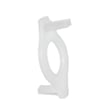
Using the exact model number prevents wrong-part returns and helps us narrow down the correct version of common repairs like a no-agitate issue (often tied to an agitator dog 80040) or a no-spin/no-drain symptom.
Tips to avoid mix-ups
- Match every digit; one wrong digit can point to a different washer design
- Use the model number (not the serial number) when selecting parts
- If the tag is worn, take a clear photo and zoom in to confirm characters
Last updated: February 2026
Is it worth repairing a Kenmore washing machine?
Yes, repairing a Kenmore washer is worth it when the fix restores reliable wash and spin performance for less than replacing the machine, especially for a proven model like Kenmore 11092478800. Most common failures on this style of washer are straightforward (drain, agitation, spin, or lid safety) and often come down to a few serviceable parts.
Quick way we decide: repair vs. replace
Use these practical checkpoints before spending money:
- Repair it when the washer fills, drains, and the tub is solid (no major rust-through), and the issue is a wear part (agitator, coupling, pump, clutch).
- Repair it when the symptom is isolated (won’t drain, won’t agitate, won’t spin) and the machine otherwise runs normally.
- Consider replacing when the outer tub is leaking badly, the gear case is failing loudly, or multiple major systems are failing at once.
- Repair it when you can DIY safely and the part cost is reasonable.
- Consider replacing when the repair requires repeated teardown and downtime you cannot tolerate.
Common repairs on model 11092478800 (and what they usually mean)
| Symptom | Likely area | Example part for this model |
|---|---|---|
| Won’t drain / water left in tub | Drain system | Water pump WP3363394 |
| Agitator moves poorly or “ratchets” | Agitator drive | Agitator dog 80040 |
| Motor runs but washer won’t agitate/spin | Drive connection | Coupling 285753A |
| Spins weakly or slips | Spin drive | Clutch 285785 |
| Won’t fill or fills incorrectly | Water inlet | Valve 285805 |
Why it matters
A targeted repair keeps a solid Kenmore washer running for years, avoids the learning curve of a new machine, and often fixes the exact complaint (no drain, no spin, poor agitation) without replacing the whole appliance.
Smart next steps
- Match the symptom to the most likely system (drain, agitation, spin, fill).
- Inspect for simple causes first (clogs, loose hoses, broken plastic coupler pieces).
- If the agitator is the issue, check the dogs and cam before assuming a transmission problem.
- If the washer won’t drain, check the pump and hoses before replacing electrical parts.
- If you suspect a control or code issue on Kenmore washers, use our Kenmore 110 vmax top load washer error codes guide to narrow the failure.
Last updated: February 2026
What is the average lifespan of a Kenmore washer?
A Kenmore washer typically lasts 10 to 15 years. For your Kenmore model 11092478800, reaching the high end of that range usually comes down to load size, leveling, and keeping the drive and drain systems working smoothly.
Typical lifespan and what affects it
Most washers fail early from vibration, drainage problems, or drive wear. These factors have the biggest impact:
- Overloading (stresses the drive system and suspension)
- Out-of-balance loads (increases tub and basket wear)
- Poor draining (can strain the pump and leave water in the tub)
- Hard water and detergent buildup (can affect valves and moving parts)
- Frequent heavy cycles (more wear per year)
Maintenance that helps you get 10 to 15 years
Use these habits to extend life and reduce common breakdowns:
- Keep loads evenly distributed; wash bulky items in pairs when possible
- Avoid packing the basket tight; leave room for clothes to move
- Check and clear the drain path if you notice slow draining or standing water
- Level the washer so it does not rock during spin
- Address small leaks quickly so they do not damage bearings or the drive area
Common wear items (and what they usually cause)
These parts are often involved when performance drops on many Kenmore top-load designs:
| Symptom | Commonly involved part | What you may notice |
|---|---|---|
| Won’t drain or drains slowly | Water pump WP3363394 | Humming, water left in tub |
| Agitator doesn’t move properly | Agitator dog 80040 | Weak agitation, slipping |
| No spin or intermittent spin | Clutch 285785 | Wet clothes, burning smell, slow spin |
| Loud banging or excessive vibration | Washer suspension spring WP63907 | Tub hits cabinet during spin |
Why it matters
A washer that is kept level, not overloaded, and draining correctly runs with less strain on the motor, clutch, and suspension. That reduces vibration-related damage and helps your Kenmore 11092478800 reach its normal service life.
Last updated: February 2026