Owner’s manual
 Error Codes

How do I tell what model Kenmore fridge I have?
To tell what model Kenmore refrigerator you have, look for the model and serial number tag on the cabinet walls or frame, not on removable drawers or shelves. On Kenmore model 59675232403, the tag is typically inside the fresh food section or freezer opening; confirm the exact location in the 59675232403 owner's manual.
Where to look for the model number tag
Check these common spots first (use a flashlight and look along the cabinet walls and frame):
- Inside the refrigerator compartment on a side wall near the crisper area
- On the ceiling or upper side wall of the fresh food section
- Inside the freezer compartment on a side wall
- Along the door opening frame (hinge side) where the door seals
- Behind the lower toe grille or kickplate area (if your design allows access)
What the label looks like and what to write down
The tag usually lists a model number and serial number. Write both down exactly as shown.
| What to capture | Example format | Why we need it |
|---|---|---|
| Model number | 596.75232403 or 59675232403 | Ensures parts fit your exact Kenmore refrigerator |
| Serial number | Letters and numbers | Helps match production changes and revisions |
Why it matters for parts and troubleshooting
Kenmore refrigerators often have multiple versions that look similar, but use different parts (ice maker, control board, light switch, door gasket). Using the correct model number prevents ordering the wrong replacement part and speeds up diagnosis.
Quick tip if you are ordering an ice maker
If your refrigerator is not making ice, confirm the model number first, then match the replacement to your parts list. For this model, a common replacement is the ice maker assembly - refrigerator ice maker by whirlpool 4317943.
Last updated: February 2026
How many cubic feet is my Kenmore refrigerator by model number?
For Kenmore bottom-mount refrigerator model 59675232403, the most accurate way to get cubic-foot capacity is to look up the specifications in the 59675232403 owner's manual. If you need a quick estimate, we can calculate it by measuring the interior, but the manual gives the official number.
Fast ways to find the capacity
- Check the model and serial tag inside the fresh food compartment (often on a side wall or ceiling area); it commonly lists key specs.
- Use the specifications section in the 59675232403 owner's manual.
- Measure the usable interior space and calculate an estimate (helpful if labels are missing).
- Compare your refrigerator’s size to typical bottom-mount capacities (see table below).
How to estimate cubic feet by measuring
- Empty enough space to measure the fresh food and freezer compartments.
- Measure each compartment’s width x height x depth (in inches).
- Compute cubic feet:
cubic feet = (W x H x D) / 1728
- Add fresh food + freezer results.
What to measure (for best accuracy)
- Measure to the inside liner, not the door bins.
- Subtract space taken by large fixed items (ice maker housing, fan covers) if they significantly reduce usable volume.
- Use the same method for both compartments.
Typical capacity ranges (for context)
| Refrigerator type | Typical total capacity | Best use case |
|---|---|---|
| Bottom-mount (standard width) | 18 to 22 cu. ft. | Most households |
| Bottom-mount (wider or deeper) | 22 to 26 cu. ft. | Larger families |
| Compact or apartment size | 10 to 17 cu. ft. | Small kitchens |
Why it matters
Knowing cubic feet helps us match the right shelves, drawers, ice maker parts, and storage accessories for your Kenmore 59675232403, and it also helps when comparing energy use and food storage needs.
Last updated: February 2026
How to read Kenmore model numbers?
Kenmore model numbers tell us who built the refrigerator and which design family it belongs to, so we can match the correct parts and service information for your Kenmore bottom-mount refrigerator model 59675232403. Start by finding the full model number on the rating label, then use the 3-digit prefix to identify the manufacturer.
Where to find the model number on a refrigerator
Check these common locations first:
- Inside the fresh food compartment on a side wall
- On the ceiling of the fresh food compartment near the light
- On the frame behind the crisper drawers
- On the door jamb (hinge side)
- On the back exterior panel near the power cord
How to decode a Kenmore model number (quick guide)
Most Kenmore model numbers follow a pattern like:
| Section | What it means | Example (concept) |
|---|---|---|
| 3-digit prefix | Manufacturer code | 596 = a Whirlpool-built Kenmore family |
| Middle digits | Design series and features | Identifies the platform |
| Ending digits | Revision/color/package | Minor variations |
For 59675232403, the 596 prefix is the key piece we use first because it points to the manufacturing source and parts system family.
Why the full model number matters for parts
Small suffix changes can affect fit and wiring, especially for items like an ice maker, control board, or damper.
- Ice maker mounting and harness style can vary
- Electronic control boards can have different connectors or programming
- Door gaskets can differ by color and door style
- Light switches and sockets can change by production run
If you are confirming parts for this model, the 59675232403 owner’s manual is also a good reference for feature set and basic troubleshooting.
Helpful tip when ordering parts
Match parts using the complete model number, not just the prefix.
| What to match | Best practice |
|---|---|
| Model number | Use all digits: 59675232403 |
| Part listing | Confirm it is listed for your exact model |
| Symptom | Use troubleshooting to narrow the correct part |
Last updated: February 2026
How to tell if a Kenmore refrigerator compressor is bad?
A bad compressor on a Kenmore 59675232403 bottom-mount refrigerator usually shows up as poor cooling with the unit running a lot, repeated clicking as it tries to start, or the refrigerator not operating at all. Before condemning the compressor, we rule out power, control settings, airflow, and “normal” operating noises listed in the 59675232403 owner's manual.
Quick checks before you blame the compressor
- Confirm the outlet works (plug in a lamp) and the cord is fully seated.
- Check the house fuse or reset the circuit breaker.
- Make sure the temperature control is turned on (not set to “off”).
- If it was just installed or moved, allow a full 24 hours to cool.
- Do not set the control to the coldest setting expecting faster cooling; it does not cool quicker.
- Listen for normal sounds (pulsating, hissing/rattling, popping, water dripping during defrost).
Symptoms that point toward a compressor or start-device problem
| What you notice | What it often means | What to do next |
|---|---|---|
| Repeated clicking every few minutes, little or no cooling | Compressor struggling to start (often start relay/overload) | Unplug, wait 5 minutes, plug back in; if clicking returns, schedule service |
| Runs “constantly” but temperatures stay warm | Sealed system or compressor not pumping efficiently | Check condenser cleanliness and door sealing; then service diagnosis |
| Silent unit, lights may work, no cooling | Control, start device, or compressor not running | Verify control is on and power is good; then service diagnosis |
| Compressor shell extremely hot to the touch | Overheating from hard-start or poor heat rejection | Clean airflow areas, reduce door openings; then service diagnosis |
Why it matters
Compressors are part of the sealed refrigeration system; misdiagnosing the problem can lead to unnecessary cost. Many “bad compressor” complaints are actually power issues, control settings, airflow restrictions, or normal operating noises on high-efficiency designs.
When to stop and call for service
- The breaker trips repeatedly when the refrigerator tries to start.
- You smell burning insulation or see damaged wiring.
- Clicking continues after basic power and control checks.
Last updated: February 2026
What are the most common problems with Kenmore refrigerators?
The most common problems we see on Kenmore refrigerators like model 59675232403 are cooling issues, water leaks, ice maker troubles, and unusual noises. These usually trace back to airflow problems (fans or blocked vents), frost buildup from a defrost issue, or a door seal that is not closing tightly; use the 59675232403 owner's manual troubleshooting section to narrow it down.
Most common symptoms and what they usually mean
- Not cooling or warm temperatures: dirty condenser area, evaporator fan not running, damper stuck, or defrost frost buildup
- Freezer cold but fridge warm: restricted airflow or a failed damper control
- Water under the refrigerator: clogged defrost drain or a water line connection issue
- Ice maker not making ice: water supply problem, ice maker failure, or temperature too warm
- Clicking, buzzing, or rattling: fan blade hitting ice, loose panel, or normal compressor cycling
Quick checks we recommend first (safe, no special tools)
- Confirm power and controls: verify the outlet works and the temperature control is on.
- Give it time after changes: after installation or major adjustments, allow 24 hours for temperatures to stabilize.
- Check door closing and gaskets: look for gaps, torn gasket sections, or doors not sealing.
- Listen for fan operation: a stalled evaporator fan often causes warm fresh food temps.
- Look for frost buildup: heavy frost on the freezer back panel points to a defrost problem.
Parts that commonly solve these problems on 59675232403
| Symptom | Common part to inspect/replace | Example part for this model |
|---|---|---|
| Fridge warm, freezer OK | Damper control | Refrigerator damper control WPW10196393 |
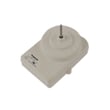
| Warm temps, weak airflow | Evaporator fan motor | Evaporator motor WPW10128551 |
| No ice production | Ice maker assembly | Ice maker assembly - refrigerator ice maker by whirlpool 4317943 |
| Erratic temps or no response | Electronic control board | Refrigerator electronic control board WPW10503278 |
Why it matters
Cooling and ice maker complaints are usually airflow- or temperature-control related. Fixing the root cause early helps prevent food spoilage, repeated frost buildup, and extra compressor run time.
Last updated: February 2026
What is the average lifespan of a Kenmore refrigerator?
Most Kenmore refrigerators last 10 to 15 years. For a Kenmore bottom-mount refrigerator like model 59675232403, consistent care (cleaning, good door sealing, and fixing cooling or ice issues early) is what most often pushes the unit toward the high end of that range.
Typical lifespan and what affects it
A refrigerator’s life is mainly driven by compressor run time, airflow, and how hard the sealed system has to work.
- Condenser coil cleanliness (dirty coils raise operating temps and run time)
- Door gasket condition (air leaks cause moisture, frost, and longer run cycles)
- Evaporator fan and airflow (poor airflow warms the fresh food section)
- Defrost performance (ice buildup restricts airflow and stresses the system)
- Ice maker and water system health (leaks and clogs create secondary damage)
For model-specific care steps and cleaning guidance, follow the 59675232403 owner's manual.
Quick maintenance schedule (simple and effective)
| Task | How often | Why it matters |
|---|---|---|
| Clean condenser coils | Every 6 to 12 months | Reduces compressor workload |
| Check door seal for gaps | Every 3 months | Prevents warm air leaks and frost |
| Confirm temps (37°F fridge, 0°F freezer) | Monthly | Avoids overworking the cooling system |
| Clear vents and don’t overpack | Ongoing | Maintains proper airflow |
When a repair helps extend life (and when it doesn’t)
Some repairs are “life extenders” because they restore normal airflow and temperature control.
- If the refrigerator is warm but the freezer is cold, a failed damper is common; see refrigerator damper control WPW10196393.
- If you hear a loud buzzing or no airflow from the freezer area, the evaporator fan motor is a top suspect; see evaporator motor WPW10128551.
- If the ice maker stops producing, replacing the assembly is often the most direct fix; see ice maker assembly 4317943.
Why it matters
A refrigerator that runs longer to hold temperature uses more energy and wears key components faster. Basic upkeep and timely part replacement keep your Kenmore 59675232403 operating in its normal range, which directly supports a full 10 to 15 year service life.
Last updated: February 2026
What size is Kenmore refrigerator model 59675232403?
Kenmore bottom-mount refrigerator model 59675232403 is a full-size, 33-inch class refrigerator in most installations; the exact cabinet width, height, and depth vary by configuration and door/handle style. For the precise dimensions and required clearances, use the 59675232403 owner's manual.
What “size” usually means (and what to measure)
When customers ask for size, we recommend confirming these measurements on your unit:
- Overall width: measure the cabinet side-to-side at the widest point
- Overall height: floor to top of hinge cover (if present)
- Overall depth: back to front, then re-check with doors and handles
- Door swing clearance: space needed to fully open doors and drawers
- Ventilation clearance: space above and behind for airflow
Installation clearances to plan for
Your manual calls for ventilation space and door-swing room, which matters as much as the cabinet dimensions.
- Leave about 1/2 inch at the top and behind for ventilation
- If you have an ice maker, allow extra space behind for the water line
- If installed next to a fixed wall, leave at least 2 1/2 inches on the hinge side for door swing
Quick reference: common dimension checkpoints
Use this table to avoid surprises when fitting the refrigerator into a cutout.
| Checkpoint | What to include | Why it matters |
|---|---|---|
| Width | Cabinet, then doors/handles | Prevents binding in tight openings |
| Height | Hinges and leveling legs | Ensures it fits under cabinets |
| Depth | Doors and handles | Affects walkway clearance |
| Clearance | Top, back, hinge side | Prevents overheating and door interference |
Why it matters
Correct sizing prevents poor airflow (warm temps), doors that cannot open fully, and installation issues with water line routing for an ice maker. If you are replacing a door gasket because of fit or sealing problems, confirm the door alignment and sealing surfaces first; the how to fix a fridge door seal guide helps you check common causes.
Last updated: February 2026
Why is my Kenmore refrigerator leaking water from the bottom?
Water leaking from the bottom of your Kenmore 59675232403 bottom-mount refrigerator is usually caused by a clogged or frozen defrost drain that overflows into the fresh food section and then runs down to the floor. Less commonly, a cracked drain pan or a water supply connection issue can drip underneath.
Quick checks we recommend first
- Look for a sheet of ice or standing water on the refrigerator floor under the crisper drawers.
- Check the freezer floor for ice buildup near the rear panel (a common sign of a blocked drain).
- Inspect the drain pan underneath for cracks, overflow, or being out of position.
- If the unit has an ice maker, check the water line and fittings at the lower rear for slow drips.
- Confirm the doors are sealing; warm air intrusion increases frost and can worsen drain freezing.
Fix a clogged or frozen defrost drain
- Unplug the refrigerator.
- Remove items from the freezer and locate the drain trough area near the evaporator cover.
- Melt ice in the drain area using warm water (turkey baster works well). Use a hair dryer on low only if you keep it moving and away from plastic.
- Flush the drain with warm water until it flows freely to the drain pan.
- Clean the drain tube with a flexible brush or pipe cleaner to clear sludge.
For model-specific access steps and panel removal guidance, follow the 59675232403 owner’s manual.
If the leak is related to the ice maker or water supply
Water supply leaks typically show up as a steady drip under the back of the cabinet.
| Symptom | Most likely source | What to do |
|---|---|---|
| Water only during/after defrost | Defrost drain restriction | Thaw and flush the drain |
| Constant drip under rear | Water line fitting or tubing | Tighten fittings, inspect tubing |
| Ice clumps in bin, water in freezer | Ice maker fill issue | Check fill tube for ice, inspect supply |
If your refrigerator uses an ice maker, the ice maker assembly 4317943 is the correct assembly listed for this model when replacement is needed.
Why it matters
A blocked drain can refreeze repeatedly, cause recurring puddles, and lead to ice buildup that restricts airflow. Fixing the drain restores normal defrost water flow into the drain pan.
Last updated: February 2026