- Kenmore refrigerator water filters
- Whirlpool refrigerator water filters
- Samsung refrigerator water filters
- GE refrigerator water filters
- LG refrigerator water filters
- Frigidaire refrigerator water filters
- KitchenAid refrigerator water filters
- Maytag refrigerator water filters
- Kenmore Elite refrigerator water filters
- Estate refrigerator water filters
- GE Profile refrigerator water filters
- Amana refrigerator water filters
- Bosch refrigerator water filters
- Dacor refrigerator water filters
- Electrolux refrigerator water filters
Top DIY repair help
View All Repair Categories
Appliances
Lawn & Garden
Power Tools
Home Improvement
Sports & Leisure
Heating & Cooling
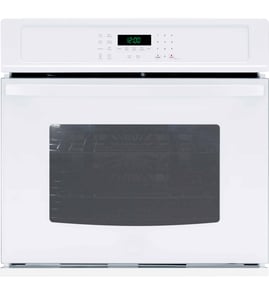
Whirlpool Wall oven Parts — Browse All Models
Finding the right Whirlpool wall oven parts for your repair is easy with Sears PartsDirect. Start by entering your model number in the search bar or browsing our list of Whirlpool wall ovens to view diagrams and OEM components that match your exact appliance. You can quickly track down parts to address heating issues, control problems or door concerns. If you want help identifying the issue before ordering, our DIY wall oven repair help page walks through the most common wall oven problems and what causes them.


 Error Codes
Frequently bought Whirlpool parts
Whirlpool Dryer Drum Belt, 92-1/4-inch
In Stock
$10.01
17% OFF Phone Price : $12.01

Qty

Whirlpool Dryer Idler Pulley
In Stock
$21.70
22% OFF Phone Price : $27.70
Qty
Dishrack Adjuster Kit - Dishwasher Rack Component By Whirlpool
In Stock
$40.47
13% OFF Phone Price : $46.47
Qty
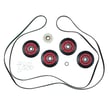
Whirlpool Dryer Repair Kit (4392067)
In Stock
$20.39
23% OFF Phone Price : $26.39
Qty
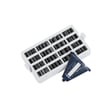
Whirlpool Refrigerator Carbon Air Filter
In Stock
$14.76
10% OFF Phone Price : $16.33
Qty
Whirlpool Washer Agitator Dog Set
In Stock
$24.17
20% OFF Phone Price : $30.17
Qty
Popular maintenance items for Wall Ovens
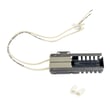
Frigidaire Range Oven Burner Igniter
In Stock
$21.50
22% OFF Phone Price : $27.50
Qty
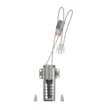
G.e. Range Oven Burner Igniter
In Stock
$59.63
9% OFF Phone Price : $65.63
Qty
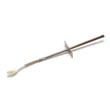
Cooking Appliance Oven Temperature Sensor
In Stock
$21.96
21% OFF Phone Price : $27.96
Qty
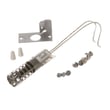
G.e. Kenmore Range Oven Burner Igniter
In Stock
$83.29
7% OFF Phone Price : $89.29
Qty
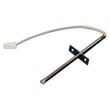
Frigidaire Range Oven Temperature Sensor
In Stock
$47.72
19% OFF Was : $58.60
Qty
Dishwasher Door Seal, Lower
In Stock
$27.61
18% OFF Phone Price : $33.61
Qty
Troubleshooting common Whirlpool wall oven problems
Whirlpool wall ovens combine electronic controls with high-heat components, which means certain symptoms tend to show up as parts wear. The issues below highlight problems Whirlpool owners frequently encounter.
Oven powers on but will not start cooking
When the display responds but the oven still will not heat, internal relays or a blown thermal fuse may be preventing power from reaching the heating elements. Wiring issues can also interrupt voltage even though the controls appear normal.
Oven temperature drops during long bakes
If the oven heats initially but food cooks unevenly or slows down, the temperature may be falling below the set level. A drifting temperature sensor or a door seal that no longer traps heat can cause temperature loss during extended baking.
Oven light stays on or turns off randomly
An oven light that behaves unpredictably often points to a faulty door switch or wiring connection. In some cases, a control board issue can keep the light circuit energized or shut it off unexpectedly.
Convection bake cooks unevenly
When convection mode runs but results are inconsistent, the fan motor may be weak or airflow may be blocked. Poor circulation prevents heat from distributing evenly across the oven cavity.
Oven beeps or flashes without warning
Unexpected beeping or blinking displays can indicate sensor errors, wiring problems or a control board that is misreading temperature signals. Reviewing the specific error code helps narrow down the cause.
Commonly replaced Whirlpool wall oven parts
Whirlpool wall ovens rely on steady heat output, accurate sensors and responsive controls. Over time, certain components tend to wear out and require replacement.
- Bake element: Supplies the main heat for baking. A failing element causes slow preheating or uneven results.
- Thermal fuse: Protects the oven by cutting power if overheating occurs. A blown fuse prevents the oven from operating.
- Temperature sensor: Monitors internal heat levels. A faulty sensor causes inaccurate temperatures.
- Door hinges: Support proper door movement and sealing. Worn hinges allow heat to escape and affect cooking performance.
- Oven control board: Manages heating cycles and user inputs. A failing board may cause erratic behavior or unresponsive controls.
Why use Sears PartsDirect for your Whirlpool wall oven parts
Sears PartsDirect carries OEM Whirlpool wall oven parts designed to fit your specific model. With detailed diagrams and compatibility tools, you can confirm the correct replacement before ordering. Using genuine Whirlpool components helps maintain accurate temperatures, reliable heating and long-term appliance performance.
Whirlpool wall oven FAQs
Why does my Whirlpool wall oven take longer to preheat than expected?
Slow preheating often points to a weakening bake element or a temperature sensor that is no longer reading accurately. Replacing the sensor can help restore normal heat-up time.
Why does my oven cooling fan keep running after cooking?
Whirlpool ovens use cooling fans to protect electronic components. If the fan runs for an extended time, airflow may be restricted or the fan motor may be wearing out.
Why does my oven shut off when using convection bake?
Overheating can trip the thermal fuse or thermal switch, especially during convection cooking. Poor ventilation around the oven cabinet can also cause shutdowns.
Why is heat escaping around the oven door?
A worn door seal or sagging hinges can prevent the door from sealing tightly. Replacing the gasket or hinges usually improves heat retention.
Why does my Whirlpool oven click repeatedly during baking?
Relays cycle during normal operation, but frequent clicking may indicate worn relays or a control board struggling to regulate temperature.
Parts & More
Canister Vacuum
Fitness & Exercise
Front-Engine Lawn Tractor
Gas Snowblower
Lawn & Garden Engine
Line Trimmer
Log Splitter
Planer
Rear-Engine Riding Mower
Refrigerator
Tiller
Water Softener
Wet/Dry Vacuum
Wine & Beverage Cooler