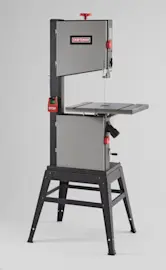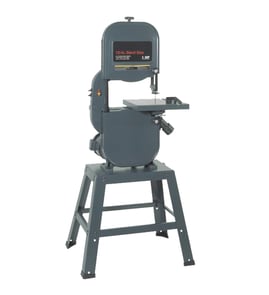

How do you determine the size of a bandsaw?
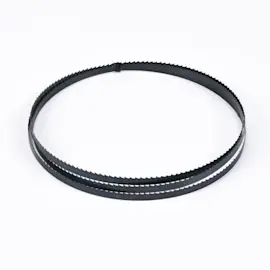
A band saw’s “size” is usually defined by its cutting capacity and the blade size it uses. For the Craftsman model 351214010 (4-1/2 inch horizontal and vertical band saw), focus on the maximum cut it can make and the blade’s length, width, and teeth per inch (TPI) so you buy the right blade and set it up correctly.
What “size” means for a band saw
Most shoppers and DIYers mean one (or more) of these:
- Cutting capacity: the largest round or rectangular stock the saw can cut
- Blade length: the loop length the saw is designed to run
- Blade width: the blade’s back-to-tooth width (common small saw ranges are about 1/4 to 1/2 inch)
- TPI (teeth per inch): tooth count that affects speed and finish
How to measure blade width and TPI
If you already have a blade and want to identify it:
- Blade width: measure straight across the blade from the back edge to the tooth tips.
- TPI: place a ruler along the teeth and count how many tooth tips fall in 1 inch.
- If a tooth lands exactly on the 1-inch mark, count the teeth in 1 inch starting at the next full tooth.
- For variable pitch blades, count TPI in a few spots and note the range (example: 10 to 14 TPI).
Quick guide: choosing TPI by material
| Material and thickness | Typical TPI range | Why it helps |
|---|---|---|
| Thin wall tubing, sheet, small profiles | 14 to 24 | Reduces tooth snagging and chatter |
| General steel cutting | 10 to 18 | Balanced speed and finish |
| Thick solid stock | 6 to 10 | Clears chips better and cuts faster |
Why it matters
Using the correct blade length and a sensible TPI prevents blade breakage, crooked cuts, and motor overload. It also improves cut quality on steel, aluminum, and other metals commonly used with a horizontal and vertical band saw.
Helpful related resource
For safe DIY troubleshooting habits and tool handling basics, use our guide: are diy appliance repairs safe.
Last updated: February 2026
What is the 3-tooth rule for bandsaws?
The 3-tooth rule means you choose a bandsaw blade pitch (TPI) so at least three teeth are cutting at all times. On your Craftsman model 351214010 band saw, this prevents tooth snagging, reduces chatter, and helps you cut straighter while extending blade life.
How to apply the 3-tooth rule
- Measure thickness in the direction the blade travels (for tubing, use wall thickness, not overall width).
- Select a TPI that keeps 3 or more teeth engaged through that thickness.
- If the blade grabs or chatters, move to a higher TPI.
- If chips pack in the gullets, move to a lower TPI.
- Recheck blade tension and guide alignment after changing blades.
Blade pitch cheat sheet (typical starting points)
| Material thickness in the cut | Typical blade pitch (TPI) | Best for |
|---|---|---|
| Under 1/8 in | 18 to 24 | Thin sheet, thin-wall tube |
| 1/8 to 1/4 in | 14 to 18 | Light bar stock, angle iron |
| 1/4 to 1/2 in | 10 to 14 | General-purpose metal cutting |
| Over 1/2 in | 6 to 10 | Thick stock, better chip clearing |
Why it matters
With fewer than three teeth in the cut, each tooth takes too large a bite; that causes grabbing, broken teeth, and wandering cuts. Keeping three or more teeth engaged spreads the load and stabilizes the blade.
If the saw still bogs down
- Reduce feed pressure; let the teeth do the work.
- Verify the blade is sharp and installed in the correct direction.
- Confirm guides are snug (not pinching) and tracking is centered.
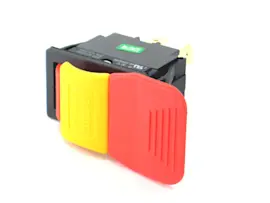
- Check for electrical issues like a weak outlet, damaged cord, or a failing switch.
For safe electrical testing basics, use how to use a multimeter to test electrical parts video.
Last updated: February 2026
Why does my Craftsman bandsaw blade keep falling off?
On the Craftsman 351214010 4-1/2" horizontal and vertical band saw, a blade that keeps falling off is almost always caused by incorrect blade tracking or tension, misaligned guide bearings, or worn wheel tires. Correcting tracking and guide alignment usually stops the blade from walking off the wheels.
Quick checks that fix most “blade falls off” problems
- Unplug the saw; open the wheel covers and remove chips from the wheels and guides.
- Verify blade direction and seating; the blade must sit centered on the wheel tires before you tension it.
- Set proper blade tension; too loose lets the blade climb and derail, too tight can damage bearings.
- Adjust tracking with the tracking knob so the blade runs near the center of the wheel (hand-spin the wheel to confirm).
- Set the guide bearings and side guides close to the blade (not squeezing it); guides that are too far away let the blade twist.
- Check that the blade is the right width and length for this saw; an incorrect blade size will not track reliably.
What to inspect if it still comes off
Wheel and tire condition
A hardened, glazed, or damaged tire reduces grip and lets the blade “hunt” side to side.
- Look for cracks, flat spots, or missing chunks
- Check for oil or pitch on the tire surface
- Confirm the blade is not riding on the wheel flange
Bearings, guides, and wheel alignment
Worn bearings or misalignment can push the blade off line.
- Spin each wheel by hand; it should turn smoothly and quietly
- Check for side-to-side wheel wobble (play) at the rim
- Confirm guide bearings spin freely and are not seized
Tracking and guide setup: a simple reference
| Adjustment | Typical symptom when wrong | What to do |
|---|---|---|
| Blade tension | Blade flutters, wanders, derails | Increase tension gradually until stable |
| Tracking | Blade walks forward/back on wheel | Center blade on tire using tracking knob |
| Side guides | Blade twists in cut, pops off | Move guides close, keep slight clearance |
| Thrust bearing | Blade gets pushed back, jumps | Set just behind blade, engages only under load |
Why it matters
A blade that derails can damage the blade, wheel tires, guide bearings, and workpiece. Getting tracking, tension, and guides set correctly also improves cut accuracy and reduces vibration.
For general DIY safety and prep steps before adjustments, use our are diy appliance repairs safe guide.
Last updated: February 2026