 Owner’s manual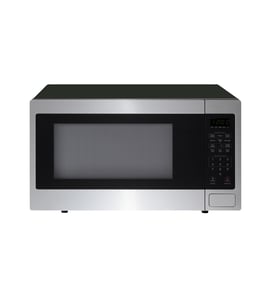

How many cubic feet is a Kenmore Model 40572122310 microwave?
The Kenmore 40572122310 countertop microwave has an oven capacity of 1.2 cubic feet. This is the usable cooking space inside the cavity (not the outside dimensions), and it helps you judge what size dishes and cookware will fit.
You can verify the 1.2 cu. ft. rating in the specifications section of the owner's manual.
A 1.2 cu. ft. countertop microwave is a mid-size unit that typically works well for daily reheating and most standard microwave-safe containers.
Common fit and use expectations:
- Fits most standard dinner plates and medium casserole dishes
- Works well for reheating 1 to 4 servings
- Supports typical microwave cookware (glass, ceramic, labeled microwave-safe plastics)
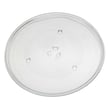
- Turntable helps heat more evenly; keep it installed for best results
- Leave ventilation clearance around the cabinet so it performs correctly
| Spec | Value |
|---|---|
| Oven capacity | 1.2 cu. ft. |
| Output power | 1100 W |
| Turntable diameter | 12.4 in |
| External dimensions (W x D x H) | 20.5 x 15.9 x 12.8 in |
Capacity is one of the best indicators of what you can comfortably cook or reheat. If you are comparing microwaves, 1.2 cu. ft. is a practical balance between counter space and interior room, especially when paired with 1100 watts for faster heating.
Last updated: February 2026
Can you put stuff on top of a countertop microwave?
Yes, but only if you keep the top vents and all other openings clear. For the Kenmore 40572122310 countertop microwave, we recommend leaving the required open space around the unit and never covering or blocking any openings, because restricted airflow can overheat and damage components.
The manual calls out specific spacing to keep airflow moving through the intake and outlet vents.
- Leave at least 12 inches of open space above the microwave.
- Keep at least 3 inches of clearance between the microwave and adjacent walls.
- Make sure one side is open (not boxed in tight on both sides).
- Do not cover or block any openings on the oven.
- Do not remove the legs from the bottom of the microwave.
For the exact placement guidance for this model, use the owner's manual.
Even when clearances are met, we treat the top surface as a “no storage” zone for anything that could trap heat or fall.
| Item on top | Recommended? | Why |
|---|---|---|
| Lightweight items used briefly (paper towels, oven mitt) | Sometimes | Less likely to block vents, but still easy to slide and cover openings |
| Small appliances (toaster, air fryer, coffee maker) | No | Heat, vibration, and weight can restrict airflow and stress the cabinet |
| Storage bins, cookbooks, food packages | No | Commonly blocks vents and holds heat against the cabinet |
| Anything liquid (cups, bottles) | No | Spill risk into controls and openings |
Countertop microwaves rely on free airflow to cool internal electrical parts. When the top or side ventilation is restricted, the microwave can run hotter than designed, which shortens part life and can lead to failures.
If your microwave has already stopped heating or seems to run but not warm food, see why is my microwave not heating.
Last updated: February 2026
Are Kenmore microwaves good?
Yes. Kenmore countertop microwaves like model 40572122310 are a solid choice for everyday reheating, defrosting, and simple cooking; they are designed to be straightforward to use and dependable for typical household needs. For the best experience, follow the cooking, container, and safety guidance in the owner's manual.
Most customers judge a microwave on a few practical points:
- Heats evenly enough for daily use (reheating leftovers, beverages, frozen meals)
- Simple controls that are easy to learn
- Reasonable noise level from the fan and turntable
- Consistent door latching and sealing (important for safe operation)
- Durability of high-wear items like the door switches, turntable drive, and interior light
Good microwaves stay “good” longer when they are used correctly. We recommend:
- Use microwave-safe containers and wraps; avoid metal or metal-trimmed items that can cause arcing
- Keep the door sealing surfaces clean and never operate the unit if the door is damaged
- Vent or slit cooking bags as directed so steam can escape
- Use paper products only for short-term heating and supervise closely
- Wipe spills promptly to reduce odors and interior staining
For more practical do’s and don’ts, see never do these things with a microwave.
| What you want | What to expect from Kenmore countertop models | What helps most |
|---|---|---|
| Everyday reheating | Strong performance for common foods | Use microwave-safe cookware |
| Defrosting | Reliable results with proper timing | Stir/rotate when prompted |
| Long-term durability | Best when used and cleaned correctly | Avoid arcing materials |
| Advanced “premium” features | Varies by model | Use the manual’s feature guide |
Microwaves are high-voltage appliances, and “good” performance depends as much on safe use as on the brand. Using the right cookware and keeping the door and seals in good condition helps prevent arcing, uneven heating, and avoidable part wear.
Last updated: February 2026


