
How to find snowblower model number?
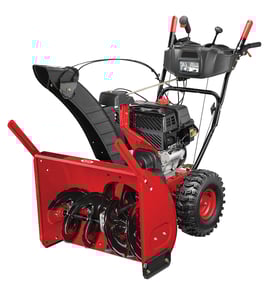
For a Craftsman snow blower, the model number is usually on a sticker or metal ID plate on the rear frame between the wheels, on the auger housing, or near the engine mounting area. Once you find it, match it exactly (for example, 536884350) when ordering parts.
Where to look on a Craftsman snow blower
Check these common spots first (wipe off snow, salt, and grime so the label is readable):
- Rear frame between the wheels (most common)
- Side or rear of the auger housing (front bucket area)
- Near the engine mounting area on the frame
- Under or near the handlebar console area
- On the engine itself (engine model is different from the snowblower model)
What number you actually need (snowblower vs. engine)
Snow blowers often have more than one ID tag. Use the snowblower model number for chassis parts like belts, scraper bars, and chute parts.
| You see this label | What it identifies | Use it for |
|---|---|---|
| Snowblower model number (example: 536884350) | The Craftsman machine | Parts diagrams and replacement parts |
| Engine model/type/code | The engine only | Engine-specific parts (carburetor, ignition, fuel system) |
Tips to avoid ordering the wrong part
- Copy the model number exactly, including all digits
- If there is a serial number, record it too (helps confirm variations)
- If the label is damaged, look for a stamped plate on the frame near the rear axle area
- When troubleshooting fuel issues, confirm whether you need a machine part or an engine part (for example, a fuel line)
Why it matters
Craftsman snow blower parts can change by production run; using the exact model number (like 536884350) ensures you get the correct drive parts, chute components, and hardware for your specific unit.
If you are replacing a fuel hose, we stock a compatible option like the gas line 791766.
Last updated: February 2026
What is the average lifespan of a snowblower?
Most snowblowers last 10 to 20 years. For a Craftsman snow blower like model 536884350, lifespan depends mainly on off-season storage, regular oil changes, and keeping wear items (belts, scraper, chute parts) in good shape.
Typical lifespan ranges
- Light residential use (few storms per year): 15 to 20 years
- Heavy use (frequent, wet snow, long driveway): 8 to 15 years
- Poor maintenance or bad storage (old fuel, corrosion): 5 to 10 years
What shortens lifespan fastest
- Leaving fuel in the tank/carburetor during storage (varnish and hard starting)
- Running low or dirty oil (accelerates engine wear)
- Hitting gravel, curbs, or ice chunks (bends auger/impeller components)
- Worn belts or pulleys that slip and overheat
- Rust from storing outdoors or in damp areas
Maintenance that adds years
- Change engine oil on schedule; check oil level before each use
- Use fresh fuel and a stabilizer; run the engine dry before long storage
- Inspect and replace worn drive/auger belts (a common wear item)
- Keep the housing clean; touch up chipped paint to slow rust
- Lubricate moving points and check fasteners for looseness
Quick parts examples for model 536884350
| What you notice | Common cause | Example part on this model page |
|---|---|---|
| Fuel smell, wet line, hard starting | Cracked fuel line | Gas line 791766 |
| Poor throwing distance, intermittent drive/auger | Worn or stretched belt | V-belt 319596MA |
| Scraping poorly, leaves snow behind | Worn scraper bar | Scraper 55323MA |
Why it matters
A snowblower that is maintained typically costs less to keep running than replacing the machine. Catching wear early (belt slip, fuel leaks, worn scraper) prevents bigger failures and keeps your Craftsman 536884350 reliable during peak winter use.
Related DIY help: how to make your snowblower last longer
Last updated: February 2026
Is it cheaper to repair or replace a snowblower?
Repairing a Craftsman snow blower model 536884350 is cheaper when the problem is a normal wear item or a simple fuel/drive issue; replacing the machine makes more sense when the engine or major structure is failing, or when the total repair cost is about half the price of a comparable new snowblower.
A quick decision checklist
We use these practical checkpoints to decide whether to repair or replace:
- Repair if it needs routine parts (belt, cable, switch, scraper) and the machine is otherwise solid.
- Repair if the issue is fuel delivery (cracked line, leaks) and the engine still has good power.
- Replace if the engine has low compression, heavy smoke, or persistent no-start after basic tune-up steps.
- Replace if the housing/frame is bent or cracked (structural alignment problems cause repeat failures).
- Replace if you are stacking multiple repairs at once (for example belt + pulley + controls + labor).
Common low-cost repairs for this model
These are typical fixes that usually stay in the “repair” category:
- Fuel line replacement (example part: gas line 791766)
- Drive belt replacement (example part: v-belt 319596MA)
- Chute control issues (binding, poor aiming, loose deflector hardware)
- Worn scraper causing poor clean-down and excessive vibration
- Loose fasteners or missing retainers after heavy use
Cost comparison guide
Use this table to keep the decision simple:
| Situation | Typical best choice | Why |
|---|---|---|
| One worn part (belt, cable, switch) | Repair | Low parts cost, quick restore of function |
| Fuel leak or cracked fuel line | Repair | Safety and reliability improve fast with a basic part swap |
| Multiple systems failing at once | Replace | Costs add up and downtime increases |
| Engine internal problem (compression, crank, severe smoking) | Replace | Major repair cost approaches replacement value |
Why it matters
A snowblower is a seasonal machine; reliability matters most when you need it immediately. Repairing wear items keeps your Craftsman 536884350 running economically, while replacing a unit with major engine or structural problems prevents repeat breakdowns and escalating repair bills.
Helpful DIY guidance
If you are leaning toward repair, we recommend starting with the basics and a proven procedure:
Last updated: February 2026
Who repairs Craftsman snow blowers?
For a Craftsman snow blower like model 536884350, small-engine repair shops and outdoor power equipment service centers typically handle repairs (engine, drive system, auger, and chute issues). If you prefer DIY, we support repairs by helping you identify and order the correct replacement parts for your exact model.
Repair options that fit most Craftsman snow blowers
- Local small-engine repair shops: Best for carburetor, recoil starter, ignition, and fuel-system work.
- Outdoor power equipment service centers: Common choice for drive/auger diagnostics and seasonal tune-ups.
- Mobile small-engine technicians: Helpful if transporting the unit is difficult.
- DIY repair: Practical for belts, cables, scraper bar, chute components, and basic fuel-line replacement.
Parts you can replace yourself on model 536884350
If the machine runs poorly, won’t move, or won’t throw snow consistently, these are common wear items to check first:
- V-belt 319596MA (drive or auger belt symptoms: slipping, squealing, no engagement)
- Idler pulley 48924MA (belt tension problems, noisy pulley)
- Gas line 791766 (fuel smell, cracking, hard starting from air leaks)
- Scraper 55323MA (poor clean-down to pavement, excessive housing wear)
- Chute deflector 762222MA (can’t control throw height or deflector is damaged)
Quick triage: repair shop vs. DIY
| Symptom | Most likely area | Best next step |
|---|---|---|
| Won’t start or surges | Fuel, spark, carburetion | Shop service or DIY basics (fresh fuel, spark plug check) |
| Moves poorly or not at all | Drive belt, idler, friction drive | DIY inspection; replace belt/pulley if worn |
| Auger won’t engage | Auger belt, cable adjustment | DIY belt/cable check |
| Throws snow weakly | Chute/impeller blockage, belt slip | DIY cleanout and belt inspection |
Why it matters
Using a repair provider familiar with small engines speeds up diagnosis and helps avoid repeat failures. For many Craftsman snow blower problems, replacing a few wear parts (belt, pulley, scraper, fuel line) restores performance quickly and costs less than major service.
For step-by-step DIY guidance, use our video: how to replace a snowblower belt video.
Last updated: February 2026
How to tell year of Craftsman snowblower by serial number?
For a Craftsman snow blower like model 536884350, the build year is typically encoded in the serial number as either a 6-digit date code (YYMMDD or MMDDYY) or a letter-coded year followed by month and day. We use the serial tag first, then confirm with the engine date code.
Where to find the serial number
Look for a sticker or metal tag in these common spots:
- Main frame near the engine or handle supports
- Rear frame crossmember behind the engine
- Side frame rails near the auger housing
- Underside of the control panel area
How to decode the year from the serial number
Craftsman has used multiple formats; these are the ones we see most often:
- YYMMDD: first 2 digits are the year, then month, then day
- MMDDYY: month and day first, then year
- Letter-coded year: a letter represents the year, followed by numbers for month and day (format varies)
Quick decode guide
| Serial number pattern | What it usually means | What to do |
|---|---|---|
| Starts with 6 digits (example: 210915) | Date code (YYMMDD or MMDDYY) | Try both and pick the realistic date |
| Starts with a letter then numbers | Letter-coded year + date info | Use the letter as the year key, then read month/day |
| Has dashes or multiple groups | Plant/line info plus date | Find the 6-digit date-like group |
Confirm the year using the engine date code
Many Craftsman snow blowers use Briggs & Stratton engines; the engine label often includes a manufacture date code.
- The snowblower build year matches the engine year or is slightly later
- If the engine date is much newer, the engine was replaced
- Use the confirmed year to match the correct parts diagram and hardware
Why it matters
The correct year helps us match the right 536884350 parts list so belts, pulleys, and controls fit correctly.
If you are also fixing a fuel issue while identifying the year, the gas line 791766 is a common replacement for cracked or leaking fuel hose.
Last updated: February 2026