Owner’s manual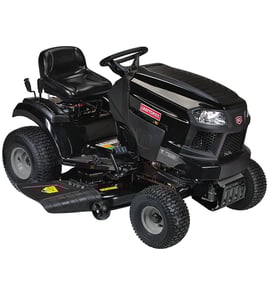

Who makes the Cub Cadet 13AX11CH712 engine?
For the Cub Cadet 13AX11CH712 front-engine lawn tractor, the engine is made by Kohler. You can confirm the engine manufacturer and service details by checking the engine identification information and warranty section in the owner's manual.
We recommend verifying the engine maker using the tractor and engine ID labels, since Cub Cadet tractors can be sold with different engine options depending on configuration.
- Lift the seat and locate the model plate (the manual notes it is typically under the seat).
- Record the model number and serial number from the model plate.
- Locate the engine ID label on the engine shroud or valve cover area.
- Match the engine brand name on the label (Kohler engines are typically marked clearly).
- Use the engine model and spec numbers when ordering engine-specific parts (filters, plugs) or looking up tune-up specs.
The operator manual’s warranty language indicates Kohler-authorized service is used for warranty engine repairs, which aligns with Kohler being the engine manufacturer for this unit.
| Item | Tractor (Cub Cadet 13AX11CH712) | Engine (Kohler) |
|---|---|---|
| Who builds it | Cub Cadet | Kohler |
| Common maintenance items | Belts, blades, deck parts, steering parts | Spark plug, air filter, oil filter |
| ID you’ll use most | Tractor model/serial | Engine model/spec |
Knowing the engine manufacturer helps you get the right spark plug gap, air cleaner element, oil type/weight, and other tune-up parts. It also prevents ordering the wrong engine parts when multiple engine options exist across similar Cub Cadet lawn tractor platforms.
Last updated: February 2026
How many hours does a Cub Cadet usually last?
Most Cub Cadet riding mowers, including the Cub Cadet 13AX11CH712 front-engine lawn tractor, typically last 500 to 1,000 hours with normal residential use and consistent maintenance (oil changes, blade care, belt checks, and clean storage). Use the maintenance schedule in the owner's manual to maximize service life.
- Maintenance frequency: oil and filter changes, air filter service, spark plug replacement
- Mowing conditions: dusty lawns, steep hills, wet grass, and heavy towing reduce lifespan
- Deck and blade care: dull blades strain the engine and PTO system
- Belt and pulley condition: worn belts slip, overheat, and accelerate wear
- Storage: keeping the tractor dry and clean prevents corrosion and electrical issues
- Change engine oil on schedule; check oil level before each mow
- Clean or replace the air filter regularly (more often in dusty conditions)
- Keep the mower deck clean underneath; remove packed grass buildup
- Inspect belts for glazing, cracking, or fraying; replace when worn
- Keep the battery charged and terminals clean; check safety switches if starting is inconsistent
| Use pattern | Typical total hours | What usually limits life first |
|---|---|---|
| Light residential mowing | 500 to 700 | belts, blades, battery, deck wear |
| Average residential mowing | 700 to 1,000 | steering/suspension wear, PTO/clutch wear |
| Heavy use (towing, hills, dusty) | 300 to 700 | engine wear, transmission stress, electrical issues |
Hour totals are a practical way to plan upkeep and budgeting. For example, the manual’s warranty language highlights that coverage depends on operating and maintaining the tractor as described, and some components have hour-based limits (such as frame/front axle coverage up to 500 hours in certain cases). Checking your hour meter and following the schedule helps you get the longest, most reliable service.
Last updated: February 2026
Is it worth repairing a lawn mower engine?
Yes, repairing the engine on your Cub Cadet lawn tractor model 13AX11CH712 is worth it when the problem is a tune-up or a single failed component; it is usually not worth it when the repair involves major internal engine damage or repeated no-start/overheating issues that keep coming back. Use the troubleshooting and maintenance guidance in the owner's manual to size up the repair.
We recommend repairing when you can answer yes to most of these:
- The engine starts but runs rough, hesitates, or idles poorly (often spark plug or air cleaner related).
- The issue points to basic fuel or ignition causes (stale fuel, loose spark plug wire, dirty air cleaner).
- Overheating is tied to maintenance items (low oil level, restricted airflow).
- The mower deck performance issue is separate from the engine (dull blade, deck not level, tire pressure).
- The tractor is otherwise in good shape (frame, steering, transmission, deck shell).
We recommend replacing the tractor (or doing a major engine swap only if you already planned it) when:
- The engine has major internal damage (knocking, low compression, heavy smoke) or catastrophic failure.
- You have repeated fuel contamination problems (water or dirt in the fuel system) that keep returning.
- Repair estimates approach 50% or more of the tractor’s current value.
The 13AX11CH712 manual points to several high-success, low-cost checks that solve many complaints:
- Connect the spark plug wire securely.
- Use clean, fresh gasoline (typically less than 30 days old).
- Check for a plugged gas cap vent.
- Inspect for a blocked fuel line.
- Replace or clean the air cleaner element.
- Verify oil level and clear airflow around the engine.
| Repair type | Typical scope | Usually worth it? |
|---|---|---|
| Tune-up / maintenance | Fuel refresh, spark plug, air filter, oil check | Yes |
| Fuel/vent issue | Gas cap vent, fuel line restriction, contaminated fuel | Yes |
| Overheating from maintenance | Low oil, restricted airflow | Yes |
| Major internal engine failure | Internal wear/damage, persistent smoke/knock | No |
A lot of “engine” complaints on riding mowers are actually maintenance or setup issues. For example, the manual recommends mowing with the engine at full throttle for best cutting performance; running at low speed can make the tractor feel weak and can worsen mulching results.
Last updated: February 2026