



How do I find the right GE part number?
For your GE washer model GTW465ASN9WW, the right part number comes from matching the model tag information to the exact component you need, then confirming the part ID and description before ordering. Start by locating the model/serial tag, then use that model number to narrow parts to the correct fit.
On most GE top-load washers, the model/serial tag is typically found in one of these spots:
- Under the lid, around the tub opening
- On the underside of the lid
- Along the rim of the washer opening
- On the back panel of the cabinet
- Near the control panel area (less common)
Write the model number exactly as shown (for this page, it is GTW465ASN9WW). A single extra character can pull up the wrong parts list.
Once you are in the GTW465ASN9WW parts list, confirm the part using both the description and the part ID. For example, common repairs on this model often involve parts like:
- Washer drive belt WH01X27538
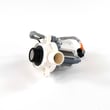
- GE washer drain pump assembly WH23X28418
- Washer water inlet valve assembly WH13X26535
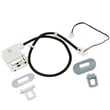
- GE washer lid lock assembly WH08X37938
Use these checks to avoid returns and delays:
- Confirm the symptom matches the part (drain issue vs. no-spin vs. no-fill)
- Compare the part name and part ID to your old part
- Check whether left/right versions exist (common with suspension parts)
- Verify your washer’s full model number suffix (GTW465ASN9WW, not just GTW465)
- If multiple similar parts appear, match by function and location on the washer
| Symptom | Common part to check first | Example part ID |
|---|---|---|
| Won’t drain | Drain pump | WH23X28418 |
| Won’t spin or weak spin | Drive belt | WH01X27538 |
| Won’t fill | Water inlet valve | WH13X26535 |
| Lid won’t lock or won’t start | Lid lock | WH08X37938 |
GE washers often use similar-looking components across multiple model families. Using the exact GTW465ASN9WW model number and matching the correct part ID prevents ordering a part that mounts differently, has a different connector, or is calibrated for another configuration.
Last updated: February 2026
How do I tell what model my GE washer is?
Your GE washer’s model number is printed on the appliance’s rating label. On the GE GTW465ASN9WW top-load washer, that label is typically on the underside of the lid, around the lid opening, or on the back of the control panel area.
Check these common label locations first:
- Under the lid (often along the rim of the opening)
- On the back of the control panel (rear panel area)
- On the side of the main cabinet near the bottom front edge
- Near the tub opening where the lid closes
- On the rear cabinet panel
GE model numbers are usually a mix of letters and numbers (for example, GTW465ASN9WW). We recommend writing it down exactly as shown, including the last letters and numbers, because they identify the correct series and parts.
| What to capture | Example | Why it matters |
|---|---|---|
| Model number | GTW465ASN9WW | Ensures parts match your exact washer |
| Serial number | (varies) | Helps date the unit and confirm revisions |
| Brand | GE | Narrows parts and troubleshooting info |
Using the exact model number prevents ordering the wrong drive system, lid lock, or drain components. Even small model suffix changes can affect fit and wiring.
After you confirm the model number, use it to match parts and troubleshooting resources such as GE gtw top load washer error codes.
Last updated: February 2026
How much does it cost to replace a gasket on a GE washing machine?
On a GE top-load washer like model GTW465ASN9WW, gasket replacement cost is usually driven by the part price plus labor. Most washer gaskets or seals run about $20 to $50 for the part, and professional labor commonly adds $150 to $300, depending on access and what has to be disassembled.
Parts and labor vary by the exact seal location (tub seal vs. hose seal vs. lid-related seal) and whether other worn parts are replaced at the same time.
- DIY parts-only: about $20 to $50 for many common seals
- Service call + labor: often $150 to $300
- Total installed (common range): about $170 to $350
- Higher totals happen when the repair requires major teardown (basket, gearcase area) or multiple seals
| Scenario | What you pay for | Typical total |
|---|---|---|
| DIY replacement | Seal only | $20 to $50 |
| Pro repair, straightforward access | Seal + labor | $170 to $350 |
| Pro repair, heavy disassembly | Seal + labor + extra parts | $300+ |
These are the factors that usually move the estimate up or down:
- Where the leak is (drain hose connection, pump area, tub seal, etc.)
- Time to access the seal (simple clamp vs. basket removal)
- Related damage (water in bearings, rusted fasteners, worn drive components)
- Whether you replace related parts during the same teardown
- Local labor rates and minimum service charges
A “gasket” complaint is often a hose, pump, or clamp issue on a top-load washer.
- Look for drips at the drain hose connection and cabinet bottom
- Check for leaks during fill (inlet valve area) vs. during drain/spin (pump/hose area)
- Inspect the drain path; a cracked hose can mimic a failed seal
- If the washer will not drain and water is present, the pump area is a common suspect
If the leak is tied to draining, pricing out a pump replacement can be a practical comparison; see GE washer drain pump assembly WH23X28418.
Replacing the correct seal early helps prevent secondary damage such as corrosion, belt slippage, and bearing wear. If water reaches drive components, you can end up replacing more than just the gasket.
Last updated: February 2026
How to order GE appliance parts?
To order parts for your GE washer model GTW465ASN9WW, order using the complete model number and then match the exact part ID to your symptom or repair. If you need help with fit or availability, contact Sears PartsDirect support.
- Find your full model number on the washer lid frame or cabinet opening (GTW465ASN9WW).
- Identify the failed system (drain, fill, spin, lid lock, agitation).
- Match the part by part ID, not just the description.
- Compare your old part to the listing photos and mounting points.
- Order any one-time-use hardware you remove (clips, screws) if needed.
These are frequently replaced items for this GE top-load platform:
| Washer problem | Part to check first | Part ID |
|---|---|---|
| Won’t spin or squeals | Washer drive belt | WH01X27538 |
| Won’t drain / water left in tub | GE washer drain pump assembly | WH23X28418 |
| Lid won’t lock / won’t start | GE washer lid lock assembly | WH08X37938 |
| Shifts oddly / won’t agitate correctly | Washer shifter assembly | WH03X30517 |
If you already know what you need, ordering the exact listing such as the washer drive belt WH01X27538 helps avoid fit issues.
Contact Sears PartsDirect support for:
- Help confirming the correct part using your model and serial number
- Availability questions and ordering assistance
- Guidance when multiple similar parts appear for GTW-series washers
GE often uses similar-looking parts across GTW-series washers; ordering by the exact GTW465ASN9WW model number and the correct part ID reduces returns and gets your washer back to draining, filling, and spinning normally.
Last updated: February 2026
Is the GE 4.5 top load washer any good?
Yes. The GE top-load washer model GTW465ASN9WW is a solid, practical choice for everyday laundry: it offers a roomy capacity, straightforward cycles, and strong wash action for mixed loads. Like many top-load agitator washers, it can be louder and more vibration-prone with bulky or unbalanced loads.
We consider this model a good fit when you want simple operation and dependable cleaning more than ultra-quiet performance.
- Handles everyday family loads well (towels, jeans, kids’ clothes)
- Agitator-style wash action helps with ground-in soil
- Large tub is convenient for bedding and bulky items
- Fewer “smart” features means fewer complexity points
- Noise and out-of-balance shaking can happen with heavy single items
If performance drops, these are the most common repair paths on GE top-load platforms like GTW465ASN9WW.
| Symptom | What it often points to | Example part for this model |
|---|---|---|
| Won’t spin or weak spin | Worn/slipping belt | Washer drive belt WH01X27538 |
| Won’t drain, water left in tub | Pump problem or blockage | GE washer drain pump assembly WH23X28418 |
| Banging, walking, frequent imbalance | Suspension wear | Washer suspension rod and spring assembly WH16X26911 |
| Lid won’t lock, won’t start/spin | Lid lock issue | GE washer lid lock assembly WH08X37938 |
- Load similar items together; avoid washing one heavy item by itself
- Distribute bulky items evenly around the basket
- Use the right water level option for the load size (too little water can worsen imbalance)
- Keep the washer level front-to-back and side-to-side
- Do not overload; leave room for clothes to circulate
A “good” washer is the one that matches your priorities. GTW465ASN9WW is strongest on capacity and cleaning power; if you are sensitive to noise or vibration, careful loading and maintaining suspension and drive components makes a noticeable difference.
Last updated: February 2026
What is the capacity of GTW465ASN9WW?
The GE GTW465ASN9WW top-load washer has a 4.5 cu. ft. capacity, which refers to the size of the wash basket and how much laundry it can hold in a typical load.
A 4.5 cu. ft. washer is considered a larger-capacity top-load model. In practical terms, it is designed to handle:
- Full family-size loads of mixed clothing
- Bulkier items like towels and small blankets
- Larger loads when you use the correct cycle and water level
- Better load balance when items are distributed evenly
Use this as a simple reference for what usually fits comfortably in a 4.5 cu. ft. top-load washer.
| Load type | Typical fit in 4.5 cu. ft. | Notes |
|---|---|---|
| Everyday mixed load | Yes | Avoid packing above the basket rim |
| Towels | Yes | Mix sizes to reduce imbalance |
| Bedding | Usually | One comforter depends on thickness |
| Heavy/oversized items | Sometimes | Wash one bulky item at a time |
Capacity affects cleaning and spin performance. Overloading can cause poor agitation, out-of-balance spinning, and extra wear on drive components like the washer suspension rod and spring assembly WH16X26911 and washer drive belt WH01X27538.
- Load items loosely; do not compress laundry
- Keep the load balanced (mix large and small items)
- If the washer bangs or walks, reduce load size and re-distribute
- Use the right cycle for bulky items to improve spin stability
- If draining is slow after heavy loads, inspect the drain path and consider the GE washer drain pump assembly WH23X28418
Last updated: February 2026
What is the life expectancy of a GE washing machine?
A GE washing machine typically lasts 10 to 14 years. For your GE GTW465ASN9WW top-load washer, consistent care (correct load size, good drainage, and stable spinning) is what most directly determines whether it lands closer to 10 years or pushes beyond it.
- Overloading strains the drive system and tub support.
- Out-of-balance loads increase wear on suspension and bearings.
- Poor draining makes the pump work harder and can leave residue behind.
- Hard water can contribute to buildup and valve issues.
- Skipping cleaning/maintenance accelerates odor, residue, and component wear.
- Keep loads evenly distributed (mix large and small items).
- Use the right amount of HE detergent; too much causes buildup.
- Run a monthly cleaning cycle (hot water plus washer cleaner).
- Check pockets; coins and screws can damage the basket and pump.
- Make sure the drain hose is installed correctly and not kinked.
| Wear item | What you may notice | Example part for GTW465ASN9WW |
|---|---|---|
| Drive belt | Burning rubber smell, weak agitation/spin | Washer drive belt WH01X27538 |
| Suspension rods | Excessive shaking, banging, off-balance errors | Washer suspension rod and spring assembly WH16X26911 |
| Drain pump | Won’t drain, humming, water left in tub | GE washer drain pump assembly WH23X28418 |
| Lid lock | Won’t start or won’t spin with lid closed | GE washer lid lock assembly WH08X37938 |
Washer lifespan is usually decided by a few high-wear systems (drive, suspension, and draining). Catching early symptoms and replacing the right part prevents secondary damage to the basket, gear case, and control.
Last updated: February 2026
What parts fail in a washing machine?
In a GE top-load washer like model GTW465ASN9WW, the parts that fail most often are the drive and spin components, water fill and drain components, and safety or control parts. These failures typically show up as no spin, no drain, leaking, loud noises, or the lid not locking.
These are the usual trouble spots we see across top-load washers, including GE models:
- Drive system: belt, motor pulley, clutch, and related hardware (symptoms: won’t spin, burning rubber smell, squealing)
- Drain system: drain pump and drain hose (symptoms: won’t drain, standing water, humming pump)
- Suspension and tub support: suspension rods/springs and bearings (symptoms: banging, walking, out-of-balance spins)
- Shifting and speed sensing: shifter and speed sensor (symptoms: won’t agitate or won’t transition to spin)
- Water fill: inlet valve and screens (symptoms: slow fill, no fill, hot or cold water missing)
- Lid lock and controls: lid lock, selector switch, main control (symptoms: won’t start, stops mid-cycle, lid won’t lock)
If you’re troubleshooting this specific GE washer, these commonly replaced parts are available for GTW465ASN9WW:
| Symptom | Likely system | Example part for this model |
|---|---|---|
| Won’t spin or squeals | Drive | Washer drive belt WH01X27538 |
| Won’t drain | Drain | GE washer drain pump assembly WH23X28418 |
| Banging or shaking | Suspension | Washer suspension rod and spring assembly WH16X26911 |
| Won’t agitate or shift | Shift/sense | Washer shifter assembly WH03X30517 |
| Won’t fill or fills wrong temp | Fill | Washer water inlet valve assembly WH13X26535 |
These steps help confirm the failure and prevent buying the wrong part:
- Unplug the washer; check for loose wiring connectors and obvious damage.
- Verify the drain hose is not kinked and the standpipe is not clogged.
- Run a small load; note whether the washer fills, agitates, drains, and spins.
- Listen for a pump hum (drain issue) versus a belt squeal (drive issue).
- Check for repeated out-of-balance events; suspension wear is common.
Washer symptoms overlap. For example, a “won’t spin” complaint can be a belt issue, a shifter issue, a lid lock issue, or even a drain problem that prevents the control from advancing. Narrowing the symptom to a specific system saves time and avoids unnecessary returns.
Last updated: February 2026
Why is my GE front-load washer leaking from the front?
A front leak is almost always caused by water escaping at the door area or overflowing from the dispenser. On your GE GTW465ASN9WW washer, the fastest wins are cleaning the door sealing surfaces, reducing oversudsing, and confirming the drain system is clearing water quickly.
- Wipe the door opening and mating surfaces; remove hair, lint, and detergent film.
- Run a rinse and spin with the washer empty to see if the leak happens without laundry.
- Cut detergent back (especially HE pods); oversudsing can push water out the front.
- Level the washer; a forward tilt can encourage water to creep past the seal area.
- Check for a slow drain; water left in the tub can slosh forward during agitation.
| What you see | Likely cause | What we do next |
|---|---|---|
| Drips at the very bottom front during drain/spin | Drain system restriction or weak pump | Inspect the tub-to-pump path; consider the GE washer drain pump assembly WH23X28418 if the pump is noisy or weak. |
| Water trails down the front panel early in the cycle | Oversudsing or dispenser overflow | Use less detergent, switch to HE liquid, and clean the dispenser area. |
| Leak only on heavy loads or off-balance spins | Excess vibration letting water slosh forward | Check suspension; worn rods can let the tub swing. Consider the washer suspension rod and spring assembly WH16X26911 if the tub bounces excessively. |
Even a small front leak can lead to repeated out-of-balance cycles, wet floors, and moisture reaching electrical components like the control panel and wiring harnesses. Fixing the root cause early prevents bigger, more expensive repairs.
A slow drain is a top contributor to front leaks because water stays in the tub longer and can surge forward.
- Listen for the pump during drain; a loud hum with little water flow points to a blockage or failing pump.
- Check the drain hose routing; avoid kinks and make sure it is not shoved too far down the standpipe.
- If you see water backing up or siphoning, correct the standpipe height and hose placement.
For fault indications that can point to draining or water-level problems, use our GE top load washer error codes reference.
Last updated: February 2026


