Owner’s manual
 Error Codes


How big is the dlg3401w?
The LG DLG3401W dryer is a full-size 27-inch wide model. Per the product specifications, its overall dimensions are 27 in (W) x 30.2 in (D) x 39 in (H); with the door open, depth is 51.4 in. See the DLG3401W owner's manual for the full specification table and clearance guidance.
Use these measurements when planning a laundry room layout, pedestal/stacking space, or a tight closet install.
- Width: 27 in
- Depth (door closed): 30.2 in
- Height: 39 in
- Depth (door open): 51.4 in
- Drying capacity (IEC): 7.4 cu. ft.
| Measurement | Door closed | Door open |
|---|---|---|
| Depth | 30.2 in | 51.4 in |
Even when the cabinet fits, airflow and service access matter for safe, efficient drying.
- Confirm required side, rear, and top clearances
- Plan vent routing to minimize length and elbows
- Make sure the floor is solid and the dryer can be leveled
- Verify gas connection location and shutoff access (gas model)
- Measure door swing clearance so the door can open fully
Correct sizing prevents crushed vents, poor airflow, and hard-to-reach shutoffs. It also helps avoid long dry times and overheating issues that can stress components like the blower system and thermostats.
Last updated: February 2026
What is the average lifespan of an LG dryer?
Most LG dryers, including the LG DLG3401W, typically last 10 to 15 years with normal household use. Consistent airflow maintenance (lint filter and venting) and avoiding overloads are the biggest factors that keep drying performance strong and prevent premature wear.
- Airflow and venting: Restricted airflow makes the dryer run hotter and longer.
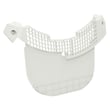
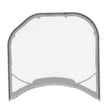
- Lint filter habits: Clean the filter before every load; it directly impacts dry time.
- Load size: Overloading strains the drum, belt, rollers, and motor.
- Heat and cycling: Frequent high-heat cycles accelerate wear on thermostats and sensors.
- Timely repairs: Replacing a worn belt or roller early prevents bigger damage.
| Usage pattern | Typical lifespan | What usually wears first |
|---|---|---|
| Light (few loads/week) | 12 to 15 years | Belt, rollers, door switch |
| Average (most households) | 10 to 15 years | Belt, idler pulley, sensors |
| Heavy (daily loads) | 7 to 10 years | Rollers, motor, control components |
- Clean the lint screen before every load.
- Check the vent for crushing, kinks, or long runs; keep the outside hood clear.
- Do not use too many fabric softener sheets; residue can reduce airflow.
- Level the dryer so the drum rides evenly on the support system.
- If you hear squealing or thumping, inspect wear parts early (belt, idler, rollers).
If the drum stops turning, slips, or squeals, these are common fixes:
- LG dryer drum belt 4400EL2001F
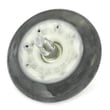
- Dryer drum support roller assembly 4581EL2002H
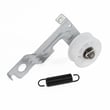
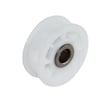
- LG dryer idler pulley 4561EL3002A
A dryer that is taking longer to dry is not just inconvenient; it usually indicates airflow restriction or a wearing drive component. Fixing those early reduces heat stress on thermostats, sensors, and the motor.
For model-specific care, cycle options, and maintenance steps, follow the DLG3401W owner's manual.
Last updated: February 2026
How to reset LG dryer model DLG3401W?
To reset your LG DLG3401W dryer, we recommend power-cycling it: turn the dryer off, cut power at the breaker (or unplug it) for about 1 minute, then restore power and press Power to start fresh. This clears many control glitches and canceled-cycle issues.
- Press Power to turn the dryer off.
- Unplug the dryer or switch the circuit breaker OFF.
- Wait 60 seconds.
- Restore power (plug in or switch breaker ON).
- Press Power, reselect your cycle, then press Start/Pause.
These checks solve the most common “won’t start” situations after a reset:
- Confirm the door is fully closed; a failed door switch can prevent starting.
- Make sure you selected a cycle and then pressed Start/Pause (the dryer will not run without it).
- If you paused the cycle, resume within 60 minutes or the dryer turns off and loses settings.
- Check the house breaker for a partial trip (especially after a power event).
- If the display shows an error code, use the code list to pinpoint the failed circuit.
| Action | What it fixes | What it will not fix |
|---|---|---|
| Power-cycle reset | Temporary control lockups, odd behavior after canceling a cycle | Broken parts, wiring issues, failed sensors, heating problems |
On the DLG3401W, pressing Power during a cycle cancels the cycle and clears settings; a simple power-cycle reset helps the control start clean so you can reselect the correct Sensor Dry or Manual Dry cycle.
Helpful references: DLG3401W owner's manual, LG dryer error codes.
Last updated: February 2026
What is the most common problem with LG dryers?
For LG dryers like model DLG3401W, the most common problem is poor drying performance (no heat or long dry times). In most homes, the root cause is restricted airflow from lint buildup in the filter or venting; less often, a failed thermostat or sensor causes heating to shut down.
- Dryer runs but clothes stay damp
- Cycles take much longer than normal
- Dryer shuts off early on sensor cycles
- Flow/vent indicator stays on after cleaning
- Heat is inconsistent from load to load
Start with airflow and load size because these cause the majority of “LG dryer not heating” and “takes too long to dry” complaints.
- Clean the lint filter before every load; hold it up to a light and wash residue off if it looks coated
- Check the outside vent hood for weak airflow or a stuck flap
- Inspect the duct for crushing, kinks, or heavy lint restriction
- Keep the vent run short with as few elbows as possible
- Avoid overloading; split bulky loads for better tumbling and drying
- If using Normal, turn off ENERGY SAVER if your model defaults it on
If airflow is good and dry times are still poor, we typically focus on temperature sensing and safety thermostats.
| Symptom | More likely cause | Example part for DLG3401W |
|---|---|---|
| Long dry time with good airflow | Temperature sensing issue | Dryer thermistor AGM30045804 |
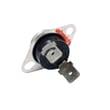
| Overheats then stops heating | Safety thermostat opening | Dryer high-limit thermostat 6931EL3003C |
| Weak airflow/noisy blower area | Blower wheel issue | Dryer blower wheel 5835EL1002A |
Restricted venting does more than slow drying; it can keep the dryer from heating properly and can require multiple cycles before the vent indicator resets. Keeping airflow strong also reduces strain on components like thermostats and the control board.
- Use the troubleshooting and venting guidance in the DLG3401W owner's manual.
- If an error code is showing, match it using LG dryer error codes.
Last updated: February 2026
Why is the LG dryer not drying?
For LG model DLG3401W, the most common reasons clothes do not dry are restricted airflow (lint screen or venting), cycle settings that start with little or no heat (Energy Saver), or load and sensor issues that end the cycle early. Start with airflow checks first.
- Clean the lint filter completely; remove any fabric softener sheet residue.
- Check the outside vent hood; confirm the damper opens freely and is not blocked.
- Inspect the vent duct for crushed sections, lint buildup, or an overly long run with too many elbows.
- If you use Auto/Sensor Dry, wipe the moisture sensor bars inside the drum with rubbing alcohol.
- Separate heavy items (towels, jeans) from lightweight items; mixed loads can confuse the sensor.
Energy and wrinkle features can make the dryer seem like it is not heating or not finishing correctly.
| What you notice | Likely cause | What to do |
|---|---|---|
| No heat at the beginning | Energy Saver adds an air-dry section first | Let the cycle progress, or choose a different cycle/option |
| Long dry times | Vent restriction or long duct run | Clear/shorten venting; clean ductwork |
| “d80” or Flow Sense bars | Dryer detected vent restriction | Clean venting; expect the indicator to reset after multiple good cycles |
If airflow is good and settings are correct but drying is still poor, a failed temperature-sensing or safety device can cause low heat or cycling issues.
- If you suspect temperature sensing problems, check the dryer thermistor AGM30045804.
- If the dryer overheats then shuts heat down, check the dryer high-limit thermostat 6931EL3003C.
- If you see an LG error code related to drying or heat, use our LG dryer error codes guide to match the code to the next step.
Restricted venting and lint buildup increase dry time and energy use, and they can trigger Flow Sense warnings. Correct airflow also helps the moisture sensor and temperature controls work accurately.
For model-specific cycle options, venting guidance, and troubleshooting tables, follow the DLG3401W owner's manual.
Last updated: February 2026