Owner’s manual
 View engine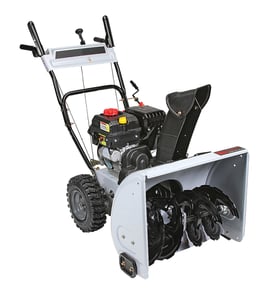



What is the typical lifespan of a gas snowblower?
A typical gas snowblower lasts about 10 to 15 years with normal residential use and routine maintenance. For the MTD 31AS6WEG799, the operator guidance also notes an average useful life of 7 years or 60 operating hours, which is a practical inspection milestone for wear and safety checks (see the 31AS6WEG799 operator's manual).
What “lifespan” means for a snowblower
Two different timeframes are useful:
- Service life (ownership life): how long the machine can keep working with maintenance and occasional repairs (often 10 to 15 years).
- Average useful life milestone: when wear becomes more likely and annual inspection becomes important (for this model, 7 years or 60 hours).
- Engine emissions durability period: an emissions certification timeframe (hours-based) that is not the same as overall machine life.
What makes a gas snowblower last longer
We see the longest life when owners stay ahead of fuel, oil, and wear items.
- Change engine oil on schedule and keep the oil level correct
- Use fresh fuel and stabilize fuel before storage
- Store it dry and clean; prevent rust and freeze-up
- Avoid forcing the machine into ice chunks, gravel, or newspapers
- Replace wear parts early (shear pins, cables, friction components)
Quick lifespan guide (typical)
| Usage pattern | Typical service life | What usually ends it |
|---|---|---|
| Light residential (short driveway) | 12 to 15 years | Fuel system neglect, rust, belts/cables |
| Average residential | 10 to 15 years | Friction drive wear, auger/drive issues |
| Heavy use (deep snow, long runs) | 7 to 12 years | Drive system wear, gearbox/auger wear |
Why it matters
Planning around lifespan helps you decide when to do preventive maintenance versus when to budget for bigger repairs. Hitting the 7-year or 60-hour mark is a smart time to check the drive system, auger engagement, and safety controls closely.
Last updated: January 2026
How to find snowblower model number?
On an MTD snow thrower, the model number is printed on the equipment ID label; for model 31AS6WEG799, it’s typically on the rear of the unit near the wheel area or on the frame behind the engine. Use that exact number when ordering parts or looking up diagrams.
Where to look on the machine
Check these common label locations first:
- Rear of the snowblower between or just above the wheels
- Frame rail behind the engine (near the recoil starter area)
- Under the handle panel area (near the control panel mounting points)
- Side of the auger housing (near the front bucket)
- Near the axle or wheel assembly brackets
What you should write down (and why)
The ID label can include several numbers. Recording the right ones prevents wrong-part orders.
| What you see on the label | What it’s used for | Example format |
|---|---|---|
| Model number | Main identifier for parts lookup | 31AS6WEG799 |
| Serial number | Production run tracking | Letters and numbers |
| Engine model/type/code | Engine-specific parts (carburetor, ignition, etc.) | Multiple fields |
Tips if the label is hard to read
If the label is dirty, faded, or scratched, these steps usually make it readable again:
- Wipe the label with a damp rag and mild soap; dry it fully
- Use a flashlight at a low angle to highlight stamped or embossed characters
- Take a close-up photo and zoom in (often clearer than the naked eye)
- Copy characters carefully; 0 (zero) and O (letter) are commonly confused
Why it matters
MTD snowblowers often share similar frames and controls across different model numbers, but parts like cables, friction wheel components, and auger hardware can vary by model. Using the exact model number helps match the correct diagrams and part listings.
For model-specific identification notes and operating details, use the 31AS6WEG799 operator's manual.
Last updated: January 2026
Is it cheaper to repair or replace a snowblower?
Repairing an MTD snow thrower like model 31AS6WEG799 is usually cheaper when the problem is a normal wear item (belt, cable adjustment, shear pin, friction disc) and the machine is otherwise solid. Replacing makes more sense when the repair total approaches about half the cost of a comparable new snowblower, especially if multiple major systems are worn.
Quick decision checklist
- Repair when the issue is isolated (one part or one adjustment) and the engine runs well.
- Repair when the auger and drive systems only need routine service (belt, cable, lubrication).
- Replace when the engine has persistent starting/running problems even after tune-up basics.
- Replace when the drive system repeatedly fails (friction wheel, gearbox, hex shaft wear) and costs stack up.
- Replace when the housing, auger, or frame has heavy rust damage or is bent from impacts.
Typical repair costs vs replacement value
Use this simple comparison to decide where your situation lands.
| Scenario | What it usually involves | Best choice |
|---|---|---|
| Minor wear item | Shear pin, cable adjustment, basic maintenance | Repair |
| Mid-level drive issue | Belt replacement, friction disc/wheel service | Repair if total stays low |
| Major drivetrain or multiple failures | Gearbox, worm gear, repeated breakdowns | Replace if total nears 50% of new |
Model-specific tips for 31AS6WEG799
The operator guidance for this platform emphasizes routine inspection and replacing worn components with OEM-equivalent parts for safe operation. Use the 31AS6WEG799 owner's manual to price out the exact parts involved and confirm the adjustment and service steps.
Common, cost-effective fixes on this model family include:
- Replacing a broken shear pin after the auger hits ice or debris (example: craftsman snowblower shear pin 738-04124A).
- Correcting drive problems by servicing the friction wheel area and replacing the drive belt when worn.
- Fixing poor engagement by adjusting or replacing a clutch cable (example: snowblower auger clutch cable 946-04230b).
Why it matters
A snowblower that only needs maintenance parts (oil service, spark plug checks, belt or cable work) is usually worth repairing because those repairs restore performance at a predictable cost. When major drivetrain parts and repeated labor add up, replacement often delivers better reliability per dollar.
Last updated: January 2026
What is the most common problem with snow blowers?
The most common problem with gas snowblowers like the MTD 31AS6WEG799 is a no-start or hard-start condition, usually caused by fuel and ignition issues (old fuel, carburetor varnish, or a worn spark plug). The next most common issues are chute clogs and auger or drive problems.
Most common issues (and what to check first)
- Won’t start / runs rough: drain old fuel, refill with fresh fuel, check choke and primer use, then inspect the spark plug.
- Electric start struggles: use short start cycles (about 5 seconds max, then wait a minute) and unplug the extension cord from the wall outlet first when disconnecting.
- Chute clogs / ice jams: shut the engine off, remove the key, and clear the chute using the clean-out tool (never hands).
- Auger won’t turn: check for broken shear pins after an ice jam or foreign object strike; replace with the correct shear pin.
- Doesn’t drive / weak traction: check drive control adjustment; if it still won’t drive, the friction wheel or drive belt may be worn.
Quick symptom-to-cause guide
| Symptom | Most likely cause | Typical fix |
|---|---|---|
| Engine won’t start | Stale fuel, dirty carburetor, spark plug issue | Fresh fuel, clean carburetor, replace spark plug |
| Auger stops turning | Shear pin(s) sheared | Replace shear pin(s) |
| Unit won’t move | Worn friction wheel or drive belt | Inspect and replace worn parts |
| Pulls to one side | Unequal tire pressure | Set both tires to 15 to 20 PSI |
Model-specific tips for the MTD 31AS6WEG799
- Keep both tires at 15 to 20 PSI; unequal pressure can make it track poorly and wear the shave plate unevenly.
- Adjust skid shoes for your surface; for gravel, keep maximum clearance between the ground and shave plate.
- If the auger won’t turn after a jam, replace the shear pins with the correct type; this model uses shear pins like craftsman snowblower shear pin 738-04124A.
- Follow the starting and adjustment procedures in the 31AS6WEG799 owner’s manual to confirm the auger control cable has very little slack when disengaged (not tight).
Why it matters
Most “big” snowblower failures start as simple maintenance problems. Fresh fuel, correct tire pressure, and replacing sacrificial parts like shear pins prevent gearbox damage, uneven wear, and mid-storm breakdowns.
Last updated: January 2026