

Why do landscapers take the guard off string trimmers?
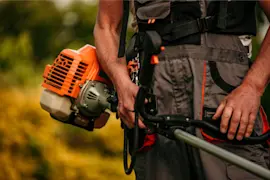
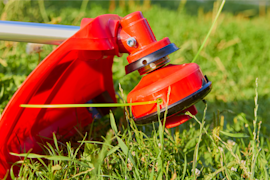
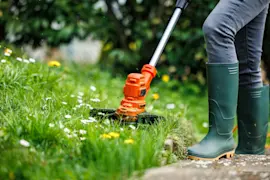
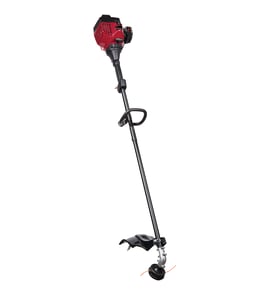
Landscapers sometimes remove the debris guard on a string trimmer to gain a wider cutting swath and improve access along fences, curbs, and tight edges. On a Craftsman 358796222 28-cc gas brushwacker, the guard is also a key safety and line-length control part, so we recommend keeping it installed.
What changes when the guard is removed
Removing the guard typically affects performance and safety in predictable ways:
- Wider cut path: you can sweep a larger area per pass.
- Less bumping and snagging: easier trimming around posts, chain link, and landscape rock.
- More debris throw: rocks, sticks, and wire can launch farther and faster.
- More line use: without the line limiter, line can run longer and wear faster.
- Higher risk of damage: line can wrap the shaft, hit the fuel tank area, or strike the operator.
Safety and wear tradeoffs (why pros still do it)
Pros often accept the tradeoff because they work faster and wear PPE, but the risks go up for anyone nearby.
| With guard installed | With guard removed |
|---|---|
| Better debris control | More debris and dust thrown |
| Line length is limited | Line can run long and burn off faster |
| Lower chance of injury | Higher chance of injury and property damage |
| More consistent edging | Easier access in tight spots |
Better options than removing the guard
If the goal is speed or cleaner cutting, these steps usually get you there without removing safety hardware:
- Use fresh, correct-diameter trimmer line and keep it at the proper length.
- Clean grass buildup from the head and guard area after each job.
- Replace worn fuel and air parts so the engine holds RPM under load (a bogging engine cuts poorly).
- Check for fuel delivery issues if it surges or dies; a cracked line or clogged filter is common.
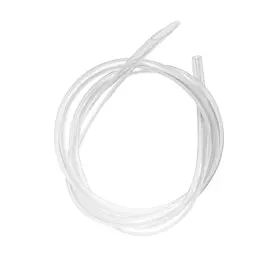
Helpful parts for tune-up on model 358796222 include the fuel line 530069247 and air filter 530024371.
Why it matters
The guard is designed to reduce thrown-object injuries and to keep line length under control. Removing it can make the trimmer feel more powerful, but it also increases line consumption, debris throw, and the chance of damaging the trimmer or injuring someone.
Last updated: January 2026
Can I use .095 trimmer line in a .080 trimmer?
Yes, you can usually run .095-inch trimmer line in a trimmer that’s rated for .080-inch, as long as the cutting head and engine can handle the extra load. On the Craftsman 358796222 28-cc gas brushwacker, thicker line can reduce RPM and increase fuel use, so it’s best for heavier weeds, not everyday trimming.
What changes when you step up to .095 line
- More cutting power in thick grass and light brush
- More drag on the engine, which can bog down at full throttle
- More vibration and faster wear on the head if it’s not designed for thicker line
- Shorter run time per tank because the engine works harder
Quick fit check before you spool .095
Use these checks to avoid constant line jams or poor performance:
- Confirm the trimmer head eyelets (line holes) are large enough for .095
- Make sure the head is designed for dual-line at that diameter
- If the line binds while feeding, drop back to .080
- If the engine struggles at wide-open throttle, drop back to .080
- If you notice lean running (surging), stop and inspect the fuel and air system
Recommended line size by job (practical guide)
| Job type | Best line size | Why |
|---|---|---|
| Light edging, normal grass | .080 | Best speed and fuel efficiency |
| Mixed grass and weeds | .080 or .095 | Balance of cut and load |
| Heavy weeds, thicker stems | .095 | More durability and bite |
If performance drops after switching line
Thicker line can expose existing fuel or airflow issues. These parts are common tune-up items on gas trimmers:
- Clean or replace the air filter 530024371
- Replace a cracked or soft fuel line 530069247
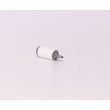
- Replace a restricted in-tank filter 530095646
Why it matters
Line diameter directly affects engine load. Using the thickest line that still feeds smoothly helps your Craftsman 358796222 cut well without bogging down, overheating, or wasting fuel.
Last updated: January 2026
Which is better, .080 or .095 trimmer line?
For the Craftsman 358796222 28-cc gas brushwacker, .095-inch trimmer line is the better choice because it matches the heavier-duty cutting this engine class is built for and holds up longer in weeds and thick grass. Use .080 only if your specific cutting head is rated for it.
Quick comparison
| Line diameter | Best for | What you will notice |
|---|---|---|
| .080 in | Light grass, detail edging | Less cutting durability in weeds |
| .095 in | Taller grass, weeds, fence lines | More cutting strength and longer life |
What we recommend for model 358796222
- Choose .095 in for routine trimming and weed cutting.
- Stick with the diameter stamped on your trimmer head or listed on the spool label.
- If your head is designed for .095, running .080 can cause poor feed and faster breakage.
- If your head is designed for .080, forcing .095 can jam the head and overload the drive system.
If cutting feels weak or the engine bogs down
A trimmer that is under-fueled or air-starved can struggle even with the correct line size. On the Craftsman 358796222, common tune-up items include:
- Air filter 530024371 (dirty filter reduces power)
- Fuel line 530069247 (cracks or leaks cause lean running)
- Fresh, correctly mixed 2-cycle fuel (old fuel causes surging and stalling)
Why it matters
Line diameter changes cutting load, feed reliability, and how cleanly the trimmer cuts. Using the correct size for your Craftsman 358796222 prevents constant line breakage, reduces head jams, and helps the engine stay in its power band.
Last updated: January 2026