 Owner’s manual



What is the average lifespan of an LG dryer?
Most LG dryers, including the LG DLE7150W, typically last 10 to 15 years with normal household use. Regular vent cleaning, lint filter care, and fixing wear items early (belt, rollers, thermostats) helps you stay closer to the high end of that range.
What affects dryer lifespan the most
A dryer’s life is usually determined by heat management and drum support wear. These are the biggest factors we see:
- Airflow and venting: restricted vents overheat parts and shorten life
- Lint control: a clogged lint screen or housing strains the blower and heater
- Load size: chronic overloading wears the drum belt, idler pulley, and rollers
- Cycle selection: sensor cycles reduce over-drying and heat stress
- Timely repairs: replacing a worn belt or roller early prevents bigger damage
Maintenance checklist (best payoff)
Use this quick routine to extend the life of an LG dryer like model DLE7150W:
- Clean the lint screen before every load
- Check outside vent hood for strong airflow while running
- Clean the full vent duct regularly (more often with pets or heavy use)
- Keep the dryer level so the drum rides evenly on the supports
- Stop using the dryer if you hear squealing, thumping, or grinding; inspect drum support parts
Common wear parts and what the symptoms mean
| Symptom | Most likely area | Example part for this model |
|---|---|---|
| Drum not turning, motor runs | Belt or idler | LG dryer drum belt 4400EL2001F |
| Thumping or rumbling | Drum support | Dryer drum support roller assembly 4581EL2002H |
| Overheating or shutting off | Thermostats/temperature sensing | Dryer high-limit thermostat 6931EL3003D |
Why it matters
A dryer that runs hot or takes too long to dry can fail years earlier because heat stress damages thermostats, wiring, and the heater assembly. Good airflow and early replacement of drum support parts are the simplest ways to protect the dryer’s core components.
For model-specific operating and care guidance (including sensor dry cycle behavior and venting requirements), follow the DLE7150W owner’s manual.
Last updated: February 2026
How to find model of LG dryer?
You can find the model number for your LG dryer on the rating label, most often on the door opening (inside the door on the cabinet frame) or on the back of the dryer near the top. For this parts page, the model is DLE7150W; confirm the label matches before ordering parts.
Where to look on an LG dryer
Check these common label locations first:
- Inside the dryer door opening on the cabinet frame
- On the back of the dryer near the top edge
- Near the terminal block access panel (electric models)
- Near the gas connection area (gas models)
- In the manual section that shows the product overview and component locations
If you are comparing multiple labels, use the model number (and the serial number if present) from the same rating label.
Quick checklist before you order parts
- Match the model number exactly (letters and numbers must be identical)
- Confirm the slash or suffix if shown on the label (for example, “/00”)
- Use the model number to look up diagrams and compatible parts
- If your dryer is stacked or in a tight space, take a photo of the label for reference
Model number vs. serial number
| Label item | What it tells us | When you need it |
|---|---|---|
| Model number | Which design and parts list your dryer uses | Always, before buying parts |
| Serial number | Production run details | Helpful for service and some part lookups |
Why it matters
LG often uses similar-looking cabinets across different dryers, but internal parts (like the heater assembly, thermostats, belt, or control board) can vary by model. Using the exact model number helps ensure the correct fit and safe operation.
For diagrams, specifications, and label-location guidance for this model, use the DLE7150W owner's manual.
Last updated: February 2026
What is the most common problem with LG dryers?
The most common problem we see with LG dryers like model DLE7150W is poor drying performance: no heat or long dry times caused by restricted venting (a clogged lint filter or exhaust duct) or an airflow warning that stays on until several good cycles run. See the DLE7150W owner's manual for the model’s Flow Sense guidance and troubleshooting.
Most common symptoms and what they usually mean
- Long dry times: lint screen clogged, exhaust duct/hood clogged, or duct run too long with too many elbows
- Runs but no heat: tripped breaker or blown fuse (electric dryers can tumble without heat), thermostat/heater circuit issue
- Won’t start: power cord not fully seated, breaker tripped, fuse blown
- Thumping/squealing or not tumbling: belt or drum support parts worn
- Stops too soon on sensor cycles: very small load, moisture sensor not reading well
Quick checks we recommend first (fastest wins)
- Clean the lint screen before every load; pause and re-clean during the cycle for heavy-lint items.
- Check the outside vent hood for strong airflow; clear lint buildup in the duct.
- Keep venting short and straight (fewer elbows improves drying and reduces overheating).
- For electric models, reset both sides of the dryer breaker; a partial trip can leave the motor running with no heat.
- If the Flow Sense indicator stays on after you clear restrictions, run multiple consecutive cycles; the dryer needs several cycles to confirm improved airflow.
Common causes: airflow vs. parts (at a glance)
| What you notice | Most likely cause | What to do next |
|---|---|---|
| Clothes take too long | Vent restriction | Clean lint screen, duct, and hood; shorten duct if possible |
| Tumbles but no heat | Electrical supply or heat circuit | Reset breaker, then test thermostats/heater circuit |
| Loud rumble/squeal | Drum support wear | Inspect rollers and idler pulley |
| Drum won’t turn | Broken belt | Inspect and replace belt if damaged |
When a part is the likely fix
If airflow is clear and drying is still poor, we typically inspect heat-safety components and drum drive parts. For tumbling problems on this model, the LG dryer drum belt 4400EL2001F is a common wear item.
Why it matters
Restricted venting is the top driver of long dry times and overheating symptoms; it also triggers airflow monitoring behavior (Flow Sense) and can make a good dryer seem “weak” even when the heater and motor are fine.
Last updated: February 2026
What parts might cause an LG dryer to not heat?
On the LG DLE7150W, a “runs but no heat” problem is most often caused by a power supply issue (one leg of 240V missing), restricted airflow (lint filter or vent duct), or a failed heating circuit component such as a thermostat or temperature sensor. Use the DLE7150W owner's manual troubleshooting steps to narrow it down.
Most common causes to check first
- House breaker or fuse issue: An electric dryer can tumble with no heat if a circuit problem leaves it with only 120V.
- Lint filter clogged: Clean it before every load; heavy-lint loads may need mid-cycle cleaning.
- Exhaust duct or hood clogged: A blocked vent can trigger overheating protection and stop heat.
- Energy Saver option (on some cycles): Can add an air-dry period that feels like “no heat.”
- Gas shutoff closed (gas models only): The dryer can run but not heat.
Parts on this model that can be involved
If airflow and power are good, these DLE7150W parts are commonly involved in heating complaints:
- Dryer thermistor AGM30045804 (temperature sensing)
- Dryer high-limit thermostat 6931EL3003D (overheat protection)
- Dryer blower thermostat 6931EL3002M (temperature control at the blower housing)
Quick symptom-to-part guide
| Symptom | Most likely area | What to do next |
|---|---|---|
| Dryer tumbles, no heat | Power supply, heater circuit | Reset breaker fully OFF then ON; then test thermostats/sensor |
| Long dry times, weak airflow | Venting, lint filter | Clean lint screen and inspect/clean duct and outside hood |
| Heat cuts out mid-cycle | Overheating protection | Check vent restriction; then check high-limit thermostat |
Why it matters
A restricted vent or clogged lint screen can make the dryer overheat, shut down heat for safety, and dramatically increase dry times. Fixing airflow first prevents repeat thermostat failures and helps the dryer dry efficiently.
Last updated: February 2026
How to factory reset LG sensor dryer?
To reset your LG DLE7150W dryer, turn it off, cut power at the breaker (or unplug it) for about 1 minute, then restore power and press POWER to start fresh. This clears many control glitches and restores normal Sensor Dry operation.
Reset steps (safe, reliable)
- Press POWER to turn the dryer off.
- Unplug the dryer or switch the circuit breaker off.
- Wait 60 seconds.
- Restore power.
- Press POWER, select a cycle, then press START/PAUSE.
What a reset does (and does not do)
A power reset clears temporary control logic issues, but it does not change cycle design or “recalibrate” the moisture sensors.
| Action | What it affects | When to use it |
|---|---|---|
| Power reset (unplug/breaker) | Control board memory and glitches | Display oddities, cycle won’t start, random stopping |
| Cancel cycle (POWER during cycle) | Ends the current cycle and clears that cycle’s settings | Wrong cycle selected, want to restart the load |
| Start/Pause | Pauses or resumes without losing settings | Door opened, need to add/remove items |
If Sensor Dry still shuts off too soon
Sensor cycles can end early when the load is too small or tumbling is poor.
- Add a few similar items to improve tumbling.
- For very small loads, use a Time Dry (manual dry) cycle instead.
- Clean the lint filter and confirm it clicks fully into place.
- Check airflow: a crushed or lint-clogged vent can cause inconsistent drying.
Why it matters
On the DLE7150W, Sensor Dry uses moisture sensing to adjust time automatically. A quick reset plus good airflow and proper load size helps the sensors read accurately and prevents short cycling.
For cycle and control-panel details specific to your dryer, use the DLE7150W manual.
Last updated: February 2026
What are the main parts of a dryer?
On the LG DLE7150W dryer, the main parts include the drum and drive system that tumbles clothes, the heating and airflow system that moves warm air through the load, and safety and control components that regulate temperature and operation. For diagrams and part locations, use the DLE7150W owner's manual.
Main dryer systems (and what they do)
- Airflow system: blower wheel and blower housing pull air through the drum and push it out the exhaust duct.
- Heating system: heater assembly (electric models) or burner system (gas models) warms the airflow.
- Temperature sensing and safety: thermistor, high-limit thermostat(s), and thermal safety devices prevent overheating.
- Drum drive system: drum belt, idler pulley, drum support rollers, and motor rotate the drum.
- User interface and controls: control panel and electronic control board manage cycles and options.
- Door and safety interlocks: door switch confirms the door is closed so the dryer can run.
Common parts you may replace on DLE7150W
These are frequent wear items that affect noise, tumbling, and drying performance:
- LG dryer drum belt 4400EL2001F (broken belt, no tumbling)
- Dryer drum support roller assembly 4581EL2002H (thumping, rumbling)
- Dryer idler pulley 4561EL3002A (squealing, belt tension issues)
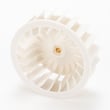
- Dryer blower wheel 5835EL1002A (poor airflow, rattling)
- Dryer lint screen by LG 5231EL1001C (restricted airflow from a damaged or clogged screen)
Quick “symptom to part” guide
| Symptom | Most likely system | Example parts to check |
|---|---|---|
| Dryer runs but clothes take too long to dry | Airflow | Lint screen, blower wheel, venting |
| Dryer won’t tumble but you hear motor | Drum drive | Drum belt, idler pulley |
| Loud thump/rumble | Drum support | Support rollers, drum seals |
| Overheating or shutting off | Temperature safety | Thermistor, high-limit thermostat |
Why it matters
Knowing the main dryer parts helps you troubleshoot faster and replace the right LG dryer parts the first time. It also supports safer operation; the manual emphasizes regular lint filter cleaning and periodic exhaust duct cleaning to reduce overheating risk.
Last updated: February 2026





