 Installation guide
 Owner’s manual




How to check GE dishwasher model number?
On the GE dishwasher model ZDT975SSJ2SS, we find the model number on the rating label located on the tub wall just inside the door (typically along the left side). The same label also lists the serial number for service and parts matching.
Where to look (fast checklist)
- Open the dishwasher door fully.
- Look on the tub wall just inside the door opening.
- Check the left-hand side first (most common placement).
- Find the rating label with both Model and Serial fields.
- Write the numbers down exactly as shown (letters and numbers).
What to record and why
| Item on label | What it’s used for | When you’ll need it |
|---|---|---|
| Model number (ZDT975SSJ2SS) | Confirms the exact dishwasher version | Ordering parts, checking compatibility |
| Serial number | Identifies production details | Service calls, warranty style support |
Why it matters
GE often uses similar-looking dishwashers with different internal parts. Using the exact model number from the rating label helps us match the correct door parts, pumps, and seals for your ZDT975SSJ2SS.
Helpful next step
If you’re ordering parts after you find the model number, use the diagrams and part lists in the ZDT975SSJ2SS owner’s manual to confirm the correct location and naming of components.
Last updated: February 2026
What is the most common problem with GE dishwashers?
For the GE ZDT975SSJ2SS dishwasher, the most common service issues we see are draining problems (water left in the tub), door-related start failures (the door not latching or sensing closed), and leaks around the door area. Many of these are resolved with basic cleaning, correct loading, and a quick reset described in the ZDT975SSJ2SS owner’s manual.
Most common symptoms and what they usually mean
- Not draining or standing water: food debris in the filter area, a restriction in the drain path, or a drain component issue.
- Won’t start or stops right away: door not fully latched, latch switch not engaging, or a control issue.
- Leaks at the front: door seal alignment, tub gasket wear, or door not closing squarely.
- Poor cleaning: spray jets blocked by loading, detergent not dispensing, or circulation issues.
- Detergent left in the cup: dishes blocking the dispenser or spray pattern.
Quick checks you can do first (no parts required)
- Confirm the door closes firmly and the unit is level.
- Avoid loading large items that block wash jets or the detergent dispenser (a common cause of detergent left in the cup).
- Use only automatic dishwasher detergent (hand soap causes suds and poor wash performance).
- If the tub is full of suds, follow the manual’s reset guidance (press and hold START for about 3 seconds on many GE models).
- Check for error codes and match them to the symptom using GE electronic dishwasher error codes.
When a part is the likely fix
| Symptom | Common culprit | Example part for this model |
|---|---|---|
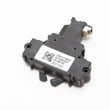
| Won’t start, door feels “loose” | Door latch not locking/sensing | GE dishwasher door latch lock WD21X10490 |
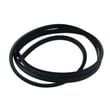
| Leaking at the door perimeter | Door/tub sealing surface issue | Dishwasher tub gasket WD08X23477 |
| Not draining well | Drain restriction or drain component | Dishwasher drain hose WD24X10062 |
Why it matters
Drain, latch, and leak problems can trigger longer cycle times, poor drying, and repeat error codes. Fixing the root cause also helps protect the control and wiring from moisture and prevents recurring wash performance complaints.
Last updated: February 2026
Can I replace dishwasher parts myself?
Yes, for the GE ZDT975SSJ2SS dishwasher you can replace many common parts yourself if you’re comfortable with basic mechanical work and you shut off power and water first. For electrical diagnostics, leak-detection issues, or anything involving wiring, we recommend using the steps in the ZDT975SSJ2SS owner’s manual and moving to a qualified technician when needed.
What you can usually replace yourself
These repairs are typically straightforward DIY jobs on a built-in dishwasher:
- Door hardware such as the latch and strike
- Door sealing parts that cause drips around the tub opening
- Drain hose routing and clamps (when access is clear)
- Rack-related items (rails, carriers) that affect sliding
- Non-electrical airflow pieces such as vent duct components
Common DIY example: If the door won’t latch or the dishwasher won’t start because the door isn’t registering closed, replacing the GE dishwasher door latch lock WD21X10490 is often a practical DIY repair.
Safety steps we follow before any repair
The manual emphasizes disconnecting power before maintenance and using proper grounding practices. Use this checklist every time:
- Turn off the breaker (do not rely only on the control panel being off)
- Shut off the dishwasher water supply valve
- Protect the floor with towels; keep a shallow pan handy
- Take photos of wire and hose routing before removal
- Restore power only after panels are reinstalled and the area is dry
DIY vs. technician: quick decision guide
| Repair type | Typical DIY difficulty | Why it’s different |
|---|---|---|
| Door latch, springs, seals | Low to medium | Mostly mechanical access at the door |
| Hoses and clamps | Medium | Tight spaces; leak risk if not seated correctly |
| Control board or wiring | High | Shock risk; requires correct diagnosis |
| “LEAK DETECTED” condition | High | Unit may stop and drain; service is typically required |
Why it matters
A correct repair prevents leaks, protects the electronic controls, and keeps the dishwasher safe to operate. The installation guidance also notes that improper work can lead to product failure, so using the ZDT975SSJ2SS installation guide helps you avoid common mistakes.
Last updated: February 2026
What are the parts of a dishwasher called?
Dishwasher parts are typically named by what they do: washing (spray arms and pump), heating and drying (heater and venting), filling and draining (inlet and drain), and safety and control (latch and control board). For GE model ZDT975SSJ2SS, confirm locations and names in the ZDT975SSJ2SS owner's manual.
Common dishwasher part names (and what they do)
- Spray arms and spray arm hub: spin and distribute wash water
- Circulation pump: pushes water through the spray system
- Filters (fine and ultra-fine): trap food soil to protect the pump
- Detergent dispenser: releases detergent at the right time
- Heating system: heats water and supports drying (some models use a hidden heater)
- Drain system: moves dirty water out through the drain hose
- Door system: latch, springs, and seals that keep the door closed and watertight
- Controls: user interface and electronic control that run cycles
Parts you will commonly see on ZDT975SSJ2SS
| Area | What it’s often called | Example part for this model |
|---|---|---|
| Door safety | Door latch/lock | GE dishwasher door latch lock WD21X10490 |
| Leak prevention | Tub gasket (door seal) | Dishwasher tub gasket WD08X23477 |
| Draining | Drain hose | Dishwasher drain hose WD24X10062 |
| Door balance | Door spring | Dishwasher door spring WD03X20316 |
| Washing | Circulation pump | Dishwasher circulation pump WD26X25103 |
Quick tips for identifying the right part name
- Match the symptom to the system: not draining (drain), not cleaning (wash), leaking (seal), not starting (door latch or controls).
- Use the location: door, tub bottom, under the unit, or inside the rack area.
- Look for moving parts (spray arms, pump) versus sealing parts (gasket, clamps).
- If you see a code or flashing lights, use GE electronic dishwasher error codes to translate it.
- For installation-related items (drain hose routing, clamps, brackets), follow the installation guide.
Why it matters
Dishwasher part names are functional; once you know whether the issue is fill, wash, heat, drain, or door safety, you can narrow to the correct GE part category and avoid ordering the wrong component.
Last updated: February 2026





