Owner’s manual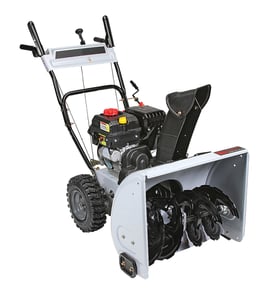




What is the typical lifespan of a gas snowblower?
A gas snowblower typically lasts 10 to 20 years. For your Murray 624604X35 snow thrower, lifespan lands on the high end when you keep up with routine maintenance like oil changes, lubrication, belt adjustments, and proper off-season storage (as outlined in the owner's manual).
What most affects lifespan
A snowblower’s service life is mainly about wear, corrosion, and how consistently it’s maintained.
- Hours of use per winter (heavy, wet snow shortens life faster)
- Maintenance frequency (oil, lubrication points, belt checks)
- Fuel practices (stale fuel and storage with fuel in the tank cause problems)
- Storage conditions (dry, clean storage reduces rust and cable seizure)
- Operator habits (overloading the machine and impacts increase drivetrain wear)
Maintenance schedule that extends life (practical baseline)
Your manual emphasizes regular lubrication and seasonal prep. Use this as a simple, repeatable plan:
| Task | When to do it | Why it matters |
|---|---|---|
| Change engine oil | At least once per season (more with heavy use) | Reduces engine wear |
| Lubricate pivot points and fittings | About every 10 hours of use | Prevents binding and premature wear |
| Check and adjust auger drive belt | Early season, mid-season, and again later in season | Prevents slipping, overheating, and belt damage |
| End-of-season storage prep | At season end | Prevents fuel and corrosion issues |
If you’re replacing a worn belt, follow a step-by-step guide like how to replace a snowblower belt video to avoid misrouting and tension problems.
Common “end of life” symptoms (repair vs. replace clues)
These issues often show up as a snowblower ages; many are repairable, but repeated failures shorten practical lifespan.
- Frequent belt slipping or burning smell under load
- Excessive vibration or rattling that returns after tightening hardware
- Auger or drive engagement feels weak even after adjustment
- Persistent oil leaks around seals
- Rusted, seized controls (chute, drive, auger levers)
Why it matters
A well-maintained gas snowblower can run for decades, but neglected lubrication, old fuel, and skipped belt adjustments quickly turn into expensive drivetrain and engine wear. Following the manual’s maintenance and storage steps keeps your Murray 624604X35 reliable when you need it most.
Last updated: February 2026
What is the best rated gas snow blower?
The “best rated” gas snowblower is the one that matches your snowfall depth, driveway size, and comfort features; for most homeowners, a two-stage gas snowblower is the top choice for power and throw distance, while a single-stage is best for lighter snow and smaller areas. For safe operation and setup details on your Murray 624604X35, use the owner's manual.
How to choose the best gas snowblower for your needs
We recommend picking based on performance requirements first, then convenience features.
- Snow depth and type: wet, heavy snow needs more traction and intake capacity
- Driveway size: larger areas benefit from wider clearing width and multiple forward speeds
- Stage type: single-stage for lighter snow; two-stage for deeper snow and plow piles
- Starting method: recoil start vs. electric start (helpful in cold weather)
- Chute control: quick chute rotation and deflector control improves accuracy
- Maintenance access: easy belt, shear bolt, and lubrication access saves time
Quick comparison: single-stage vs. two-stage
| Feature | Single-stage gas | Two-stage gas |
|---|---|---|
| Best for | Light to moderate snow | Moderate to heavy snow, plow berms |
| Clearing width (typical) | 18 to 22 in. | 24 to 30 in. |
| Throw distance (typical) | Shorter | Longer |
| Surface | Best on paved, smoother surfaces | Better traction on mixed surfaces |
Why “best rated” can change from one homeowner to another
Ratings often reflect a mix of power, ease of use, and reliability. If you regularly see deep snow or end-of-driveway piles, a two-stage design usually earns higher satisfaction because it feeds snow with an auger and throws it with an impeller.
Safety and ownership tips that matter on any gas snowblower
Your Murray 624604X35 manual emphasizes key safety habits that also apply when comparing models.
- Stop the engine before unclogging the auger or discharge chute
- Disconnect the spark plug wire before repairs or adjustments
- Never run the engine indoors; exhaust contains carbon monoxide
- Run the machine a few minutes after throwing snow to help prevent freeze-up
- Use fast throttle when throwing snow; let the engine warm up in very cold temps
Last updated: February 2026
Is a 2 stage or 3 stage snowblower better?
A 2-stage snowblower is the better choice for most homeowners because it handles typical driveway snow efficiently with fewer moving parts. A 3-stage is better when you regularly face deep, wet, or hard-packed snow and want faster intake and throwing performance; check your owner's manual for your Murray 624604X35 operating tips and setup.
2-stage vs 3-stage: what’s the real difference?
Both are designed for heavier snow than a single-stage machine, but they move snow differently.
- 2-stage: an auger pulls snow in, then an impeller throws it out the chute.
- 3-stage: adds a front “accelerator” that helps chew and feed snow faster into the auger/impeller system.
- Bottom line: 3-stage typically clears faster in extreme conditions, but it is usually heavier, more complex, and more expensive to maintain.
Which one fits your driveway and snow type?
Use this quick guide to decide.
| Condition | 2-stage | 3-stage |
|---|---|---|
| Typical residential driveway snowfalls | Best fit | Often more than you need |
| Deep, wet snow and end-of-driveway plow berms | Good (slower passes) | Best (faster intake) |
| Hard-packed or icy snow | Good with technique | Better throughput |
| Maintenance and parts complexity | Lower | Higher |
Getting the best performance from your Murray 624604X35
Even with a 2-stage machine, technique and adjustment matter as much as “stages.”
- Run the engine at full throttle and control clearing by changing ground speed, not engine speed.
- In deep or wet snow, slow down; if wheels slip, slow down again.
- Discharge downwind when possible.
- Set skid height correctly; on paved surfaces, the scraper bar is typically set about 1/8 inch above the surface.
- After throwing snow, run the machine a few minutes to help prevent auger/impeller freeze-up.
Why it matters
Choosing the right stage affects clearing time, traction demands, and long-term upkeep. For many properties, a well-adjusted 2-stage snow thrower delivers the best balance of performance and simplicity.
Last updated: February 2026
Should I spray my snowblower with WD-40?
Yes, you can spray a light coat on your Murray 624604X35 snow thrower to help prevent rust and reduce snow sticking in the chute area, but keep it off belts, friction-drive parts, and hot engine surfaces. For storage, the manual specifically recommends a spray rust-preventative on bare metal. See the owner's manual.
Where it’s OK to spray (and where it’s not)
Use spray only on clean, cool, dry surfaces.
Good places (light coat):
- Chute interior and chute flap area (helps reduce sticking)
- Auger housing interior (after cleaning and drying)
- Bare metal on the blower housing, auger, and impeller for off-season rust protection
- External metal fasteners and linkages (wipe excess)
Avoid spraying:
- Belts and pulleys (slip and loss of drive)
- Friction disc and drive plate area (poor traction and no forward/reverse)
- Engine muffler, cylinder, or any hot surfaces (fire risk)
- Rubber tires and hand grips (messy, can degrade rubber over time)
Best practice for off-season storage (model-recommended)
Your 624604X35 storage routine should include cleaning, lubrication, and rust protection.
- Drain fuel and run the engine until it’s out of gas
- Change oil and protect the cylinder with a small amount of oil
- Clean the machine thoroughly and lubricate points listed in the manual
- Spray bare metal with a rust-preventative lubricant, then cover with a breathable cover
Quick comparison: WD-40 vs silicone spray
| Spray type | Best use on a snowblower | What to watch for |
|---|---|---|
| WD-40 style water-displacing spray | Short-term moisture displacement and light rust protection | Can attract grime; keep off friction-drive parts |
| Silicone spray | Chute non-stick performance | Still avoid belts and friction disc |
| Dedicated rust preventative | Off-season bare-metal protection | Apply after cleaning; wipe overspray |
Why it matters
Overspray on the drive system is one of the fastest ways to create “engine runs but won’t move” or weak auger engagement. Keeping sprays limited to the chute and bare metal helps performance while protecting against corrosion.
Last updated: February 2026