Owner’s manual
 View engine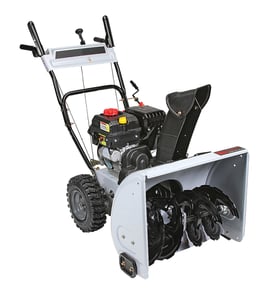

How do I tell how old my snowblower is?
For Craftsman snow thrower model 536886331, the most reliable way to estimate age is to use the serial number from the decal on the rear of the snow thrower housing, then match that serial information to the date-coding guidance in the 536886331 owner's manual.
Where to find the model and serial number
The identification decal is typically on the rear of the snow thrower housing. Record both the model number and serial number for future reference.
- Look for a decal that lists MODEL NUMBER and SERIAL NUMBER
- Clean off packed snow, salt, and grime so the characters are readable
- Write the serial number down exactly as shown (letters and numbers)
- Also record your date of purchase if you know it
How to decode the build year (quick method)
Many outdoor power equipment serial numbers include a year indicator within the serial string. A common format uses a single character that represents the last digit of the manufacture year.
- Find the character position used for the year in your serial format
- Convert that character to the last digit of the year (example: a “4” means a year ending in 4)
- Use your purchase date and the machine’s features to decide the most likely decade
Example (how the “last digit” works)
| Serial number year digit | Possible manufacture years |
|---|---|
| 4 | 1994, 2004, 2014 |
| 9 | 1999, 2009, 2019 |
| 0 | 1990, 2000, 2010 |
Why it matters
Knowing the approximate age helps us choose the right replacement parts (belts, carburetor parts, skid shoes) and plan maintenance. For example, worn drive components often point to replacing a belt such as the snowblower drive belt 1733324SM when traction performance drops.
Last updated: January 2026
How to find snowblower model number?
On the Craftsman snow thrower model 536886331, the model and serial numbers are printed on a decal attached to the rear of the snow thrower housing. We recommend writing both down for parts lookup and future service; see the 536886331 owner's manual.
Where to look on the machine
Check these common label locations first (starting with the most likely for this model):
- Rear of the snow thrower housing (model and serial decal)
- Engine mount frame (snow thrower model number reference point)
- Blower housing on the engine (engine model number)
- Near the handle frame or between the wheels (common on many snowblowers)
What numbers to record (and why)
For Craftsman model 536886331, there are typically two different model numbers involved. Recording both prevents ordering the wrong belt, carburetor part, or ignition component.
| What to record | What it identifies | When you need it |
|---|---|---|
| Snow thrower model number | The snowblower assembly | Ordering chassis, auger, drive, and control parts |
| Serial number | Your exact production unit | Warranty, service history, correct revisions |
| Engine model number | The engine itself | Ordering engine parts like carburetor items and ignition parts |
Tips for reading a worn or dirty decal
If the decal is hard to read, these steps usually make it legible without damaging it:
- Brush off loose snow, salt, and debris first
- Wipe with a damp rag and mild soap; dry completely
- Use a flashlight at a low angle to highlight embossed or faded print
- Take a close-up photo and zoom in to read the characters
Why it matters
Snowblowers often use one model number for the snow thrower and a different model number for the engine. Using the correct number helps match the right parts the first time, especially for drive and auger components.
Last updated: January 2026
How many years should a snowblower last?
A gas snowblower like the Craftsman 536886331 typically lasts 15 to 20 years with normal residential use and consistent maintenance. Units that get regular oil changes, lubrication, and proper off-season storage often run 20+ years, while neglected machines commonly fail much sooner.
Typical lifespan by use and care
- Light use (a few storms per season): 15 to 25 years
- Moderate use (weekly during winter): 12 to 20 years
- Heavy use (long driveways, wet snow, frequent drifting): 10 to 15 years
- Commercial or rental use: 5 to 10 years
What shortens snowblower life fastest
| Issue | What you may notice | What to do |
|---|---|---|
| Old fuel or varnish in carburetor | Hard starting, surging, stalling | Drain fuel for storage; service carburetor parts as needed |
| Worn belts | Poor drive or weak auger engagement | Inspect and replace belts when glazed, cracked, or stretched |
| Lack of lubrication | Stiff controls, poor drive, squeaks | Lubricate per schedule (hex shaft, auger shaft, pivots) |
| Rust and corrosion | Flaking paint, seized fasteners | Clean after use; touch up paint; store dry |
Maintenance that makes the biggest difference
We recommend following the maintenance and storage schedule in the 536886331 owner’s manual. Focus on these high-impact items:
- Change engine oil on schedule (this model uses 5W-30, 26 oz capacity).
- Keep fresh unleaded fuel; stabilize or drain fuel for off-season storage.
- Check and service the spark plug (Champion RJ19LM, .030 gap).
- Inspect belts each season; replace if slipping or frayed.
- Lubricate drive and auger components before and after the season.
Parts that commonly wear out
These are normal wear items on many snow throwers and are worth checking when performance drops:
- Snowblower drive belt 1733324SM (ground drive)
- Snowblower gas belt 585416MA (auger drive)
Why it matters
A snowblower’s engine and gearbox can last decades, but small maintenance items (fuel care, belts, lubrication, and storage) determine whether your Craftsman 536886331 stays reliable every winter or becomes hard to start and weak under load.
Last updated: January 2026
What is the most common problem with snow blowers?
The most common problem we see on gas snow blowers like Craftsman model 536886331 is hard starting or stalling, usually tied to fuel issues (old fuel, water or dirt in the fuel system) or ignition problems (a worn spark plug). Clogs and drive or auger issues are also frequent.
Most common issues (and what they look like)
- Difficult starting: engine cranks but will not fire, or only starts with choke
- Engine stalls or runs erratically: runs briefly, surges, or dies under load
- Unit fails to discharge snow: chute plugs, or auger stops moving snow
- Unit fails to propel itself: drive system slips or will not move in gear
- Excessive vibration: often after striking a foreign object
Quick checks we recommend first
Use these steps before replacing parts; they solve a large share of “won’t start” and “won’t throw” complaints.
- Drain old fuel and refill with fresh, correct fuel mix (if applicable)
- If the engine is running on choke, reduce choke as it warms; running on choke too long points to a fuel delivery issue
- Inspect and replace the spark plug if it is fouled or worn
- Check for chute blockage; never clear with hands
- Inspect belts for glazing, cracking, or looseness
Common causes and likely fixes
| Symptom | Most common cause | Typical fix |
|---|---|---|
| Hard starting | Defective spark plug; contaminated fuel | Replace plug; flush fuel system and refill |
| No snow discharge | Discharge chute clogged; shear bolt broken | Clear chute safely; replace shear bolt |
| No forward drive | Drive belt loose/damaged; traction cable misadjusted | Adjust cable; replace belt |
| Vibration | Loose parts; damaged impeller | Inspect, tighten, repair before use |
Safety steps when clearing a clog
The manual’s process is the safest approach:
- Release auger and traction drive levers
- Move throttle to STOP and remove (do not turn) the ignition key
- Disconnect the spark plug wire
- Clear the chute with a pry bar, not your hands
Parts that commonly wear
If troubleshooting points to belt slip, these are typical wear items for this model:
- Snowblower drive belt 1733324SM (ground drive issues)
- Snowblower gas belt 585416MA (auger drive issues)
Why it matters
Starting and fuel-system problems can turn into carburetor varnish and repeated no-starts after storage. Catching belt wear early prevents loss of drive or auger performance during heavy, wet snow.
For model-specific operating and troubleshooting steps, follow the Craftsman 536886331 owner’s manual.
Last updated: January 2026