Owner’s manual
 View engine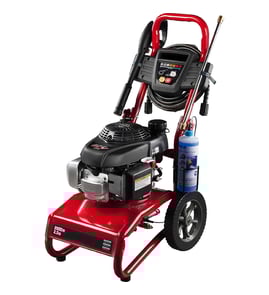



What PSI should my pressure washer be?
For the Craftsman pressure washer model 580762010, the rated working pressure is 2000 PSI, which is the PSI you should expect during normal operation with proper water supply and a correct spray tip. We recommend staying at or below the machine rating listed in the 580762010 owner's manual.
What “right PSI” means for real cleaning jobs
PSI is only part of performance; flow (GPM) and the spray tip you use matter just as much.
- Light cleaning (cars, patio furniture): typically 1,300 to 2,000 PSI with a wider fan tip
- General home cleaning (decks, siding): typically 1,800 to 2,800 PSI
- Concrete and heavy grime: often 2,500 PSI and up (use extra care to avoid surface damage)
- Fragile surfaces (painted items, glass): use lower pressure and never aim a jet stream at glass
Quick checks if your PSI seems low
If your 580762010 feels weak, the issue is usually water supply, a restriction, or a pump sealing/valve problem.
- Verify the outdoor spigot provides at least 2.5 GPM to the washer
- Clean the inlet screen before connecting the garden hose
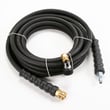
- Confirm the high-pressure hose and wand connections are tight
- Try a different spray tip (a worn or incorrect tip can change pressure feel)
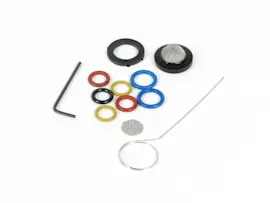
- Inspect for leaks at fittings; replace worn seals such as the Craftsman pressure washer o-ring A2017GS
Specs to use as your baseline (model 580762010)
| Spec | What to expect | Why it matters |
|---|---|---|
| Rated pressure | 2000 PSI | Target cleaning force at the nozzle |
| Rated flow | 2.2 GPM | Rinsing power and cleaning speed |
| Max water temp | 140°F | Hotter water can damage pump seals |
Why it matters
Running above the rated PSI can damage the pump and hoses, and it increases injury risk. Keeping the washer at its designed 2000 PSI helps protect the unloader system, pump seals, and spray gun while delivering consistent cleaning results.
Last updated: January 2026
What are the most common issues with 580762010?
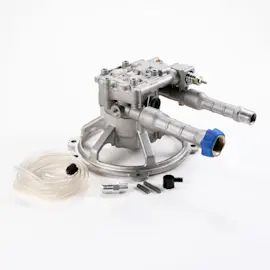
The most common issues we see with the Craftsman 580762010 gas pressure washer are low or surging pressure, water leaks at fittings or the pump, and hard starting or stalling under load. Most problems trace back to restricted water supply, worn pump seals or O-rings, or sticking check valves.
Common problems and what they usually mean
- Low pressure or pulsing spray: clogged nozzle, air in the inlet, worn piston seals, or a check valve not sealing.
- Water leaking from the pump area: worn O-rings, piston seals, or a damaged hose connection.
- No pressure but engine runs: unloader valve issue, check valve issue, or internal pump wear.
- Engine starts then dies or loses power: fuel quality, choke setting, dirty air filter, or load-related bogging.
- Poor chemical pickup: incorrect tip selection or a restriction in the injection path.
Quick checks we recommend first (fast and free)
- Verify strong water supply; fully open the spigot and use a non-kinked garden hose.
- Purge air: connect water, squeeze the trigger until flow is steady, then start the engine.
- Inspect for leaks at every connection; replace flattened or nicked O-rings.
- Clean the spray tip and inlet screen.
- If pressure still surges, inspect pump check valves and seals.
Parts that commonly fix pressure and leak symptoms
If your symptoms match, these model-compatible parts are often involved:
| Symptom | Likely wear item | Example part for 580762010 |
|---|---|---|
| Low pressure, water in pump oil, or pump seepage | Piston seal | Piston seal 93680GS |
| Drips at fittings, wand, or pump manifold | O-ring | Craftsman pressure washer o-ring A2017GS |
| Surging pressure, backflow, poor prime | Check valve | Check valve B1879GS |
Why it matters
Running the 580762010 with low water flow, air in the line, or active leaks accelerates pump wear and can quickly turn a small seal problem into a larger pump repair. Using the correct spray tip and keeping seals tight protects pressure and performance.
Helpful reference
For model-specific operating steps, maintenance intervals, and winterizing guidance, use the Craftsman 580762010 owner's manual.
Last updated: March 2026
What kind of gas goes in a Craftsman 3000 PSI pressure washer?
For a Craftsman gas pressure washer like model 580762010, we use clean, fresh unleaded gasoline (87 octane/87 AKI minimum). Avoid old fuel and don’t mix oil into the gas because this unit uses a 4-cycle engine.
Fuel type and what to avoid
Use regular unleaded fuel and keep it fresh to prevent hard starting, surging, and power loss.
- Use unleaded gasoline, 87 AKI (87 octane) or higher
- Use fresh fuel (stale gas is a top cause of no-start issues)
- Do not use a gas/oil mix (4-cycle engine)
- Avoid fuel contaminated with water or dirt
- If the washer will sit, treat fuel with stabilizer and follow storage steps in the 580762010 owner's manual
Quick checklist before you fill the tank
- Shut the engine off and let it cool.
- Fill outdoors, away from ignition sources.
- Use a clean fuel can and a funnel to keep debris out.
- Don’t overfill; leave room for expansion.
Common symptoms caused by the wrong or old fuel
| Symptom | Often caused by | What to do first |
|---|---|---|
| Won’t start | Stale fuel, varnish in carburetor | Drain and refill with fresh 87 AKI gas |
| Loses power under load | Old fuel, restricted fuel flow | Replace fuel with fresh gas, check air filter |
| Surges at idle | Fuel quality, partially clogged jet | Fresh fuel, then carburetor cleaning if needed |
Why it matters
Correct fuel protects the carburetor and helps the engine run at the right speed so the pump can build steady pressure without hunting or stalling.
Last updated: January 2026