Owner’s manual
 Error Codes



Is RS25H5000WW a side by side refrigerator?
Yes. The Samsung RS25H5000WW is a side-by-side refrigerator; the owner's manual specifically describes it as a Samsung Side-By-Side Refrigerator and includes setup and operating instructions for this style.
How we know it is side-by-side
In the documentation for this model family (RS25H50****), Samsung labels the product as a Side-By-Side Refrigerator and provides installation guidance and dimensions for a side-by-side layout.
What “side-by-side” means for your RS25H5000WW
A side-by-side refrigerator has two tall doors:
- Freezer on the left and fresh food on the right (typical configuration)
- Vertical compartments that run from top to bottom
- Often includes an in-door ice and water dispenser
- Uses separate airflow paths and sensors to manage freezer and refrigerator temperatures
Quick model-family dimension snapshot (RS25H50****)
These are the overall dimensions shown in the manual for the RS25H50**** family; they are the best reference for RS25H5000WW planning and fit.
| Measurement | Only cabinet | With door | With handle |
|---|---|---|---|
| Width | 35 3/4 in | 36 1/20 in | Not listed in excerpt |
| Depth | 30 9/10 in | 33 3/4 in | 36 1/5 in |
| Height | 68 3/5 in | 69 9/10 in | 69 9/10 in |
Why it matters
Confirming the side-by-side design helps you plan clearance for door swing, water line access for the dispenser, and replacement parts that match this layout (for example, a compatible refrigerator water filter DA29-00020B).
Last updated: February 2026
Why is my Samsung two door fridge not making ice?
If our Samsung RS25H5000WW side-by-side refrigerator is not making ice, the most common causes are no water supply (shut-off valve closed or low pressure), the ice maker being turned off, the freezer temperature being too warm, or not waiting long enough after connecting the water line. Confirm the setup steps in the RS25H5000WW owner's manual.
Quick checks that fix most “no ice” problems
- Make sure the water line is connected and the shut-off valve is fully open.
- Verify home water pressure is 20 to 125 psi (required for proper ice maker operation).
- If the refrigerator was just installed or the water line was just connected, wait at least 12 hours for ice production.
- Confirm the ice maker is not set to Ice Off (press and hold the Ice button about 3 seconds to toggle).
- Lower the freezer temperature if it is too warm (ice production slows dramatically when the freezer is warm).
- Check the ice bucket for clumped ice; break up clumps and reinstall the bucket fully.
Water supply and filter issues to rule out
A restricted water path can stop ice production even when the dispenser still works.
- If water flow is weak, replace the filter and flush the system.
- If the refrigerator makes unusual noises with the ice maker on, confirm water is actually reaching the unit (valve open).
Helpful parts for water-related ice issues:
What to check based on symptoms
| Symptom | Most likely cause | What we do next |
|---|---|---|
| No ice at all, new install | Normal fill delay | Wait 12 hours; confirm valve open |
| No ice, dispenser also weak | Low pressure or restriction | Verify 20 to 125 psi; replace filter |
| Ice maker on, loud/unusual noise | No water supply | Open shut-off valve; turn Ice Off if no water line |
| Ice clumps in bucket | Partial melt/refreeze or warm freezer | Break clumps; lower freezer temp |
Why it matters
Ice makers depend on steady water pressure and a consistently cold freezer. When pressure drops below spec or the freezer runs warm, the ice maker cannot fill and freeze on schedule, so production stops.
Last updated: February 2026
How to fix Samsung refrigerator error code 25E?
Error code 25E on a Samsung RS25H5000WW side-by-side refrigerator points to a defrost problem in the freezer evaporator area (often frost buildup affecting airflow). We fix it by safely forcing a defrost cycle, clearing ice from the evaporator area, and then checking the defrost heater and temperature sensors.
Quick fix: force a defrost cycle
Use this when the freezer is warming up, airflow is weak, or you hear the fan hitting ice.
- Move food to a cooler if needed; keep doors closed as much as possible.
- Unplug the refrigerator for 5 minutes, then plug it back in (this helps reset controls).
- Use the control panel to enter forced defrost (the exact button sequence varies by version); follow the steps in the owner's manual.
- Let the defrost run until the frost melts and airflow returns.
- After defrost, confirm the freezer is set near 0°F and the fresh food section near 37°F.
What to check if 25E comes back
A repeat 25E usually means a component in the defrost system is failing or ice is returning because drainage or airflow is restricted.
- Heavy frost on the back freezer panel: evaporator not defrosting fully.
- Fan noise, then quiet: fan blade hitting ice or fan motor struggling.
- Water/ice buildup: drain issue can refreeze and block airflow.
- Temperature swings: sensor reading off, causing poor defrost timing.
Common parts involved (for RS25H5000WW)
| Symptom | Most likely area | Example part for this model |
|---|---|---|
| Frost returns quickly after defrost | Defrost system | Refrigerator defrost heater DA47-00311A |
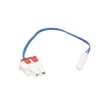
| Temps seem wrong or inconsistent | Temperature sensing | Refrigerator temperature sensor DA32-10109W |
| Fan rubbing or weak airflow | Evaporator fan area | Refrigerator evaporator fan motor assembly DA97-08061A |
Why it matters
When the evaporator coils ice over, the refrigerator cannot move cold air correctly. That can raise freezer temps, soften ice cream, reduce ice production, and make the compressor run longer than it should.
Related help
If you see other codes along with 25E, use our code list to narrow the cause: Samsung rs25h model side by side refrigerator error codes.
Last updated: February 2026
What is the most common problem with Samsung refrigerators?
The most common problems we see with Samsung refrigerators (including the Samsung RS25H5000WW) are cooling issues and ice maker or dispenser troubles. These are usually tied to airflow restrictions, frost buildup from defrost problems, or water-supply issues that affect the ice maker and water filter system.
Most common symptoms customers notice
- Fresh food section not staying cold enough
- Freezer temperature swings or heavy frost/ice buildup
- Ice maker stops making ice or makes small cubes
- Water dispenser flow is slow
- Unusual fan noise (often from ice buildup near the evaporator area)
What to check first on RS25H5000WW
Start with the basics that cause the highest number of “not cooling” and “no ice” complaints.
- Airflow: Do not block interior air vents with food packages; blocked vents can cause overcooling in spots and poor cooling elsewhere.
- Power reset: If the refrigerator was unplugged, wait at least 5 minutes before plugging it back in.
- Water supply: Ice maker operation requires 20 to 125 psi water pressure; low pressure commonly causes slow fill and weak ice production.
- Filter and water system: A restricted filter can reduce dispenser flow and ice maker performance; follow the replacement and flushing steps in the owner's manual.
- Vacation habits: If you will not use water or ice for an extended time, close the water valve to help prevent leaks.
Parts that commonly relate to these problems
If troubleshooting points to a failed component, these are common “usual suspects” for cooling and ice/water complaints on this model.
| Problem area | What fails most often | Example part for RS25H5000WW |
|---|---|---|
| Ice production | Ice maker assembly issues | Refrigerator ice maker assembly DA97-08059A |
| Water dispensing | Clogged filter or valve not opening fully | Refrigerator water filter DA29-00020B |
| Temperature control | Sensor reading incorrectly | Refrigerator temperature sensor DA32-10109W |
Why it matters
Cooling and ice maker problems tend to cascade: restricted airflow or frost buildup can warm the refrigerator section, and water-supply restrictions can make the ice maker seem “dead” even when it is working. Catching the root cause early helps protect food quality and prevents repeat failures.
Last updated: February 2026