Owner’s manual
 Error Codes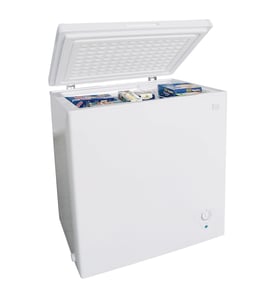



Why is my chest freezer leaking water underneath?
Water under your Kenmore 25316702101 chest freezer almost always comes from defrost water that is not being routed out correctly (drain plug left out, drain opening blocked, or the catch pan overflowing). It can also happen after heavy frost buildup melts during a manual defrost.
What to check first (fast, high-impact)
- Confirm both drain plugs are installed after defrosting; if a drain is left open, warm air can enter and create more frost and meltwater.
- Look for recent manual defrosting; the manual recommends defrosting when frost reaches about 1/4 to 1/2 inch.
- Check for overflow during defrost; defrost water can outpace a shallow pan if you do not monitor it.
- Inspect the lid seal area; warm, moist air entering around the lid increases frost buildup, which later turns into water.
- Verify the freezer is level; a slight tilt can make water miss the pan during draining.
Correct way to drain defrost water on this model
Our guidance matches the defrost-drain steps in the 25316702101 owner's manual.
- Unplug the freezer before defrosting (electrical safety).
- Place a shallow pan under the outside drain outlet.
- Pull out the outside drain plug.
- Pull out the inside drain plug so water can flow out.
- Check the pan often so it does not overflow.
- Reinstall both drain plugs when finished.
Drain setup options
| Method | Best for | What to watch |
|---|---|---|
| Shallow pan under drain | Small to moderate meltwater | Overflow if not monitored |
| 1/2-inch garden hose adapter to a floor drain | Large meltwater volume | Hose routing so it stays downhill |
Why it matters
Water underneath is usually a symptom of excess frost and meltwater management, not a “mystery leak.” Fixing the drain-plug and defrost process prevents repeat puddles and helps the freezer maintain stable temperatures.
Last updated: February 2026
Why is my Kenmore chest freezer beeping?
Your Kenmore 25316702101 chest freezer beeps when the alarm system detects an unsafe condition, most commonly a high internal temperature after startup or a door-ajar or operational alarm. You can usually silence the buzzer by pressing the alarm reset or ALARM OFF button; see the owner's manual for your exact control style.
What the beeping usually means
Common causes on this model family include:
- Freezer temperature too high: the red temp alarm light blinks and the buzzer sounds until the freezer reaches a safe temperature.
- Door ajar: the display can alternate a door-related code and beep repeatedly until the lid is fully closed.
- Operational error: the display can alternate an error code and beep until you reset the alarm.
- After plugging in or warm start: the temp alarm can sound while the cabinet pulls down to freezing.
How to stop the alarm (and what to do next)
- Press ALARM OFF or ALARM RESET to silence the buzzer.
- Confirm the lid is fully closed and the gasket is sealing all the way around.
- Set the temperature control colder and allow several hours for temperature recovery.
- Avoid overloading with warm food; add unfrozen items in smaller batches.
- If the alarm returns within about 12 hours, treat it as an active temperature problem and check airflow and sealing.
Quick code and symptom guide
| What you notice | What it points to | What we recommend |
|---|---|---|
| Red temp alarm light blinking with beeping | Temperature too high | Press alarm button; keep lid closed; let it recover |
| Beeps every few seconds with door-related display | Lid not fully closed | Reseat lid; check gasket contact |
| Alternating error code with beeping | Control or sensor issue | Reset alarm; if it repeats, schedule service |
| Alarm won’t stop until you press a button | Alarm latched | Press ALARM OFF/RESET per manual |
Why it matters
A beeping freezer is protecting your food. If the alarm is caused by high temperature, staying above safe freezing for too long can lead to thawing, ice crystals, and food quality loss.
Last updated: February 2026
Where is the model number on a Kenmore chest freezer?
On Kenmore chest freezer model 25316702101, the model and serial number label is typically on the left exterior wall of the cabinet. We recommend recording both numbers before ordering parts or checking operating instructions in the owner's manual.
Where to look on this chest freezer
Check these common label locations for chest models:
- Left exterior wall of the freezer cabinet (most common)
- Near the back edge of the cabinet on the left side
- Lower left side area where the cabinet wall is easiest to see
- If the freezer is built into a tight space, pull it out so you can see the left side clearly
What the label usually includes
The data plate typically lists:
- Model number (for this unit: 25316702101)
- Serial number
- Electrical ratings (volts/amps)
- Sometimes the refrigerant type and other manufacturing details
| What you need | Why you need it | Example for this freezer |
|---|---|---|
| Model number | Ensures parts diagrams match your unit | 25316702101 |
| Serial number | Helps confirm production variation | From the label |
Why it matters
Kenmore model numbers can look similar across different freezer sizes and revisions. Using the exact model and serial number helps us match the correct parts (like a temperature control knob or lid lock components) and avoid ordering the wrong item.
Quick tip before ordering parts
- Write the model and serial number down exactly as shown
- Take a clear photo of the label for reference
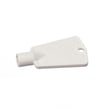
- Use the model number when browsing parts for this freezer, such as the gibson freezer door key 297147700 if you need a replacement key
Last updated: February 2026
How often should you defrost a chest freezer?
For your Kenmore 25316702101 chest freezer, we recommend defrosting whenever frost buildup reaches about 1/4 to 1/2 inch; for many homes, that works out to about once a year, but it can be more often with frequent lid openings or humid conditions. See the defrosting instructions in the owner's manual.
When it is time to defrost
Use these practical triggers to decide when to defrost:
- Frost is 1/4 to 1/2 inch thick on the walls or lid area
- The blue defrost button is completely covered with frost (some chest models)
- The lid is harder to close, or you notice more moisture around the opening
- You are losing usable storage space because of ice buildup
- You want to clean the interior and reorganize food
Quick guide: how often is “normal”?
Typical defrost frequency depends on how the freezer is used.
| Usage pattern | Typical defrost timing | What drives it |
|---|---|---|
| Light use, lid opened occasionally | About 1 time per year | Less warm, moist air entering |
| Frequent access (daily), humid garage/basement | Every 3 to 6 months | Moisture enters and freezes faster |
| Lid left open briefly or seal issues | As soon as frost hits 1/4 inch | Rapid frost accumulation |
Tips to reduce frost buildup between defrosts
These habits help you go longer between defrost cycles:
- Open the lid only when you are ready to grab items; close it promptly
- Keep food organized (using baskets) so you are not searching with the lid open
- Occasionally remove light frost with a plastic scraper (never metal)
- Make sure packages are dry before placing them inside
- Confirm the temperature control is set for steady freezing, not extreme overcooling
Why it matters
Defrosting at the right time helps your freezer run efficiently, protects stored food quality, and prevents heavy ice from reducing capacity. It also gives you a good opportunity to clean the interior safely and thoroughly.
Last updated: February 2026
How big is a Kenmore chest freezer model 25316702101?
Kenmore chest freezer model 25316702101 is a chest-style unit; the exact exterior width, height, depth, and cubic-foot capacity are listed in the specifications section of the 25316702101 owner's manual. For planning purposes, most Kenmore chest freezers in this series are roughly 20 to 45 inches wide, 33 to 36 inches tall, and 21 to 30 inches deep.
How to get the exact size for your unit
Use the specs in the manual, then confirm with a tape measure on your freezer:
- Measure width across the cabinet (left to right)
- Measure height from floor to the top of the lid (lid closed)
- Measure depth front to back; include hinges if they protrude
- Add clearance space around the cabinet for airflow
- Measure doorways and turns the freezer must pass through
Typical planning clearances (so it runs efficiently)
Chest freezers need breathing room so the compressor can reject heat.
| Location | What to plan for | Practical tip |
|---|---|---|
| Back and sides | Airflow clearance | Keep the cabinet from being tight against walls |
| Top | Lid opening space | Make sure the lid can open fully without hitting shelves |
| Front | Walkway space | Leave room to stand and lift baskets out |
Parts that relate to usable space (not cabinet size)
If your goal is better storage organization rather than changing the footprint, these model-compatible parts help:
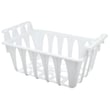
- Freezer basket 216848200 (adds lift-out storage and improves access)
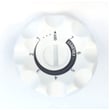
- Freezer temperature control knob 216707200 (restores easy temperature adjustments if the knob is missing or cracked)
- Freezer lid lock 297090200 (helps keep the lid secured, depending on your setup)
Why it matters
Correct dimensions prevent delivery surprises, ensure the lid seals and opens properly, and help maintain stable temperatures by allowing proper ventilation.
Last updated: February 2026