Error Codes


Which is quieter, 39 or 42 DBA?
39 dBA is quieter than 42 dBA; on a Whirlpool dishwasher like model WDF341PAPB2, the 39 dBA unit will sound noticeably softer because decibels are logarithmic (a small number change can mean a bigger perceived difference).
Dishwasher sound ratings are measured in dBA; lower is quieter.
- 39 dBA is the quieter option
- 42 dBA is slightly louder
- A 3 dBA increase is roughly a doubling of sound energy
- In a typical kitchen, the difference is usually noticeable, especially in open floor plans
| Rating | Which is quieter? | What you typically notice |
|---|---|---|
| 39 dBA | Quieter | More “background” sound; easier to talk over |
| 42 dBA | Louder | More audible wash and drain sounds |
If your dishwasher runs during meals, in an open-concept space, or overnight, choosing the lower dBA rating helps reduce disruption. If your current dishwasher seems louder than expected, cleaning filters and checking for spray arm obstructions can also reduce noise.
These checks often help on WDF341PAPB2-STYLE Whirlpool dishwashers:
- Clean the filter area; a clogged filter can make the pump louder (see dishwasher filter WPW10463906)
- Make sure the spray arm spins freely and is not hitting tall items (see dishwasher spray arm WPW10491331)
- Confirm dishes are loaded so nothing rattles against the tub or each other
- Check that the unit is firmly mounted and level
- If you see a fault code, use Whirlpool dishwasher error codes to narrow the cause
Last updated: January 2026
What is the life expectancy of a whirlpool dishwasher?
A Whirlpool dishwasher like model WDF341PAPB2 typically lasts about 10 years with normal use and basic maintenance. Consistent cleaning, correct detergent use, and fixing small issues early (drain, spray, heat) are what most often determine whether it reaches or exceeds that mark.
Most dishwashers fall into a fairly predictable range; how you use and maintain the unit matters as much as the brand.
- Typical life expectancy: ~10 years
- Heavy use (multiple loads daily): often shorter
- Light use (few loads weekly): often longer
- Hard water: can shorten life if scale builds up
- Poor draining or low wash pressure: increases wear on pumps and seals
These steps help WDF341PAPB2 clean better and reduce strain on the circulation and drain system.
- Clean the filter regularly; replace it if it is warped or won’t rinse clean (see dishwasher filter WPW10463906).
- Keep the spray arm holes clear; replace a cracked or clogged arm (see dishwasher spray arm WPW10491331).
- Run a monthly cleaning cycle with a dishwasher cleaner to reduce grease and mineral buildup.
- Use rinse aid to improve drying and reduce spotting (especially with hard water).
- Scrape, don’t pre-wash; heavy pre-washing can confuse soil sensing on some cycles.
- Check the drain path if you see standing water; kinks and clogs shorten pump life.
When a dishwasher “wears out,” it is usually one of these systems.
| System | Common symptom | Example part on this model |
|---|---|---|
| Drain system | Water left in tub, humming | Dishwasher drain pump (W10876537) |
| Wash system | Poor cleaning, weak spray | Motor (W11612326) |
| Heating | Not drying, cool water | Element assembly (W10518394) |
Knowing the typical lifespan helps you decide whether to repair or replace. On a WDF341PAPB2 near the 10-year mark, a simple fix (filter, spray arm, hose) often makes sense, while major tub or control repairs can be a tougher value.
Last updated: January 2026
Where is the filter on Whirlpool Quiet Partner 2?
On the Whirlpool dishwasher family that includes model WDF341PAPB2 (often marketed as Quiet Partner 2), the filter is located in the bottom of the tub, directly under the lower dishrack, around the sump area. On many units, you access it by removing the lower rack and twisting the filter assembly out.
- Turn the dishwasher off; let the heater cool.
- Pull out the lower rack.
- Look at the center-rear or center-bottom of the tub floor for the round filter cover.
- Twist the filter counterclockwise and lift it out (some designs also have a flat screen beneath).
If your filter is damaged or won’t lock in place, the most common related parts are the filter and the filter cup.
- Remove the lower rack for clear access.
- Check for broken tabs, cracks, or warping.
- Rinse the filter under hot water; use a soft brush for grease.
- Clean debris from the sump opening before reinstalling.
- Reinstall by seating it flat and twisting until it stops.
These are the filter-related parts commonly used on this Whirlpool platform:
| What you’re looking at | What it does | Example part for WDF341PAPB2 |
|---|---|---|
| Cylindrical or round twist-lock filter | Catches food soil to protect the pump | Dishwasher filter WPW10463906 |
| Filter cup / housing piece | Supports and seals the filter area | Filter cup a W10872845 |
A clogged or broken filter reduces water flow to the spray arms, which leads to poor cleaning, redepositing grit on dishes, and can contribute to drain problems. If you’re also seeing standing water, use the steps in dishwasher not draining video to narrow down whether the drain path or pump is the issue.
Last updated: January 2026
What is the most common problem with a whirlpool dishwasher?
For the Whirlpool WDF341PAPB2 dishwasher, the most common issues we see are draining problems, poor cleaning, and drying complaints. These symptoms usually trace back to a clogged filter, a blocked drain path, or reduced wash water circulation rather than a single “one-size-fits-all” failure.
- Dishwasher not draining: clogged filter area, kinked drain hose, or a failing drain pump
- Dishes not getting clean: clogged spray arm holes, dirty filter, or circulation problem
- Water left in the bottom: partial drain restriction or weak pump-out
- Not drying well: rinse aid low, heater issue, or cycle selection
- Door won’t latch or starts then stops: door latch not engaging consistently
- Cancel the cycle and run a drain to see if water evacuates quickly.
- Remove and rinse the filter; check the sump area for debris.
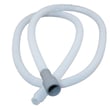
- Inspect the drain hose routing for kinks and make sure the high loop is in place.
- Spin the spray arm by hand and clear any clogged jets.
- Confirm hot water supply to the dishwasher (best cleaning starts with hot incoming water).
| Problem you notice | Common fix area | Example part for this model |
|---|---|---|
| Won’t drain or drains slowly | Drain pump or drain path restriction | Dishwasher drain pump W10876537 |
| Poor cleaning, food redeposit | Filter system clogged or damaged | Dishwasher filter WPW10463906 |
| Poor wash coverage | Spray arm clogged or worn | Dishwasher spray arm WPW10491331 |
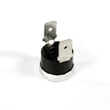
| Not heating or poor drying | Heating circuit | Element assembly W10518394 |
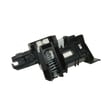
| Won’t start, door feels “loose” | Door latch not closing | Dishwasher door latch WPW10653840 |
Drain, wash, and heat functions work together. A restricted filter can cause poor cleaning and leave water behind; a weak heater can make drying look like a wash problem. Fixing the root cause prevents repeat clogs, odors, and pump strain.
- Use Whirlpool dishwasher error codes if the control is flashing a code.
- Follow dishwasher not draining video for step-by-step drain checks.
Last updated: January 2026