Error Codes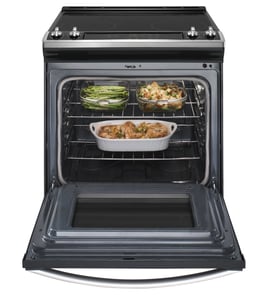




What are the key features of the KSEG700ESS6?
The KitchenAid KSEG700ESS6 is a 30-inch electric slide-in range built around a large-capacity oven and a flexible radiant cooktop. Key highlights include a convection oven (about 6.4 cu. ft.), a 5-element cooking surface with multi-zone capability, and convenience features like a warm zone and storage drawer.
Feature highlights (what you get day to day)
- Convection baking/roasting for more even heat and faster cook times on many foods
- Five radiant elements for flexible pan sizes and multi-pot cooking
- Triple cooking zone style element for small, medium, or large cookware
- Warm zone to keep cooked food warm without overcooking
- AquaLift self-clean style cleaning cycle (water-assisted cleaning approach)
- Storage drawer for bakeware and cookware organization
- ADA compliant and Sabbath mode options for accessibility and special-use operation
Quick feature summary
| Area | What it means | Why it’s useful |
|---|---|---|
| Oven | Convection, large capacity (about 6.4 cu. ft.) | More even browning, room for multiple racks |
| Cooktop | 5 radiant elements, multi-zone flexibility | Better fit for different pot and pan sizes |
| Convenience | Warm zone, storage drawer | Keeps food ready to serve; reduces clutter |
| Cleaning | AquaLift self-clean | Simplifies routine oven cleanup |
Parts that support these features
If a feature is not working (no heat, uneven baking, element not cycling), these model-matched parts are common starting points for diagnosis and repair:
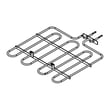
- Bake element W10779716 (primary oven heat source for bake)
- Cooling fan assembly W11107275 (helps manage heat around controls and oven)
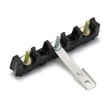
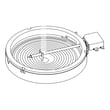
- Range radiant surface element W11171119 (one of the cooktop heating elements)
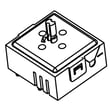
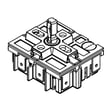
- Range infinite switch W10917724 (controls power cycling to a surface element)
Why it matters
Matching features to the correct system (bake, convection, surface element, controls) helps you troubleshoot faster and order the right KitchenAid parts for KSEG700ESS6 the first time.
Last updated: February 2026
What are the parts of an electric oven?
An electric oven in a KitchenAid KSEG700ESS6 range is built around heating, airflow, lighting, and control components. The core parts are the bake and broil heating elements, temperature sensing and controls, the oven cavity and door, and (on many models) convection fan parts for even baking.
Main electric oven parts (what they do)
- Bake element: bottom heat source for most baking and roasting (example: bake element W10779716).
- Broil element: top heat source for broiling and browning.
- Oven control and keypad: sets modes, time, and temperature (examples: keypad W11025616, control, mrc2 W11082269).
- Temperature sensor: tells the control board the actual oven temperature.
- Convection fan system (if equipped): circulates hot air for more even cooking (example related part: cooling fan assembly W11107275).
- Oven light and lens: illuminates the cavity (example: light lens WP3196068).
Quick breakdown: “heats” vs “controls” vs “structure”
| Category | Common parts | What you notice when it fails |
|---|---|---|
| Heating | Bake element, broil element | No heat, slow preheat, uneven baking |
| Controls | Control board, keypad | Dead display, wrong temps, buttons not responding |
| Airflow | Convection fan parts, cooling fan | Hot spots, noisy fan, overheating symptoms |
| Structure | Door, panels, racks, trim | Heat loss, poor sealing, cosmetic damage |
Why it matters
Knowing which part does what helps you troubleshoot faster. For example, “won’t bake but broils” often points to a bake-element issue, while “buttons don’t work” points to the keypad or control.
Helpful tips before ordering parts
- Confirm whether the problem is bake, broil, or both.
- Check for obvious damage: blistering, cracks, or burn marks on the element.
- If the display is blank or erratic, focus on control components first.
- For electrical testing, use safe practices and the right tools (see how to use a multimeter to test electrical parts video).
Last updated: February 2026
What is the lifespan of a KitchenAid oven?
A KitchenAid oven like model KSEG700ESS6 typically lasts 10 to 15 years with normal household use and basic care. Consistent overheating, heavy self-clean use, and electrical issues can shorten life; replacing common wear parts can extend it.
What affects lifespan most
- Heat stress from frequent high-temp baking, broiling, and self-clean cycles
- Power quality (loose connections, voltage spikes, tripped breakers)
- Door seal and airflow (heat leaking can overwork components)
- Cleaning habits (spills left to bake on can cause smoke and overheating)
- Timely part replacement when symptoms first appear
Common “end-of-life” symptoms and what they usually mean
| Symptom | Most common cause | Typical fix |
|---|---|---|
| Oven not heating or heats unevenly | Failed bake element | Replace the bake element W10779716 |
| Display glitches, beeping, or dead controls | Control or keypad issue | Inspect wiring, then test controls |
| Fan runs loud or won’t run | Cooling fan problem | Replace the cooling fan assembly W11107275 |
| Burner won’t regulate heat | Infinite switch issue | Test and replace the correct switch |
Practical ways to help your KSEG700ESS6 last longer
- Wipe up sugary or acidic spills after the oven cools to prevent baked-on damage.
- Use self-clean sparingly; run it only when needed and keep the kitchen ventilated.
- Avoid slamming the oven door; it protects hinges, latch parts, and the door seal.
- If you smell hot wiring or see flickering power, stop using the range and inspect the terminal area.
- When troubleshooting electrical parts, follow safe testing practices from how to use a multimeter to test electrical parts video.
Why it matters
Most range failures are tied to a few serviceable components (heating, cooling, and controls). Replacing a failed bake element, cooling fan, or switch early often restores normal cooking performance and helps you avoid secondary damage from overheating or poor temperature control.
Last updated: February 2026
What's the KSEG700ESS6's capacity?
The KitchenAid KSEG700ESS6 electric slide-in range typically has an oven capacity in the about 5.8 cu. ft. class, which is large enough for multiple racks of food and most oversized cookware used for family meals.
How to confirm the exact capacity for your KSEG700ESS6
Capacity is usually listed on the model rating label, in the product specs, or in the literature that came with the range. If you are comparing similar models, use the model number (KSEG700ESS6) to avoid mixing gas and electric versions.
- Check the model and serial tag (often on the oven frame behind the storage drawer or along the door frame).
- Compare the full model number including suffix (KSEG700ESS6) when shopping parts or looking up specs.
- If you are measuring usable space, measure the interior cavity (width, height, depth) and account for rack supports.
- For cooking planning, focus on what fits: full-size sheet pans, roasting pans, and Dutch ovens.
- If baking results seem off after a move or power issue, verify the oven heats correctly before assuming capacity is the problem.
When capacity questions come up during a repair
Capacity does not change, but performance can. If the oven struggles to reach temperature or bakes unevenly, a heating or airflow issue is more likely than a size issue.
| Symptom you notice | Common cause | Parts to consider for KSEG700ESS6 |
|---|---|---|
| Oven not heating or slow preheat | Failed lower bake circuit | Bake element W10779716 |
| Oven runs hot, noisy, or shuts down | Cooling/ventilation problem | Cooling fan assembly W11107275 |
| Display works but heating is inconsistent | Control or wiring issue | Check connections at range terminal block WPW10245259 |
Why it matters
Oven capacity affects what cookware fits and how you plan multi-dish meals. For troubleshooting, separating “size” from “heating performance” helps you target the right repair, such as the bake element, cooling fan, or power connection.
Last updated: February 2026
Why does my KitchenAid oven take so long to heat?
If your KitchenAid KSEG700ESS6 oven takes a long time to preheat, the most common causes are incorrect power supply (low voltage or a wiring issue), a weak bake element, or heat loss from a door seal or frequent door opening. Start by confirming proper power, then check heating performance.
Quick checks that fix most slow-preheat complaints
- Avoid opening the oven door during preheat; every opening dumps heat and adds minutes.
- Verify the range is on a dedicated 240V circuit (a 120V or partially lost leg condition causes very slow heating).
- Make sure the oven is not set to a special mode that changes preheat behavior (some modes ramp heat differently).
- Look for heavy soil on the oven bottom or around the sensor area; buildup can affect heat circulation.
- Confirm the oven light lens is intact; a missing or damaged lens can allow heat to escape (see light lens WP3196068).
Parts that commonly cause slow preheat on KSEG700ESS6
A slow preheat usually means the oven is not producing full heat, or it is losing heat faster than it should.
| Symptom | Most likely cause | What to do next |
|---|---|---|
| Preheat is slow and baking is uneven | Weak lower heating element | Inspect and test the bake element W10779716 |
| Oven heats, then seems to stall | Control not driving heat correctly or sensing issue | Check wiring connections; consider professional diagnosis |
| Preheat is slow and you notice a hot control panel area | Cooling airflow issue | Inspect the cooling fan assembly W11107275 for operation |
| Intermittent power, burning smell at cord area, or dead display at times | Loose/burned power connection | Inspect the range terminal block WPW10245259 and cord connections |
How we recommend testing the bake element (safe, basic approach)
- Turn off power at the breaker before removing panels or touching wiring.
- Visually inspect the element for blisters, cracks, or separated spots.
- If you have a meter, do a continuity check on the element leads (a failed element often reads open).
- If the element tests bad, replace it with the exact match for this model.
A helpful reference for electrical testing is how to use a multimeter to test electrical parts video.
Why it matters
Slow preheat is not just an inconvenience; it often points to a power supply problem or a heating component that is failing. Catching it early helps prevent poor baking results and reduces the chance of additional electrical damage.
Last updated: February 2026