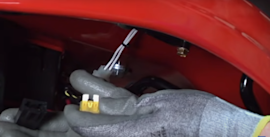
Installation guide
 Owner’s manual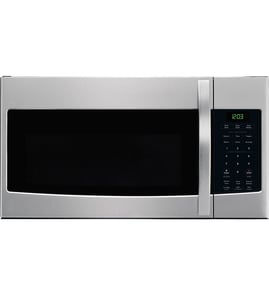



What is the glass plate in the microwave called?
In your Kenmore 40185044210 microwave/hood combo, the glass plate is called the glass turntable tray (often just called the turntable). It sits on a support ring and rotates to help heat and defrost food more evenly; see the installation guide for handling and setup notes.
The turntable system is a small set of parts that work together to rotate your food during cooking.
- Glass turntable tray: the removable glass plate you set dishes on
- Turntable tray support: the roller ring that the tray rides on
- Turntable motor: the drive motor under the oven floor that turns the tray
- Coupler/drive hub (varies by design): connects the motor shaft to the tray/support
Different manuals and parts lists may use slightly different wording.
| What you call it | Common parts-list name | Notes |
|---|---|---|
| Glass plate | Glass turntable tray | Most common term for the removable glass piece |
| Spinning plate | Turntable | Refers to the whole rotating system |
| Roller ring | Turntable tray support | The ring with wheels under the glass |
Replace the tray when any of these are true:
- It is cracked, chipped, or has sharp edges
- It wobbles badly even when seated correctly on the support
- It no longer sits flat (warped)
- It has deep gouges that trap food and are hard to clean
Model-matched replacement parts for this unit include the microwave glass turntable tray DE63-00624A and the microwave turntable tray support DE92-90495C.
A properly seated turntable helps prevent hot and cold spots, reduces overcooking at the edges, and keeps the load balanced so the turntable motor is not strained.
Last updated: February 2026
What is the inside of a microwave called?
The inside of a microwave is commonly called the oven cavity (or simply the cavity). In your Kenmore 40185044210 microwave/hood combo, this is the metal cooking compartment where food sits and microwave energy is distributed for heating.
- Oven cavity
- Cooking cavity
- Microwave cavity
- Interior (or interior cavity)
- Cavity liner (the interior metal lining)
The cavity itself is the metal box, but several parts directly affect what you experience inside the microwave.
| What you notice inside | What it usually involves | Example part on this model |
|---|---|---|
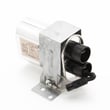
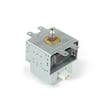
| Food is not heating | High-voltage heating system | Microwave magnetron OM75P-21-ESGN |
| Tray not turning | Turntable drive system | Microwave glass turntable tray DE63-00624A |
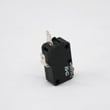
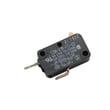
| Door will not close or start | Door latch and interlock system | Microwave door interlock switch 3405-001034 |
Using the right term (oven cavity) helps when you are checking cleaning guidance, diagnosing arcing or burn marks, or matching the correct replacement parts for your Kenmore microwave.
- If you see sparks or burn marks, stop using the microwave until the cause is corrected.
- Keep the cavity clean and dry; residue can cause arcing.
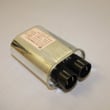
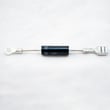
- If the unit runs but does not heat, the issue is often in the high-voltage circuit (magnetron, diode, capacitor).
- If the microwave will not start, check door alignment and the interlock switch system.
- For mounting and clearance rules (important for safe operation over a range), follow the installation guide.
Last updated: February 2026
What are the external parts of a microwave?
On a Kenmore 40185044210 microwave/hood combo, the main external parts are the door and handle, control panel, vent grille and ducting pieces, surface (cooktop) light cover, and the power cord that plugs into a dedicated outlet. For diagrams and installation-related exterior hardware, use the installation guide.
These are the most common “outside” components on an over-the-range microwave:
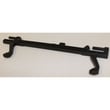
- Door assembly and door/latch pieces (door, hinges, latch hooks)
- Control panel (keypad and display area)
- Vent grille (front top grille that covers the vent area)
- Vent damper and duct adaptor pieces (depending on how it vents)
- Surface light lens and light bulb (cooktop light)
- Power cord (routes up into the cabinet during installation)
Your Kenmore 40185044210 is designed to be installed in one of three ventilation types:
| Venting type | Where air goes | Exterior parts most involved |
|---|---|---|
| Recirculating (ductless) | Back into the kitchen | Vent grille, grease filters |
| Outside top exhaust (vertical duct) | Up through cabinet/duct | Exhaust adaptor, damper, upper duct |
| Outside back exhaust (horizontal duct) | Out the back wall | Rear exhaust opening alignment, damper |
If you are trying to identify or replace a visible exterior part, these are common:
- Microwave vent grille DE64-02397C (front grille area)
- Microwave vent damper DE72-40022A (helps prevent backdraft)
- Microwave surface light lens DE67-40063A (cover for the cooktop light)
- Microwave power cord DE96-00218C (plugs into the cabinet outlet)
External parts are not just cosmetic. The door and latch system help the microwave run safely, and the vent grille, damper, and ducting determine how smoke and steam are moved away from your range. During installation, routing the power cord correctly also helps prevent pinching and electrical issues.
Last updated: February 2026
What does 40185044210 mean on a microwave?
On a Kenmore microwave/hood combo, 40185044210 is the model number, not an error code. We use that model number to match the correct parts list, wiring layout, and installation requirements for your exact unit; see the installation guide for model-specific details.
- On the rating label (often inside the door opening or on the side frame)
- On your purchase paperwork or service receipt
- On the parts list and diagrams for Kenmore model 40185044210
- In the installation paperwork for the over-the-range mounting setup
| Item you see | What it usually looks like | What it means |
|---|---|---|
| Model number | Long number like 40185044210 | Identifies the exact microwave/hood combo version |
| Error code | Short code like F##, SE, E-## | Points to a specific operating fault |
Using the correct model number helps us match parts that must fit and function safely in an over-the-range microwave, including:
- Door safety components (interlock and latch parts)
- Turntable drive parts
- Venting and damper pieces for hood exhaust setups
- Electrical components that must match the unit’s rating
For example, if your symptom is “runs but won’t heat,” common repair paths involve high-voltage components such as the microwave magnetron OM75P-21-ESGN (diagnosis and replacement should be handled by a qualified technician due to stored high voltage).
Use these steps to capture the right code so you can troubleshoot accurately:
- Write down the exact characters (example: F44, SE, E-11)
- Note when it appears (start, during cook, when opening the door)
- Unplug the microwave for 2 minutes, then retry (this can clear a temporary control glitch)
- Check that the door closes firmly and the latch clicks
Model numbers prevent wrong-part returns and help ensure the microwave is installed and vented correctly (recirculating, outside top exhaust, or outside back exhaust), which affects performance and safety.
Last updated: February 2026