Owner’s manual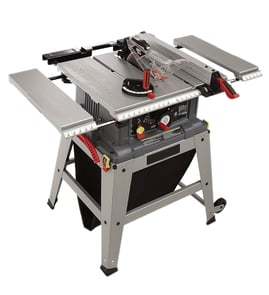

Can you use an 8 inch blade on a 10 inch table saw?
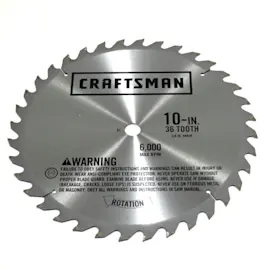
Yes, you can mount an 8-inch blade on the Craftsman 113298090 as long as it fits the 5/8-inch arbor and is rated for 3450 RPM or higher. For through-cuts, we use a 10-inch blade so the spreader stays properly positioned; see the 113298090 owner's manual.
What’s safe (and what’s not)
- OK for some non-through work: An 8-inch blade is commonly used for dado-style or non-through operations when the blade does not need to reach full 10-inch cutting height.
- Required for through-sawing: Use a 10-inch diameter blade when the blade comes through the top of the workpiece; this keeps the spreader closest to the blade.
- Arbor fit matters: Use blades designed for a 5/8-inch arbor and that are unbroken and balanced.
- Speed rating matters: Use only blades/cutting tools marked for 3450 RPM or higher.
- Never use these: Grinding wheels, abrasive cut-off wheels, friction wheels (metal slitting blades), wire wheels, or buffing wheels.
Quick compatibility checklist
| Check | What to look for | Why it matters |
|---|---|---|
| Arbor size | 5/8-inch center hole | Prevents wobble and unsafe mounting |
| Blade diameter | 8-inch (limited use) vs 10-inch (through-cuts) | Affects cut depth and spreader alignment |
| RPM rating | 3450 RPM or higher | Reduces risk of blade failure |
| Blade condition | Sharp, clean, balanced | Helps prevent kickback and rough cuts |
Setup tips when switching blade sizes
- Unplug the saw before changing blades.
- Install the correct table insert for the blade type; never run without the proper insert.
- Snug the arbor nut with the arbor wrenches; do not overtighten.
- After installing, spin the blade by hand to confirm it clears the insert and guards.
Why it matters
Using a smaller blade changes cutting height and can change how well the spreader and guarding align during through-cuts. Following the blade diameter, arbor, and RPM guidance helps reduce kickback and thrown pieces.
If you need to look up diagrams or part numbers for your saw, we list them by model on this page and you can also search by model on Sears PartsDirect.
Last updated: February 2026
How to get rid of an old table saw?
If you are getting rid of a Craftsman 113298090 10-inch table saw, the best options are to sell or donate it if it still runs, or recycle it as scrap metal and electrical equipment if it does not. Before it leaves your shop, make it safe by unplugging it and removing the blade and loose accessories.
Best disposal options (from most value to least)
- Sell it (working saw): local pickup is usually easiest for heavy power tools.
- Donate it (working and complete): include the blade guard, spreader, and anti-kickback pawls if you still have them.
- Recycle it (not worth repairing): take it to a recycling or transfer station that accepts scrap metal and electrical tools.
- Scrap yard: many yards accept the steel/aluminum body and motor as mixed metal.
- Junk removal: use this when you cannot transport it safely.
Safety steps before you move or dispose of it
The manual emphasizes preventing accidental starting and unexpected movement. Use these steps before loading it up:
- Turn the switch OFF, unplug the saw, and secure the cord.
- Remove the blade and store it so the teeth cannot cut anyone.
- Remove and bag loose parts (miter gauge, fence, throat plate/table insert, wrenches).
- If the saw is on a stand or mobile base, lock it down so it cannot tip or roll.
- Vacuum or blow out heavy sawdust buildup so it does not spill during transport.
What to do with the blade and sharp parts
Most disposal problems come from the blade, not the saw body.
| Item | What to do | Why it matters |
|---|---|---|
| Saw blade | Wrap in cardboard and tape; recycle as metal where accepted | Prevents cuts and protects handlers |
| Blade guard/pawls | Keep with the saw if donating or selling | Helps the next owner use safer setups |
| Power cord | Do not use if cut or badly worn; keep it secured for transport | Reduces shock and snag hazards |
Why it matters
A table saw is heavy and can shift suddenly; the manual calls out placing it on a firm, level surface and avoiding accidental starting. Taking 10 minutes to de-power, de-blade, and secure the saw prevents injuries during loading, hauling, and drop-off.
For model identification and safe handling guidance, use the 113298090 owner's manual. If you need to look up parts diagrams or confirm the exact model number before listing it, search by model on Sears PartsDirect.
Last updated: February 2026
Are all table saw arbor nuts the same size?
No. Arbor nuts are not universal; the nut size and thread depend on the saw’s arbor (shaft) design. On the Craftsman 113298090 10-inch table saw, the manual specifies a 5/8-inch arbor, so you must use blades and hardware designed for that arbor size; see the 113298090 owner's manual.
What’s standardized (and what isn’t)
Many 10-inch table saw blades share a common arbor hole size, but that does not mean every saw uses the same arbor nut.
- Blade arbor hole size is often 5/8 inch on many 10-inch saws.
- Arbor nut thread (diameter, pitch, and direction) can vary by brand and model.
- Washer/flange shape can vary and affects how the blade seats.
- Left-hand vs. right-hand threads vary by design; using the wrong nut can loosen during operation.
- Stacked accessories (like dado sets) may require different hardware length or washer setup.
What we know for Craftsman model 113298090
Our documentation for this Craftsman saw calls out the arbor size and tightening guidance.
| Item | What to use | Why it matters |
|---|---|---|
| Arbor size | 5/8-inch arbor blades | Ensures the blade fits and runs true |
| Blade diameter | 10-inch blade for thru-sawing | Keeps the spreader closest to the blade |
| Tightening | Snug with arbor wrenches (do not over-tighten) | Helps prevent blade damage and loosening |
How to choose the correct arbor nut or hardware
Use these checks before ordering or installing parts:
- Confirm your exact model number is 113298090.
- Match the arbor size (this saw uses 5/8 inch).
- Inspect the nut and washers for rounding, cracks, or burrs.
- Make sure the blade is seated flat against the arbor flange before tightening.
- Tighten the arbor nut to snug, not extreme force.
Why it matters
The arbor nut clamps the blade to the arbor. If the nut, washer, or blade fit is wrong, the blade can wobble, cut inaccurately, or loosen during use. Correct fit also helps protect the arbor threads and keeps the saw running smoothly.
For parts lookup by model number, start with the parts list for Craftsman 113298090, or search by model on Sears PartsDirect.
Last updated: February 2026
What is the best table saw out there?
The “best” table saw depends on what you build and where you use it. Your Craftsman 113298090 is a 10-inch direct-drive saw designed for general woodworking; for many users, the best saw is the one that stays accurate, has solid safety features, and matches your space, budget, and cut capacity.
How to choose the best table saw for your needs
- Jobsite portability: lighter weight, folding stand, easy transport
- Shop accuracy: heavier saws hold alignment better and reduce vibration
- Fence quality: a rigid, easy-to-square fence improves rip accuracy
- Safety features: riving knife or splitter, blade guard, anti-kickback pawls
- Power and drive type: direct-drive is common on portable and contractor-style saws
- Dust collection: helps visibility and keeps the motor area cleaner
Where your Craftsman 113298090 fits in
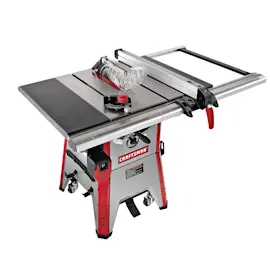
From our documentation, the Craftsman 113298090 is a 10-inch direct-drive table saw with a 20 x 27-inch die-cast aluminum table and two 10 x 27-inch stamped steel extensions. For many DIY and home-shop projects, that size and layout is a practical balance of capacity and footprint.
| If you mainly do this… | Prioritize… | Why it matters |
|---|---|---|
| Trim, flooring, jobsite cuts | Portability, quick setup | Faster moves and repeatable cuts on site |
| Furniture, cabinetry | Fence rigidity, flat table, alignment | Cleaner joinery and consistent dimensions |
| Sheet goods | Outfeed/side support | Prevents tipping and binding during long rips |
Safety matters (especially when comparing “best”)
Kickback prevention and safe feeding technique are major differentiators between saws. We recommend following the safety and operating guidance in the 113298090 owner's manual, including planning your feed path, keeping hands out of the blade path, and ensuring offcuts are not trapped or confined.
Quick safety checklist before you buy or use any saw
- Use the blade guard and anti-kickback devices when the cut allows
- Keep the fence parallel to the blade to reduce binding
- Support long or wide stock with stable outfeed/side support
- Never reach behind the blade to “catch” material
- Use a push stick or push block when the rip gets narrow
Why it matters
The “best table saw” is the one that produces accurate cuts repeatedly and helps you work safely. Matching the saw type to your projects (jobsite vs. shop), then dialing in alignment and safe technique, delivers better results than chasing a single top-rated model.
For parts and model-based lookup, start with the parts list for Craftsman 113298090, or search by model on Sears PartsDirect.
Last updated: February 2026