View engine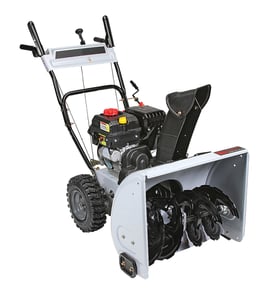




How many years should a snowblower last?
A gas snowblower like Craftsman model 536886650 typically lasts 15 to 20 years with normal residential use and consistent maintenance. In heavy use or poor storage conditions, lifespan commonly drops closer to 10 to 15 years; routine belt, friction drive, and lubrication care makes the biggest difference.
Typical lifespan (what to expect)
Most owners see these ranges depending on how the machine is used and maintained:
- Light use (small driveway, dry snow): 18 to 20 years
- Average use (mixed snow, seasonal storms): 15 to 20 years
- Heavy use (wet snow, long runs, commercial-like use): 10 to 15 years
- Neglected maintenance or stored with old fuel: 5 to 10 years
What shortens snowblower life fastest
These are the most common wear and damage drivers we see on gas snow throwers:
- Running with old fuel or a dirty carburetor (hard starts, surging)
- Worn or slipping belts that overheat and glaze
- Lack of lubrication on drive components (hex shaft, axles, chute gears)
- Hitting hidden objects (shear pins, auger gearbox stress)
- Storing the unit wet, leading to rust and seized hardware
Maintenance that adds years (high impact)
A simple seasonal routine keeps Craftsman 536886650 running longer:
- Change oil on schedule; check level before storms
- Use fresh fuel and stabilize fuel before storage
- Inspect and replace worn belts such as the snowblower drive belt 1733324SM and snowblower gas belt 585416MA
- Lubricate drive and wheel points; follow how to lubricate a snowblower drive hex shaft video
- Check the spark plug and replace when fouled; follow how to check a snowblower spark plug video
Repair vs replace: quick decision guide
| If your snowblower has... | Usually makes sense to... |
|---|---|
| Minor belt slip, poor drive, or weak auger engagement | Repair (common wear items) |
| Repeated carb/fuel issues every season | Repair plus fuel system cleanup habits |
| Major engine damage or severe rusted structure | Consider replacement |
Why it matters
A snowblower’s “life” is mostly about whether it still starts reliably and throws snow at full power. On model 536886650, staying ahead of belt wear and lubrication prevents the most common performance losses that make a machine feel “worn out” years early.
Last updated: February 2026
How to find snowblower model number?
Your Craftsman snow thrower model number is printed on the model and serial tag; on model 536886650 it’s commonly found on a label near the rear of the unit, often between the wheels. Once you have it, we can match the correct parts and diagrams.
Where to look on a Craftsman snowblower
Check these common tag locations first:
- Rear of the snowblower frame between the wheels
- Back of the housing near the handles
- Side of the frame close to the engine
- Under a rear cover or near the axle area
- On the auger housing side panel (less common)
What the label looks like
Most tags include both a model number and a serial number.
| Label item | What it’s used for | Example format |
|---|---|---|
| Model number | Identifies the exact snowblower design for parts lookup | 536886650 |
| Serial number | Identifies production run; helps confirm revisions | Letters and numbers |
Why it matters for parts and repairs
Using the exact model number prevents ordering the wrong belt, chute hardware, or drive components. For example, model-specific parts like a snowblower drive belt 1733324SM can vary by length and width even when machines look similar.
Quick tips before you write it down
- Wipe the tag clean; snow, salt, and oil can hide digits.
- Copy the full number exactly; don’t drop leading digits.
- If the tag is missing, use the engine model information as a secondary clue when shopping parts.
Last updated: February 2026
How to tell year of Craftsman snowblower by serial number?
For Craftsman snow thrower model 536886650, the serial number usually encodes the build date, but the exact format depends on who manufactured the unit (MTD, Murray, AYP, or another supplier). We use the serial number prefix pattern to identify the maker first, then translate the date code into a month, day, and year.
Step 1: Find the serial number and copy it exactly
Look for a sticker or stamped tag on the frame (commonly near the engine, axle area, or rear housing). Then write down:
- The full serial number (every letter and digit)
- Any date printed separately (sometimes shown as a build date)
- The model number 536886650 (you already have this)
Step 2: Match the serial format to the most common Craftsman patterns
Many Craftsman snowblowers were built by different manufacturers, and each uses a different code style.
| Common serial clue | What it usually means | What you do next |
|---|---|---|
| Letters mixed with numbers early in the serial | Often an MTD-style date code | Decode month letter, then day, then year digit |
| Mostly numbers, sometimes with a separate date label | Often Murray or AYP-style labeling | Look for a printed build date or a separate engine date |
| Engine has its own model/type/code tag | Engine date may be easier to decode | Use engine code to estimate the snowblower’s build year |
Quick MTD-style decoding (common on Craftsman)
A very common pattern uses the first 5 characters to show the build date:
- 2nd character = month (A = Jan, B = Feb … L = Dec)
- 3rd and 4th characters = day of month (01 to 31)
- 5th character = year within a decade (for example, “1” can indicate 2001 or 2011 depending on the model era)
If you cannot confidently decode it, use a practical cross-check
These checks narrow the year without guessing:
- Compare the engine date code to the snowblower serial; they are usually close.
- Check whether wear parts match common designs for that era (belts, chute hardware, controls).
- If the drive or auger system has been serviced, confirm belt sizes and style.
Helpful DIY reference: how to replace a snowblower belt video
Why it matters
Knowing the build year helps us match the correct Craftsman parts diagrams and ensures you get the right wear parts (like belts, chute components, and control hardware) for model 536886650.
Last updated: February 2026
Is it cheaper to repair or replace a snowblower?
For a Craftsman snow thrower model 536886650, it’s cheaper to repair when the problem is a normal wear item (belt, spring, pin) and the total cost stays well below half the price of a comparable new snowblower. Replace it when the engine or drive system needs major work or failures keep repeating.
Quick decision checklist
- Repair if the issue is isolated (no-start tune-up, slipping drive, chute won’t rotate).
- Repair if parts are readily available and the machine is otherwise solid.
- Replace if repairs are approaching 50% or more of the cost of a similar new unit.
- Replace if the engine has low compression, heavy oil burning, or persistent fuel-system problems.
- Replace if the drive system has multiple worn components (friction drive, pulleys, bearings) and performance is still poor.
- Replace if the frame, auger housing, or key structural areas are badly rusted or bent.
Common “repair makes sense” examples for model 536886650
These are typical, cost-effective fixes that often restore performance:
- Replace a worn ground drive belt: snowblower drive belt 1733324SM
- Replace a worn auger drive belt: snowblower gas belt 585416MA
- Fix chute rotation issues by inspecting the chute gear and retainers: worm 585196MA
Cost and effort comparison
| Situation | Typical parts involved | Usually best choice |
|---|---|---|
| Slips in forward or won’t self-propel | Drive belt, pulley, linkage adjustment | Repair |
| Auger won’t spin or stops under load | Auger belt, idler/pulley checks | Repair |
| Chute hard to turn or binds | Worm gear, retainer rings, lubrication | Repair |
| Hard starting plus poor power even after tune-up | Engine diagnostics, carb work, compression check | Replace (often) |
| Multiple systems failing in the same season | Belts plus drive components plus engine issues | Replace |
Why it matters
A snowblower’s value is in reliable starts and strong throwing power. Small repairs (belts, chute parts, lubrication) usually bring a Craftsman 536886650 back quickly, while major engine or drive overhauls can cost more than the machine is worth.
Helpful DIY guidance
- Use: how to replace a snowblower belt video
- Also helpful for performance and longevity: how to make your snowblower last longer
Last updated: February 2026
Should I spray my snowblower with WD-40?
Yes, you can spray a light coating on your Craftsman snow thrower model 536886650 to help reduce snow sticking and to add short-term corrosion protection; for best results, use a silicone-style spray on the chute and auger housing and keep petroleum sprays off belts, friction surfaces, and hot engine parts.
Where spraying helps (and where it causes problems)
Use spray only on clean, dry surfaces and avoid anything that needs grip.
Good places to spray (light coat):
- Inside the discharge chute and chute opening to reduce clogging
- Auger housing interior (not the belt area)
- Painted metal surfaces for short-term moisture protection
- Chute rotation ring area after cleaning (wipe excess so it does not attract grit)
Places to avoid spraying:
- Drive and auger belts (slip risk), including the snowblower drive belt 1733324SM and snowblower gas belt 585416MA
- Pulleys, friction disc, and any rubber drive surfaces
- Engine muffler area and any hot surfaces
- Control linkages where overspray can drip onto belts
WD-40 vs silicone spray: quick comparison
| Product type | Best use on a snowblower | What to watch for |
|---|---|---|
| Water-displacing spray (original WD-40 type) | Short-term moisture displacement, light rust prevention | Can evaporate quickly; overspray can cause belt slip |
| Silicone spray | Non-stick coating for chute and housing | Apply lightly; wipe excess to avoid dirt buildup |
Best practice steps (5 minutes)
- Shut the engine off, remove the key (if equipped), and let everything cool.
- Brush out packed snow and ice; wipe the chute and housing dry.
- Spray a light coat on the chute and auger housing interior.
- Wipe off drips and any overspray near belt covers.
- If the drive starts slipping afterward, clean belts and pulleys with a degreaser and replace worn belts.
Why it matters
Overspray on belts or pulleys is one of the fastest ways to create “no drive” or weak auger engagement symptoms. Keeping sprays limited to the chute and housing helps performance without sacrificing traction.
Last updated: February 2026