 Installation guide
 Owner’s manual



How to clear F21 code on Kenmore washer?
On Kenmore washer model 41741942710, the F21 code points to a long-drain condition. We clear it by fixing the drain problem first (filter, hose, pump), then canceling the cycle and restarting the washer using the reset steps in the 41741942710 owner's manual.
What to do first (in order)
- Press and hold POWER to cancel the current cycle.
- Wait 1 minute, then press POWER to turn the washer back on.
- Start a Drain/Spin or Spin cycle to confirm the tub empties.
- If it still will not drain, perform a manual drain and clean the pump filter (see the Care and Cleaning section in the manual).
- Check the drain hose for kinks or a crushed section behind the washer.
- If the pump runs loudly, hums, or will not move water after the filter is clean, replace the drain pump.
Clean the drain pump filter (most common fix)
A clogged pump filter is the most common reason F21 returns right away.
- Manually drain the tub if needed.
- Open the pump access area and unscrew the filter, then pull it out.
- Remove coins, lint, socks, and debris from the filter and filter cavity.
- Reinstall the filter fully (hand-tight) and run a rinse/spin to test.
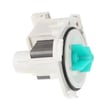
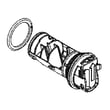
If the washer still drains slowly after cleaning, the pump itself is the next likely failure point: washer drain pump assembly 132510083.
Quick checks that prevent repeat F21 codes
| Check | What you want | What it means if it fails |
|---|---|---|
| Drain hose routing | No kinks, not pinched | Water cannot exit fast enough |
| Standpipe/sink drain | Drains freely | Household drain restriction |
| Load size | Not overpacked | Excess suds and slow drain |
| Pump filter | Clear of debris | Pump cannot move water |
Why it matters
When the washer cannot drain on time, it protects itself by stopping the cycle and showing F21. Clearing the code without fixing the restriction usually leads to repeat errors, wet loads, and potential leaks around the pump area.
Last updated: January 2026
How to hard reset a Kenmore Elite washer?
For the Kenmore washer model 41741942710, a “hard reset” is usually just a power reset that clears a stuck control state. Unplug the washer (or turn off the breaker) for a few minutes, then restore power and restart the cycle using the POWER and START/PAUSE controls as described in the 41741942710 owner's manual.
Reset steps we recommend
- Press and hold POWER to cancel/stop the current cycle.
- Unplug the washer (or switch the circuit breaker off).
- Wait 3 to 5 minutes.
- Restore power.
- Press POWER, select a cycle, then press START.
- If the controls are locked, press and hold Prewash + Extra Rinse together until the lock indicator turns off.
If it still will not start after a reset
These checks solve most “dead” or unresponsive control complaints on front-load Kenmore washers:
- Confirm the door is fully closed; the washer will not run with the door open.
- Check the outlet and home power; reset the breaker if needed.
- Make sure the washer is not in a cool-down period from an overheated motor (it can restart after up to about 30 minutes).
- Verify the water supply valves are on; some models show “Check the tap” for slow/no fill.
- If the washer drains poorly or stops mid-cycle, inspect the drain system; a failing pump can mimic control issues.
| Symptom | Most likely cause | Best next step |
|---|---|---|
| Buttons beep but won’t change settings | Cycle already started | Press PAUSE, change settings, press START |
| Nothing happens when you press START | Door not latched or no power | Close door firmly; verify outlet/breaker |
| Stops and later runs again | Motor overheated | Wait for cool-down; reduce load size |
| Controls won’t respond | Control lock enabled | Hold Prewash + Extra Rinse to unlock |
Why it matters
A true “hard reset” does not fix a failed part, but it often clears a stuck cycle or control logic so you can confirm whether the issue is power, door latch/lock behavior, or a component problem.
Last updated: January 2026
How to unclog drain hose on Kenmore washer?
For Kenmore washer model 41741942710, we unclog the drain hose by safely draining any standing water first, then checking the pump filter and the hose path for kinks or blockages. After clearing the restriction, we reinstall everything securely so the washer drains normally.
Step-by-step: clear the clog safely
- Unplug the washer and turn off both water supply valves.
- Manually drain the tub using the procedure in the 41741942710 owner's manual.
- Open the pump cleanout access and remove and rinse the pump filter; reinstall it snugly (do not overtighten).
- Pull the washer forward and inspect the drain hose end-to-end:
- Straighten any kinks.
- Remove lint, coins, socks, or sludge from the hose.
- Check the standpipe setup so it does not cause drain problems:
- Standpipe height should be at least 24 inches and no more than 56.5 inches.
- Secure the hose so it cannot pop out during draining.
- Run a Rinse/Spin cycle and confirm strong, steady draining.
What to check first (fast diagnosis)
- Pump filter is packed with debris (common cause of slow drain)
- Drain hose kinked behind the washer
- House drain/standpipe partially blocked
- Standpipe too tall (can slow draining) or too low (can cause siphoning)
- Suds overload from non-HE detergent (can mimic a drain problem)
Drain setup limits for this washer
| Item | Target | Why it matters |
|---|---|---|
| Minimum standpipe height | 24 in. | Prevents siphoning and water-level errors |
| Maximum standpipe height | 56.5 in. | Helps the pump move water out efficiently |
| Hose retention | Secured with tie/strap | Prevents the hose from being forced out by discharge water |
When a part is likely involved
If the pump filter is clean and the hose and standpipe are clear but the washer still drains slowly or not at all, the drain pump can be the next suspect. For this model, the replacement is the washer drain pump assembly 132510083.
Why it matters
A restricted drain hose or clogged pump filter can trigger drain-related messages, leave water in the drum, and strain the drain pump. Clearing the restriction early helps prevent repeat clogs and protects key components.
Last updated: January 2026


