 Owner’s manual



How to hard reset a Kenmore 11047571602 washer?
To hard reset your Kenmore 11047571602 washer, unplug it (or switch off the breaker) for 1 minute, then restore power. This clears many temporary control glitches without changing your cycle selections; then start a new cycle normally.
Quick reset steps (recommended)
- Press STOP to end the current cycle.
- Unplug the washer (or turn the breaker off).
- Wait 60 seconds.
- Plug back in (or turn the breaker on).
- Select a cycle and press and hold START for about 1 second to begin.
For model-specific control behavior and cycle cancel steps, follow the 11047571602 owner's manual.
If the washer is stuck mid-cycle
If the door is locked or the washer will not respond, use the control-panel cancel procedure first:
- To stop and restart with a new cycle: press STOP once, choose a new cycle, then press and hold START (about 1 second).
- To cancel a cycle: press STOP twice; the washer powers down and the door unlocks after it is safe (it may drain first if water level or temperature is high).
- To drain manually: select RINSE/DRAIN & SPIN, make sure 2ND RINSE is deselected, then press and hold START (about 1 second).
What a hard reset fixes (and what it does not)
A power reset is best for temporary electronic issues. If symptoms return quickly, check for a mechanical or door-lock problem.
| Symptom | Try first | Common next step |
|---|---|---|
| Buttons unresponsive | Power reset | Cancel cycle with STOP twice |
| Door stays locked | Cancel cycle, allow drain | Run RINSE/DRAIN & SPIN |
| Cycle will not start | Reselect cycle, hold START 1 second | Check door latch engagement |
Why it matters
Resetting power can clear a control-board “freeze” so the washer can accept selections again. Using STOP and the drain/spin options also helps you unlock the door safely and prevent water from sitting in the drum.
Last updated: February 2026
Is it worth repairing a Kenmore washing machine?
Yes, repairing a Kenmore washer is worth it when the fix restores reliable operation for less than the cost of replacement, especially for common wear items like belts, door seals, and latches on model 11047571602. We use the owner's manual to match symptoms to the right repair.
A practical way to decide
Use these checkpoints before you spend money on parts or labor:
- Total repair cost vs. replacement cost: If the repair is clearly cheaper, repair usually wins.
- What failed: Wear items (belt, door boot, latch) are typically straightforward; major tub or control issues can be pricier.
- How the washer has been maintained: Regular cleaning and correct HE detergent use improves long-term reliability.
- Leak risk: Door seal and clamp problems can cause repeat leaks if not fixed correctly.
- Downtime: If you need a fast fix, prioritize common, in-stock parts.
Common repairs that often make sense on this model
These are frequent, cost-effective repairs for Kenmore front-load style washers:
| Symptom | Likely area | Example part for 11047571602 |
|---|---|---|
| Water leaking at the door | Door seal or clamp | Washer door boot WPW10111435, washer door boot spring clamp WP8540108 |
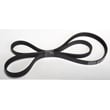
| Won’t spin or tumbles weakly | Drive system | Washer drive belt WP8540101 |
| Door won’t lock or won’t start | Door lock/strike | Washer door strike WP8540221, latch assembly (varies) |
| Poor draining or debris issues | Drain filter/trap | Filter WPW10730972, trap WPW10405608 |
Why it matters
A targeted repair prevents secondary damage. For example, a leaking door boot can lead to corrosion and electrical problems, and a slipping belt can strain the drive motor. Fixing the root cause early usually extends the washer’s usable life.
Tips to keep repair costs from coming back
- Follow the cleaning and maintenance schedule in the owner's manual.
- Use the correct amount of HE detergent to reduce residue and odors.
- Check water inlet hoses periodically and replace if worn.
- Keep the door gasket area clean and dry between loads.
Last updated: February 2026
How to read Kenmore washer model numbers?
Kenmore washer model numbers (including 11047571602) are structured so the first 3 digits identify the manufacturer, the next digits identify the base design, and the remaining digits indicate feature or color variations. This helps us match the correct Kenmore parts and service information.
What each section of the model number means
Most Kenmore washer model numbers follow this pattern:
- Prefix (first 3 digits): manufacturer code (example: 110)
- Middle digits: the base model/platform family
- Ending digits: version details such as feature package and color/finish
For this washer family, the manual also shows the format as 110.4756# / 4757#, where the # represents a color number. Use the full model number on your rating label when ordering parts.
Why the full model number matters for parts
Small differences at the end of the model number can change which parts fit, especially on front-load washers.
Common parts that can vary by model version include:
- Door seal and clamps
- Door lock and strike
- Electronic control boards
- Hoses and dispenser components
- Drive belt and motor components
Quick examples (using your model)
| Example model number | What it tells us | What can change |
|---|---|---|
| 11047571602 | Exact model and version | Correct part fit and wiring match |
| 110.4756# | Model family format shown in the manual | Color/version depends on the # |
Where to confirm the exact number
We recommend confirming the complete model number from the washer’s model/serial label, then cross-checking it with the 11047571602 owner's manual.
Why it matters
Using the full Kenmore model number prevents ordering the wrong door boot, control, or drain components and saves time during troubleshooting and repair.
Last updated: February 2026
What is the cubic feet capacity of a Kenmore washer model 11047571602?
The Kenmore washer model 11047571602 is a front-loading automatic washer, and its exact drum capacity in cubic feet is listed in the product specifications for that model. The fastest way to confirm the rated capacity is to check the specifications section in the 11047571602 owner's manual.
Where to find the capacity (cu. ft.)
In the 11047571602 owner's manual, look in these common locations:
- Product specifications or features pages
- A model and serial identification page that lists ratings
- A spec table that includes terms like capacity, volume, or tub
- The section that covers installation requirements and appliance details
If the manual does not list cubic feet
Some washer manuals focus on installation, cycles, and care rather than publishing a cu. ft. number. When that happens, we use these practical ways to size loads correctly for a full-size Kenmore front-load washer like 11047571602:
- Load items loosely so they tumble freely
- Fill the drum no more than about 3/4 full with dry laundry
- Wash bulky items (comforters, jackets) one at a time
- Use HE detergent only (this model is designed for HE detergent)
Typical capacity ranges (for context)
These ranges help you interpret what you see in specs when comparing washers; they are not a promise of the exact 11047571602 rating.
| Washer type | Typical capacity range (cu. ft.) | Common use |
|---|---|---|
| Compact front-load | 2.0 to 2.6 | Apartments, small loads |
| Full-size front-load | 3.0 to 4.5 | Most households, mixed loads |
| Extra-large front-load | 4.5+ | Large families, bulky loads |
Why it matters
Capacity affects cleaning performance and spin balance. Overfilling reduces tumbling action, can leave detergent residue, and increases vibration during high-speed spin.
Related troubleshooting
If you get a balance-related code while washing larger loads, use the Kenmore front load washer dc error code guide to pinpoint likely causes and fixes.
Last updated: February 2026
How to unclog drain hose on Kenmore washer?
To unclog the drain hose on your Kenmore washer model 11047571602, unplug the washer, remove standing water, then clear the drain path from the tub outlet through the pump area and out the external drain hose. Reinstall the hose with the correct height and an air gap to prevent siphoning.
Safe, effective steps to clear a clog
- Unplug the washer and keep power off while you access hoses.
- Remove water from the drum (bail, towels, or a wet vac) so you can open hoses without flooding.
- Check the external drain hose for kinks, crushing, or a blockage at the standpipe or laundry tub.
- Pull the drain hose from the standpipe and flush it with hot water; clear lint or small items with a flexible brush.
- If it still will not drain, access the pump area and the tub-to-pump hose; remove debris such as coins, socks, or lint.
Drain hose setup that prevents repeat drain problems
We follow these rules from the 11047571602 owner's manual to keep the washer draining correctly:
- Keep the top of the drain hose at least 30 in. (76 cm) above the floor.
- Do not route the drain hose higher than 96 in. (2.4 m) above the floor.
- Do not force excess drain hose into the standpipe.
- Do not seal or tape the drain hose into the standpipe; it needs an air gap.
Quick diagnosis guide
| What you see | What to check first | What it usually means |
|---|---|---|
| Won’t drain or shows a drain problem | Hose kinked, clogged, or too high | Restriction or poor drain routing |
| Keeps draining or cycle seems stuck | Hose too low or sealed in standpipe | Siphoning (no air gap) |
| Slow drain after clearing hose | Excess suds | Too much detergent or non-HE detergent |
Parts that may be involved
- Filter WPW10730972: This is a filter component used in the washer’s water flow system; if it is clogged, it can contribute to performance issues, but it is not the drain pump.
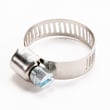
- Clamp WP596669: Replace if a hose clamp is distorted or will not reseal after you remove a drain hose.
Why it matters
A restricted drain path can leave water in the drum, trigger drain errors (including F21), and cause siphoning or repeat clogs if the drain hose is installed too low or sealed into the standpipe.
Last updated: February 2026





