


Can I use a generic water filter in my GE refrigerator?
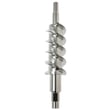
Yes, you can often use a generic water filter in a GE refrigerator if it matches the exact filter type your system is designed for; the key is correct fit, proper sealing, and verified filtration performance. For GE UNC15NPRBII, we recommend matching the OEM-style filter interface and replacing the filter head if it is leaking or not locking in securely.
A generic filter only works well when it is a true equivalent to the original design.
- Match the exact filter model family (shape, latch style, and inlet/outlet design)
- Confirm it is certified for drinking-water contaminants (look for NSF/ANSI claims on the packaging)
- Avoid filters that feel loose, require forcing, or do not fully seat
- Flush the new filter with several gallons of water (or per the filter maker’s instructions)
- Replace the filter on schedule to prevent slow fill and off-taste ice
If the filter is wrong or not sealing, you will usually see performance issues quickly.
| Symptom | What it usually means | What to check next |
|---|---|---|
| Water leaks at the filter area | Poor seal or cracked head | Inspect/replace refrigerator water filter head and tubing WR17X12301 |
| Slow water flow | Clogged filter or low supply pressure | Try a new filter; verify supply valve is fully open |
| Bad taste or odor in ice | Filter not effective or overdue | Replace filter; clean bin and water path |
| No fill to the unit | Supply issue or valve problem | Check/replace water valve WR57X38936 |
Your GE UNC15NPRBII depends on steady water flow and clean water to freeze clear, good-tasting ice. A poor-fitting or low-quality filter can restrict flow, cause leaks, and lead to small batches or hollow cubes.
Use the OEM-style filter design when you have any of these conditions:
- You have recurring leaks at the filter connection
- The filter housing does not lock positively
- You notice reduced ice production after installing a new filter
- You want the simplest, most reliable fit
- You are troubleshooting taste/odor complaints
Last updated: February 2026
Does my GE ice maker have a filter?
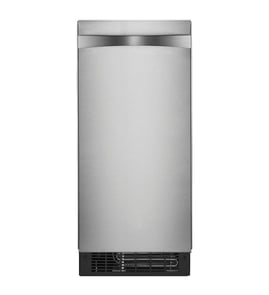
Yes. The GE freestanding ice maker model UNC15NPRBII uses a water filtration setup; if your unit is plumbed to a water supply, it typically has a replaceable filter to help reduce taste and odor issues and protect the water system.
Check these common signs on freestanding ice makers like GE UNC15NPRBII:
- A small filter housing or filter head in the water line path
- A filter access area behind a small cover or door
- Tubing connections leading into and out of a filter head
- A filter cartridge currently installed (twist-in or push-in style)
- A removable cover that protects the filter area
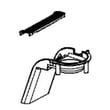
If you see a filter access cover, the replacement cover for this model is the filter access door WR02X38930.
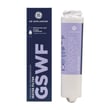
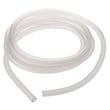
For this model’s parts list, the filter shown is the refrigerator water filter GSWF. If your ice maker has a filter head and tubing assembly, the matching water line connection component listed is the refrigerator water filter head and tubing WR17X12301.
| What you’re replacing | What it does | When to replace |
|---|---|---|
| Water filter (cartridge) | Improves water quality going into the ice maker | When ice tastes/odors change or flow slows |
| Filter head and tubing | Holds the filter and connects water lines | If it leaks, cracks, or won’t seal |
| Filter access door | Covers and protects the filter area | If broken or missing |
A working filter helps keep ice tasting clean and can reduce mineral and sediment buildup that leads to slow fills, small cubes, or poor ice quality.
- Discard the first batch or two of ice after a filter change
- Confirm the water supply valve is fully open
- Check for kinked or pinched 1/4-inch water line tubing
- Look for slow fill symptoms that point to a weak inlet valve
- Clean the bin and interior surfaces regularly
For broader performance tips, use tips for better ice from an ice maker.
Last updated: February 2026
Is it really necessary to change your refrigerator water filter every 6 months?
Yes. Replacing a refrigerator water filter about every 6 months is the standard schedule because the filter media loads up with sediment and contaminants over time, which can reduce flow and affect taste and odor. If your GE UNC15NPRBII uses a replaceable filter, follow that 6-month baseline.
Replace the filter earlier than 6 months if you notice any of these:
- Water flow slows down at the dispenser or fill line
- Ice tastes “off,” smells musty, or looks cloudy
- You recently had plumbing work or a boil-water event
- You have hard water, well water, or heavy ice and water use
- The filter is past its rated gallons (if your model tracks usage)
A fresh filter helps keep your ice maker and water system performing normally by reducing common issues tied to restricted flow and water quality.
- Weak fill that leads to small cubes or slow ice production
- Sediment that can clog a water valve or small tubing
- Taste and odor transfer into ice
- Extra strain on the water system as restriction increases
| What you’re seeing | What it usually means | What we recommend |
|---|---|---|
| 6 months have passed | Normal filter loading | Replace the filter |
| Slow flow before 6 months | Filter is plugging early | Replace now; check water supply |
| Bad taste or odor | Filter is saturated or water quality changed | Replace now; flush a few minutes |
| No symptoms, light use | Filter may still be loading gradually | Replace at 6 months anyway |
A water filter is a “wear” item. Even if water looks clear, the filter can become restricted and less effective over time, which impacts ice quality and can contribute to fill problems in a freestanding ice maker setup.
If your UNC15NPRBII is set up with a compatible filter, we recommend using the exact replacement listed for the system, such as the GE smartwater refrigerator water filter GSWF.
Last updated: February 2026
Is it worth repairing a GE ice maker?
Repairing a GE freestanding ice maker like model UNC15NPRBII is worth it when the problem is isolated (water supply, valve, drain, or controls) and the total repair cost stays well below the price of a comparable replacement. If the compressor or sealed system is involved, replacement is usually the better value.
- Repair if the unit cools normally and the issue is limited to water flow, draining, or sensing.
- Repair if you can confirm a single failed part (for example a valve, thermistor, or display board).
- Replace if the ice maker has repeated failures or multiple major parts are needed.
- Replace if the repair requires sealed-system work (compressor or refrigerant handling).
- Replace if the cabinet is rusted, the bin area is damaged, or leaks have caused ongoing corrosion.
These are typical “contained” repairs that often restore normal ice production without major labor:
| Symptom | Likely area | Example part for UNC15NPRBII |
|---|---|---|
| Runs but makes little or no ice | Water fill problem | Water valve WR57X38936 |
| Leaking water | Drain or reservoir components | Drain valve WR87X38941 |
| Erratic temps or harvest issues | Sensor feedback | Thermistor WR09X38943 |
| Dead display or unresponsive controls | User interface/control | Display board WR55X38950 |
- Compressor is failing, noisy, or not starting reliably.
- Ice production is poor and you also have cooling problems.
- You need multiple high-cost parts at once (for example motor plus control plus water system parts).
- A technician confirms a sealed-system restriction or refrigerant leak.
Freestanding ice makers combine refrigeration, water fill, and a harvest system. Fixing a single failure point (like a valve or drain component) is cost-effective; chasing multiple issues or sealed-system problems quickly pushes the total cost beyond the value of the machine.
For symptom-based troubleshooting before you buy parts, use freestanding ice maker troubleshooting.
Last updated: February 2026
What are common GE ice maker problems?
Common problems on the GE UNC15NPRBII freestanding ice maker include no ice, low ice production, leaking water, odd noises, and poor-tasting ice. Most issues trace back to water supply restrictions, drainage problems, or a failed control or water component.
- Ice maker runs but no ice: water not filling, reservoir not refilling, or a control issue
- Very little ice: restricted water flow, scale buildup, or temperature/airflow problems
- Leaking water: drain system problem or a water valve that is not closing fully
- Noise (grinding, buzzing, rattling): auger or motor area binding, or fan/motor noise
- Bad taste or odor: old filter, dirty reservoir, or mineral scale
- Confirm the shutoff valve is fully open and the supply line is not kinked.
- Replace the water filter if flow is weak or ice tastes off; use the exact GE smartwater refrigerator water filter GSWF.
- Look for standing water in the bin area; a drain restriction often shows up as leaks or slushy ice.
- Power reset: unplug for 5 minutes, then restore power and allow a full cycle.
- Clean mineral scale from the water system; scale commonly causes small cubes and slow production.
| Symptom | Likely part area | Example part for UNC15NPRBII |
|---|---|---|
| No fill or intermittent fill | Water inlet valve | WR57X38936 water valve |
| Leaking or won’t drain | Drain components | WR87X38941 drain valve |
| Dead display or erratic operation | Electronic control | WR55X38950 display board |
An ice maker depends on steady water flow and reliable draining. A restricted filter or a sticking valve can cause no-ice complaints, while a drain issue can create leaks and clumped ice that leads to bigger mechanical wear.
For step-by-step symptom-based troubleshooting, use our freestanding ice maker troubleshooting guide.
Last updated: February 2026
What are the parts of the ice maker machine?
A GE freestanding ice maker like model UNC15NPRBII is built from a refrigeration system (to freeze water), a water system (to fill and drain), and controls (to run cycles). Common service parts include the compressor, water valve, drain valve, sensors, and control board.
- Water supply and fill: inlet tubing, fittings, and the water valve that meters water into the reservoir.
- Water level and safety: reservoir and float components that prevent overfilling.
- Freezing system: sealed refrigeration components that remove heat so water can freeze.
- Ice forming and harvesting: auger and related hardware that moves ice and helps break it up.
- Drain system: drain valve and drain path that remove water during cleaning or purge cycles.
- Controls and user interface: display board and wiring that manage timing, sensors, and status.
| Part (example) | What it controls | Common symptom when it fails |
|---|---|---|
| Water valve WR57X38936 | Lets water into the unit | No ice, small ice, slow production |
| Drain valve WR87X38941 | Drains water during purge/clean | Leaking, won’t drain, standing water |
| Display board WR55X38950 | Runs the cycle and shows status | Not running, dead display, erratic operation |
| Thermistor WR09X38943 | Senses temperature for cycling | Thin ice, long cycles, inconsistent harvest |
- Water filtration components (filter, filter head, access door)
- Tubing unions and couplers for water line connections
- Door and hinge parts that affect sealing and bin temperature
Knowing which system a symptom belongs to speeds up troubleshooting. For example, “runs but no ice” usually points to the water fill path (valve, tubing, filter) or a control/sensor input, while “leaking water” often points to the drain path or fittings.
For symptom-based help, use freestanding ice maker troubleshooting.
Last updated: February 2026
What is the life expectancy of an ice maker?
Most freestanding ice makers like the GE UNC15NPRBII last 10 years with normal home use and routine cleaning; heavy use, poor water quality, and restricted airflow shorten that lifespan. Keeping the water system clean and the condenser area ventilated does the most to extend service life.
| Ice maker type | Typical life expectancy |
|---|---|
| Freestanding (like GE UNC15NPRBII) | 10 years |
| Built-in refrigerator ice maker | 7 years |
| Light commercial / high-duty use | 8 years |
- Hard water and scale buildup in the reservoir and water circuit
- Dirty condenser and poor ventilation around the cabinet
- Slow leaks that cause corrosion or mineral deposits
- Worn water-control parts (valves, float switch)
- Skipping periodic cleaning and sanitizing
- Replace the water filter on schedule if your setup uses one (a clogged filter restricts flow and stresses the fill system); see GE smartwater refrigerator water filter GSWF.
- Keep the condenser area clean and make sure the fan can move air freely.
- Clean and descale the water system regularly to prevent mineral buildup.
- Fix small leaks quickly; a failing drain valve WR87X38941 can lead to water where it should not be.
- If the unit overfills or stops filling correctly, check water-level control components such as the float switch WR09X39745.
Ice makers fail most often from water-related issues (scale, restricted flow, leaks) and heat-related issues (dirty condenser, poor airflow). Preventing those two problems is the most reliable way to reach the full 10-year service life.
Last updated: February 2026