


How long will an electric leaf blower last?
A well-maintained electric leaf blower like the Weed Eater 2540 typically lasts 10 years. Keeping airflow unrestricted, avoiding overheating, and replacing worn attachments (like tubes or bags) on time are the biggest factors in reaching that lifespan.
What affects lifespan the most
- Heat management: Don’t block the intake or exhaust; overheating shortens motor life.
- Debris control: Keep leaves and grit from packing into the tube or impeller area.
- Cord and plug condition: A damaged cord can cause intermittent power and arcing.
- Attachment wear: Cracked tubes and leaking bags reduce performance and strain the motor.
- Storage: Dry storage prevents corrosion and keeps plastics from degrading.
Quick maintenance checklist (5 minutes)
- Clear the air intake vents before each use.
- Inspect the power cord for nicks, cuts, or loose prongs.
- Make sure the tube is fully seated and not cracked.
- Empty and shake out the vacuum bag (if equipped) so airflow stays strong.
- Let the blower cool after long runs (especially in warm weather).
Common wear items for the 2540
| Part | What it impacts | Replace when you see |
|---|---|---|
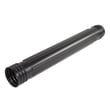
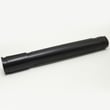
| Leaf blower attachment kit extension tube 530094425 | Airflow and blowing force | Cracks, loose fit, reduced airflow |
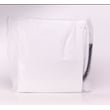
| Craftsman, poulan leaf blower vacuum bag 530402533 | Suction and debris containment | Tears, clogged fabric, weak suction |
Why it matters
Electric blowers usually fail early from restricted airflow (heat buildup) or running with damaged attachments that force the motor to work harder. Simple inspections and timely part replacement keep performance steady and extend service life.
Last updated: February 2026
What is the best rated electric leaf blower?
The “best rated” electric leaf blower depends on whether you mean corded or battery, plus your yard size and how much power you need. For most homeowners, the top-rated picks are typically high-CFM cordless blowers for convenience, or corded blowers for steady power without battery limits.
How we recommend choosing the best one
Use these factors to match the blower to your job:
- Power (CFM and MPH): Higher CFM moves more leaves; higher MPH helps lift wet, stuck debris.
- Corded vs. cordless: Corded is consistent for long sessions; cordless is easier to carry and store.
- Battery platform (if cordless): Staying on one battery system saves money if you already own tools.
- Weight and balance: A heavier blower can be “best” on paper but tiring in real use.
- Noise level: Quieter models matter in neighborhoods and for longer run times.
Quick comparison: corded vs. cordless
| Type | Best for | Typical tradeoff |
|---|---|---|
| Corded electric | Driveways, patios, small to medium yards | Limited by extension cord length |
| Cordless (battery) | Larger yards, quick cleanups, portability | Runtime depends on battery size |
Why it matters
If you buy based only on ratings, you can end up with a blower that is too heavy, too loud, or not powerful enough for wet leaves. Matching CFM, runtime, and ergonomics to your yard gives you better real-world results.
Keeping your Weed Eater 2540 working like it should
If you already own the Weed Eater 2540, performance issues often come down to airflow restrictions or worn attachments. These model-matched parts help restore normal airflow and collection:
- Replace a cracked or loose tube with the leaf blower attachment kit extension tube 530094425
- If your unit uses vacuum mode, replace a torn bag with the craftsman, poulan leaf blower vacuum bag 530402533
- Check for packed debris in the tube and housing; clear it before testing power
Last updated: February 2026
Is a higher MPH or CFM better for a leaf blower?
For the Weed Eater 2540 electric leaf blower, higher CFM is better for moving a larger volume of dry leaves across a wider area, while higher MPH is better for blasting stuck, wet, or heavier debris out of corners and cracks. For most yard cleanup, we prioritize CFM first, then MPH.
Quick way to choose (CFM vs. MPH)
- Choose higher CFM if you want to clear:
- Driveways, patios, and open lawn edges
- Large piles of dry leaves
- Light debris over a broad area
- Choose higher MPH if you need to:
- Break loose wet leaves and matted grass
- Push debris out of mulch beds (carefully)
- Clean corners, seams, and crevices
- Choose a balanced blower if you do a bit of everything.
What the numbers mean
| Spec | What it tells you | Best for | What you notice in use |
|---|---|---|---|
| CFM (cubic feet per minute) | Air volume | Moving lots of leaves at once | Faster clearing in open areas |
| MPH (miles per hour) | Air speed | Dislodging stubborn debris | Stronger “punch” in tight spots |
Why it matters
CFM and MPH work together. A blower can have high MPH but still feel slow in big areas if the air volume (CFM) is low. Likewise, high CFM with low MPH can move a lot of light leaves but struggle with wet clumps.
Parts that can affect real-world performance
If your 2540 feels weaker than it used to, airflow restrictions and leaks matter as much as the specs.
- Check the tube and connections for cracks or loose fit
- Make sure the intake and outlet are clear of packed debris
- Inspect the cord and plug for damage (low power delivery can reduce performance)
- If you use vacuum mode, check the bag for clogging and airflow restriction
If you need to replace worn or missing airflow components, match the attachment to your exact setup, such as the leaf blower attachment kit extension tube 530094425.
Last updated: February 2026
What are the parts of the blower?
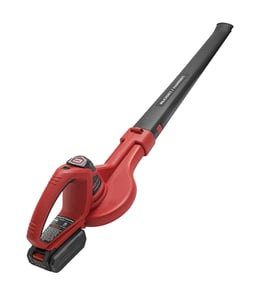
On the Weed Eater 2540 electric leaf blower, the main “parts of the blower” are the air-moving assembly (motor and fan/impeller), the housing and tubes that direct airflow, and any vacuum/mulch attachments (bag and extension tube). The exact configuration depends on whether you’re using it in blow-only or vacuum mode.
Main assemblies you’ll typically find
- Motor (electric drive that spins the fan)
- Fan/impeller (moves air; sometimes called the blower wheel)
- Blower housing (the body that contains the fan and channels airflow)
- Nozzle and tubes (directs air to the ground)
- Switch and power cord (controls power and provides electricity)
- Vacuum/mulch path and bag (only when configured as a blower-vac)
Model 2540 parts we commonly see customers replace
These are model-matched items shown for the 2540 parts list:
- Leaf blower attachment kit extension tube 530094425
- Craftsman, poulan leaf blower vacuum bag 530402533
Quick “blow” vs “vacuum” comparison
| Mode | What it does | Parts you’ll use most |
|---|---|---|
| Blow | Pushes leaves/debris away | Housing, tube/nozzle, motor/fan |
| Vacuum | Pulls debris in (often mulches) | Intake path, bag, tube/attachments |
Why it matters
Knowing the assemblies helps you troubleshoot faster. For example, weak airflow usually points to a clogged tube/bag, a damaged tube connection, or an issue with the fan/impeller, while a no-power symptom points to the cord, switch, or internal wiring.
Helpful tip before ordering
- Confirm you’re searching parts by the full model number 2540
- Match the part name and ID exactly
- Replace cracked tubes or a torn bag promptly to maintain airflow
For model-number help, use how to find your appliance model number (and what it means for parts).
Last updated: February 2026
What is the difference between a 20V and 40V leaf blower?
A 20V vs 40V comparison applies to cordless, battery-powered leaf blowers. Your Weed Eater model 2540 is an electric (corded) leaf blower, so it does not use a 20V or 40V battery system; performance depends on motor design, airflow, and your power supply.
20V vs 40V: what the numbers really mean
On cordless blowers, voltage is a battery platform rating that affects how much power the tool can deliver under load.
- 40V systems deliver stronger sustained blowing for heavier debris and longer sessions.
- 20V systems are lighter and better for quick cleanups and tight spaces.
- Battery capacity (Ah) drives runtime more than voltage alone.
- CFM and MPH describe real-world blowing performance.
- Battery and charger compatibility is usually brand and platform specific.
| Feature | 20V cordless blower | 40V cordless blower |
|---|---|---|
| Typical use | Light duty, small areas | Medium to heavy duty, larger areas |
| Weight | Lighter | Heavier |
| Runtime approach | More battery swaps | Fewer swaps |
| Best performance indicator | CFM, MPH, nozzle | CFM, MPH, nozzle |
How this applies to Weed Eater 2540 (corded)
Because the 2540 plugs into household power, you get steady output without battery runtime limits. For better reach and directing airflow, an accessory like the leaf blower attachment kit extension tube 530094425 can help restore handling if your tube is cracked, loose, or missing.
Why it matters
Matching the power source to the job prevents frustration. Corded blowers like the Weed Eater 2540 are ideal for consistent power near an outlet; cordless voltage choices matter most when you need portability and longer battery runtime.
Last updated: February 2026