Error Codes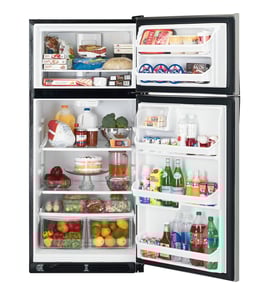



What are the disadvantages of a top mount fridge?
A top-mount refrigerator like the GE GTS19KGNDRWW typically makes fresh-food access less convenient because the refrigerator section sits lower, and it usually offers fewer premium organization and dispenser features than many bottom-freezer designs.
Common drawbacks to expect
- More bending for daily use: fresh foods are below waist level, so you reach down more often.
- Less flexible organization: many top-mount layouts have fewer adjustable bins, drawers, and specialty zones.
- Fewer built-in features: water and ice dispensers are less common on basic top-mount models.
- Freezer convenience tradeoff: the freezer is easy to access, but the items you use most (fresh food) are not.
- Door swing clearance: in tighter kitchens, door swing can feel more intrusive than some counter-depth or French-door layouts.
Quick comparison: top-mount vs bottom-freezer
| Feature | Top-mount refrigerator | Bottom-freezer refrigerator |
|---|---|---|
| Fresh-food access | Lower, more bending | Higher, easier reach |
| Freezer access | Eye-level, convenient | Lower drawer, more bending |
| Typical features | Simpler, fewer add-ons | More options and upgrades |
| Organization | Often basic | Often more flexible |
Why it matters
If you open the refrigerator section many times per day, the “fresh food is lower” layout is the biggest day-to-day disadvantage. If you use the freezer more often, a top-mount can still be a practical fit.
When a “disadvantage” is actually a maintenance issue
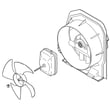
If the refrigerator seems inconvenient because it is not cooling evenly, frosting up, or making noise, that is usually a repair issue, not a design drawback. For example, airflow problems can involve the evaporator fan area (see evaporator f WR60X31522), and water/ice issues can involve the inlet valve (see refrigerator water inlet valve WR57X32213).
Last updated: January 2026
What is the most common problem with a GE refrigerator?
The most common problem we see on GE refrigerators like model GTS19KGNDRWW is cooling trouble (fresh food section warm, freezer not holding temp, or temps swinging). The most frequent causes are airflow problems (fans, frost buildup), dirty condenser area, or a door not sealing.
Quick checks first (no parts needed)
- Confirm the temperature controls were not bumped warmer.
- Make sure vents inside the refrigerator and freezer are not blocked by food packages.
- Listen for fan noise: you should typically hear airflow when the compressor is running.
- Check the door seal for gaps, tears, or areas that do not grip the cabinet.
- Clean dust from the condenser area (unplug first); restricted airflow here is a top cause of poor cooling.
Common causes and what they look like
| Symptom | Most likely area | What you typically notice |
|---|---|---|
| Freezer cold, fridge warm | Airflow/damper | Weak airflow into fresh food, items near vents colder |
| Both sections warm | Condenser airflow or sealed system | Compressor runs a lot, little cooling |
| Frost blanket on back freezer wall | Defrost/airflow | Fan noise changes, airflow drops over time |
| Lights work but cooling seems inconsistent | Door switch/controls | Fan may stop when door switch is not made |
Parts that commonly relate to cooling complaints on this model
If your checks point to airflow or fan issues, these model-matched parts are common suspects:
- Evaporator f WR60X31522 (moves cold air through the freezer and into the refrigerator)
- Refrigerator door switch WR23X31507 (tells the control when the door is closed; can affect fan operation)
- Fixed damper WR02X31092 (helps regulate cold air entering the fresh food section)
Why it matters
A top-mount refrigerator depends on steady airflow and heat removal. When a fan is weak, coils are clogged, or a door leaks, the compressor runs longer, temperatures drift, and food quality drops quickly.
Helpful DIY guidance
- Use GE refrigerator error codes if your unit is showing a code or flashing pattern.
- If you suspect a fan problem, follow how to fix your evaporator cooling fan for symptom-based troubleshooting.
Last updated: January 2026
Is top mounted refrigerator better than bottom mounted?
A top-mount refrigerator like the GE GTS19KGNDRWW is “better” when you want lower cost, strong energy efficiency, and simpler access to the freezer; a bottom-mount is “better” when you want fresh-food items at eye level and easier organization for everyday groceries.
Quick comparison (top-mount vs bottom-mount)
| Feature | Top-mount (freezer on top) | Bottom-mount (freezer on bottom) |
|---|---|---|
| Everyday access | Freezer is easiest to reach | Fresh food is easiest to reach |
| Typical price | Usually lower | Usually higher |
| Energy use | Often very efficient | Varies by design |
| Storage feel | Simple, straightforward | Often more “organized” layouts |
When a top-mount is the better choice
- You use the freezer often (frozen meals, ice, bulk items)
- You want a simpler design with fewer features to maintain
- You prefer a lower purchase price and lower long-term operating cost
- You want a classic layout that fits many kitchens
When a bottom-mount is the better choice
- You cook frequently and want fresh food at eye level
- You dislike bending for produce, deli items, and drinks
- You want a freezer drawer that can hold wide or bulky items
- You prioritize organization over simplicity
Why it matters
The “best” layout depends on how you shop and cook. If you open the refrigerator section far more than the freezer, a bottom-mount can feel more convenient day to day. If you rely on frozen foods or want a simpler, efficient design, a top-mount like the GTS19KGNDRWW is a strong fit.
Related help for GE refrigerators
- Use how to reset the door alarm on a GE refrigerator if the door alarm is sounding after loading groceries or if a door is not sealing fully.
Last updated: January 2026