 Error Codes


How big is a 7.0 dryer?
A “7.0 dryer” usually means about 7.0 cu. ft. of drum capacity, not the outside cabinet size. For a GE electric dryer like DHSR333EV0WB, most 7.0 cu. ft. vented dryers are roughly 27 inches wide, 38 to 39 inches tall, and 29 to 32 inches deep (depth varies most by door style).
Typical outside dimensions for a 7.0 cu. ft. vented dryer
Most standard-width dryers in this capacity range fit a common laundry alcove.
- Width: about 27 in.
- Height: about 38 to 39 in.
- Depth: about 29 to 32 in.
- Door swing clearance: plan extra space in front for loading
- Vent clearance: allow room behind for the exhaust duct and power cord
Quick fit check (what to measure)
Use a tape measure and confirm these before ordering a replacement dryer or stacking next to a washer.
| What to measure | Where to measure | What to allow for |
|---|---|---|
| Width | Wall-to-wall at the narrowest point | 1/2 to 1 in. total clearance |
| Height | Floor to lowest obstruction (shelf, cabinet) | Leveling legs and airflow |
| Depth | Back wall to front edge of door (closed) | Door handle and door swing |
| Vent space | Behind dryer | Duct bend radius and clamp space |
Why it matters
Capacity (7.0 cu. ft.) tells you how much laundry the drum holds; dimensions determine whether the dryer fits your space and whether the venting can be installed without crushing the duct (a common cause of long dry times).
Related maintenance that helps drying performance
If your DHSR333EV0WB is taking longer to dry, these checks often help as much as any part replacement:
- Clean the lint screen every load
- Inspect and clean the vent run to the outside
- Make sure the dryer is level so clothes tumble correctly
- Check for strong airflow at the exterior vent hood
- Review our guide: dryer takes a long time to dry
Last updated: February 2026
How do you reset the heating on a GE dryer?
To “reset the heat” on your GE electric dryer model DHSR333EV0WB, we recommend doing a power reset first (unplug for 1 minute, then restore power). If it still will not heat, the fix is usually restoring airflow or replacing a failed heating or safety component rather than a control reset.
Quick reset and safety steps
- Turn the dryer OFF.
- Unplug the power cord (or switch the breaker OFF).
- Wait 60 seconds.
- Restore power and run a timed dry cycle with high heat for 3 to 5 minutes.
- If the drum turns but there is no heat, stop the cycle and continue with the checks below.
What to check next (most common causes of no heat)
A GE electric dryer needs correct power, good airflow, and working heat-limit protection. Check these in order:
- House power: Electric dryers typically need 240V (two hot legs). If one breaker trips, the dryer can run but not heat.
- Airflow and venting: Clean the lint screen; confirm strong airflow at the outside vent hood.
- Overheat protection: A tripped/failed safety thermostat can cut heat until the underlying airflow problem is fixed.
- Heating circuit: A failed heating element assembly can cause no heat.
- Drum turning issues: If the drum is not turning, the heater often will not run; inspect the belt and idler system.
Parts that commonly affect heating on DHSR333EV0WB
| Symptom | Common suspect | Example part for this model |
|---|---|---|
| Runs but no heat | Safety thermostat | Therm. l210 WE4M160 |
| Runs but no heat | Heating element assembly | Heater housing WE11M23 |
| Won’t run when door closes | Door switch | Door switch WE4M415 |
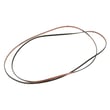
| Hums, won’t tumble, or squeals | Belt or idler | Drive belt WE03X29897 and idler pulley WE03X31620 |
Why it matters
When a dryer overheats, it often shuts the heater down to protect the appliance. Restoring airflow (lint screen, duct, outside hood) prevents repeat overheating and helps drying times, energy use, and part life.
Related help
If your dryer is showing a code or beeping pattern, use GE cleanspeak dryer error codes as a quick reference for what the dryer is detecting.
Last updated: February 2026
What brand of dryer lasts the longest?
Speed Queen dryers last the longest; their commercial-style build typically delivers 20 to 25 years of service. For most home dryers (including GE models like DHSR333EV0WB), a realistic lifespan is 10 to 15 years when airflow stays clear and wear parts are replaced before they cause bigger damage.
Typical lifespan by brand tier
These ranges reflect normal residential use with proper venting and routine maintenance.
| Brand tier | Examples | Typical lifespan | Best for |
|---|---|---|---|
| Commercial-grade | Speed Queen | 20 to 25 years | Maximum longevity, simple controls |
| Upper mainstream | Maytag, Whirlpool | 10 to 15 years | Reliability, parts availability |
| Mainstream | GE, Electrolux | 10 to 15 years | Balanced cost and performance |
What matters more than the logo
Long dryer life comes from keeping heat and friction under control.
- Clean the lint screen every load; clean the vent duct regularly to prevent overheating.
- Avoid overloading; it strains the motor, drum, and belt.
- Address squealing, thumping, or a burning smell quickly.
- Use the correct cycle and heat setting; excessive heat shortens component life.
- Keep the drum support system in good shape to reduce drag and noise.
How this applies to your GE DHSR333EV0WB
This GE electric dryer is a straightforward design; longevity usually comes down to airflow and maintaining common wear items.
Common “keep it running” parts for this model include:
- Drive belt WE03X29897 (drum not turning, belt snapped or stretched)
- Idler pulley WE03X31620 (squeal, belt tracking issues)
- Dryer blower wheel WE16M15 (rattling, weak exhaust, long dry times)
- T'stat saf. WE4M137 (overheating symptoms tied to temperature limiting)
Why it matters
A dryer that lasts longer costs less per year and dries faster when airflow stays strong; that reduces heat stress on the heating system and controls.
Last updated: February 2026
What does "easy care" mean on a dryer?
On the GE DHSR333EV0WB electric dryer, Easy Care is a cycle setting designed for synthetic or “permanent press” fabrics; it uses gentler heat and often adds a cool-down or wrinkle-control period to help reduce wrinkles and overheating compared with a Cotton/Regular cycle.
What to dry on Easy Care
Use Easy Care when the load is more likely to wrinkle or heat-damage.
- Polyester, nylon, acrylic, and blends
- Permanent press shirts and work clothes
- Lightweight items that dry quickly
- Loads where you want fewer wrinkles at the end
- Items labeled “tumble dry low” or “permanent press”
What Easy Care changes (typical behavior)
Exact temperatures vary by model and cycle, but most dryers treat Easy Care as a lower-heat, fabric-protecting option.
| Setting | Typical heat level | Typical goal | Best for |
|---|---|---|---|
| Cotton/Regular | Medium to high | Fast drying | Towels, jeans, heavy cotton |
| Easy Care | Low to medium | Reduce wrinkles, protect fabrics | Synthetics, blends, permanent press |
| Air/Fluff (no heat) | No heat | Freshen, dry very delicate items | Foam, rubber-backed items (check labels) |
If clothes still come out wrinkled or damp
Easy Care can leave heavier items slightly damp because it is gentler. If results are off, we recommend these quick checks.
- Do not overload; mixed-weight loads wrinkle more
- Use a higher dryness level (if your control offers it) or add a short timed dry
- Clean the lint screen before every load
- Check airflow; a restricted vent causes long dry times on any setting
- If the drum is not tumbling smoothly, inspect wear items like the drive belt WE03X29897 and drum slides
Why it matters
Choosing the right cycle helps protect fabrics, reduces wrinkles, and can prevent unnecessary heat stress on items like elastic waistbands and synthetic blends. It also helps you avoid over-drying, which can shrink or prematurely wear clothing.
Last updated: February 2026
What is the most common problem with a GE electric dryer?
For the GE DHSR333EV0WB electric dryer, the most common problems are no heat/long dry times (airflow restriction or a failed heating component) and the drum not tumbling (a worn belt or drive support parts). These issues often start with lint buildup and normal wear.
Most common symptoms and what they usually mean
- Runs but no heat: heating element circuit problem, high-limit thermostat opening, or poor airflow
- Takes too long to dry: clogged lint screen, crushed/blocked vent, weak airflow
- Drum will not spin but motor hums: broken belt or a seized drum support
- Squealing or scraping: worn drum slides or drum felt
- Stops mid-cycle: overheating from restricted venting, safety thermostat opening
Quick checks we recommend first (fast, high-impact)
- Clean the lint screen and wash it with warm water if you use dryer sheets (film can reduce airflow).
- Check airflow at the outside vent hood; it should be strong and steady.
- Inspect the vent path for kinks, long runs, or lint buildup.
- If the drum will not turn, unplug the dryer and try turning the drum by hand; heavy resistance points to drum support drag.
Common parts tied to these problems on DHSR333EV0WB
| Symptom | Likely wear item | Example part for this model |
|---|---|---|
| Drum not tumbling | Belt | Drive belt WE03X29897 |
| Squeal, thump, drag | Drum support surfaces | Slide drum WE03X37317 or slide drum WE03X37318 |
| Scraping, heat loss at drum edge | Drum seal surface | Felt WE09X27634 |
| No heat (electric) | Heater assembly | Heater housing WE11M23 |
Why it matters
When airflow is restricted, an electric dryer can overheat and trip safety controls, which leads to no-heat complaints, longer dry times, and repeat part failures. Fixing venting and lint buildup first prevents replacing good parts.
For display or diagnostic issues on GE dryers, we also use the GE cleanspeak dryer error codes and GE gfd model series error codes references to interpret what the dryer is reporting.
Last updated: February 2026





