Owner’s manual



How do I tell what model LG washer I have?
To tell what model LG washer you have, we look for the model and serial tag on the washer itself. On LG front-load washers like model WM4200HBA, the tag is typically found around the door opening (door frame area) and lists the model number and serial number.
Where to find the model tag on an LG front-load washer
Check these common locations first:
- Around the door opening on the cabinet (door frame area)
- Behind the door, along the inner rim of the opening
- On the back panel of the washer (less common, but worth checking)
- Inside the service flap or lower front access area (if your unit has one)
For the exact location and labeling details for your washer, use the WM4200HBA owner's manual.
What to write down (and why)
Record the information exactly as shown on the tag.
| Item on tag | What it’s used for | Example format |
|---|---|---|
| Model number | Matching parts and diagrams | WM4200HBA |
| Serial number | Verifying production details and service history | Letters and numbers |
| Revision code (if shown) | Ensuring the correct version of a part | Suffix or extra digits |
Why it matters for parts and troubleshooting
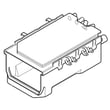
LG often makes small design changes within a model family. Using the full model number (and any revision code shown on the tag) helps us match the correct washer parts, such as a door lock, water inlet valve, or drain pump assembly.
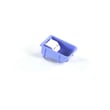
If you’re diagnosing a door that will not lock or unlock, the model tag also helps confirm the correct replacement, such as the LG washer door lock EBF61315802.
Last updated: February 2026
What is the average lifespan of an LG washer?
Most LG washers last 10 to 15 years with normal use and basic maintenance. For the LG WM4200HBA, regular Tub Clean cycles, keeping the door open to dry, and removing mineral buildup in hard-water areas help you reach the high end of that range (see the WM4200HBA manual).
What affects washer lifespan the most
- Hard water scale buildup on internal components (shortens life if ignored)
- Overloading and consistently unbalanced loads (adds stress to the tub and suspension)
- Poor ventilation after use (odor and residue buildup)
- Skipped cleaning of the drum and dispenser drawer
- Delayed repairs when symptoms start (leaks, draining issues, door not locking)
Maintenance that extends life on WM4200HBA
The manual notes that the tcL alert typically appears every 1 to 2 months depending on usage; running the Tub Clean cycle when prompted helps keep the drum and internal surfaces cleaner.
Use this routine:
- Run Tub Clean when tcL blinks
- If you use a descaler/drum cleaner, follow with Rinse+Spin before the next load
- Leave the door open overnight after the last load to dry the drum
- Periodically clean mineral buildup; use a water softener in hard-water areas
- Remove and clean the detergent dispenser drawer to prevent residue
Typical lifespan expectations (quick guide)
| Usage pattern | Typical lifespan | What to focus on |
|---|---|---|
| Light (few loads/week) | 12 to 15 years | Tub Clean, ventilation |
| Average (most households) | 10 to 13 years | Cleaning, balanced loads |
| Heavy (daily loads) | 8 to 12 years | Scale control, prompt repairs |
Why it matters
A front-load washer like the LG WM4200HBA relies on tight sealing, proper draining, and smooth spinning. Keeping the drum clean and controlling mineral scale reduces wear on key systems like the drain pump, door lock, and motor components.
Last updated: February 2026
What is the most common problem with LG washers?
Drain and spin issues are the most common problems we see on LG washers, including the LG WM4200HBA. In many cases, the washer is not draining fast enough because of a restricted drain path (pump filter, drain hose, or household standpipe), which can also prevent a proper spin.
What to check first (fast, no-parts steps)
- Unplug the washer before opening any access panels.
- Check the household drain/standpipe for slow draining or backup during pump-out.
- Confirm the drain hose is installed correctly and secured so it cannot pop out during drain.
- Make sure the drain hose is not kinked, crushed, or pinched behind the washer.
- Reduce load size; tightly packed loads can contribute to poor spin performance.
- Review the troubleshooting section in the WM4200HBA owner's manual for model-specific checks.
Common symptoms and the most likely causes
| Symptom | Most likely cause | What usually fixes it |
|---|---|---|
| Won’t drain or drains slowly | Clogged pump filter or restricted drain hose/standpipe | Clean filter, clear hose/standpipe |
| Won’t spin or leaves clothes wet | Drain restriction or load imbalance/overload | Fix drain issue, rebalance load |
| Water leaking during fill or drain | Loose hose connections or drain backup | Tighten hoses, correct drain setup |
| Loud banging during fill (water hammer) | Plumbing pressure surge | Add water hammer arrestors, reduce pressure |
When a part is the likely fix
If the drain path is clear but the washer still will not drain, a failed pump is a common next suspect on front-load washers. For the WM4200HBA, the replacement is typically the washer drain pump assembly AHA75853813.
Why it matters
A restricted drain can trigger repeated wet loads, longer cycle times, and extra strain on the pump and control system. Fixing the drain path early helps protect the washer and restores normal spin performance.
Last updated: February 2026