Owner’s manual
 Error Codes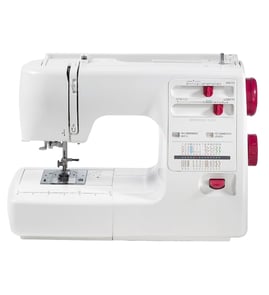

How do I know what model my Kenmore sewing machine is?
Your Kenmore sewing machine’s model number is printed on its identification (nomenclature) plate. On Kenmore model 3851960180, that plate is on the back of the machine; once you have the model number, you can match the correct manual and parts list for your exact machine.
Where to look on the machine
We recommend checking these common spots in this order:
- Back of the machine: look for the nomenclature plate (most common for this Kenmore series)
- Lower rear base: sometimes the plate is near the bottom edge
- Underside of the base: tip the machine carefully to view the label
- Inside an accessory compartment (if your machine has one): occasionally a label is placed there
What the model number looks like
Kenmore sewing machine model numbers are typically numeric and may include a prefix that identifies the series.
| What you see on the plate | What it means | What to do next |
|---|---|---|
| 385.XXXXXXX | Kenmore 385 series (common electronic/mechanical models) | Use the full number to match the correct manual and parts |
| 158.XXXX or 148.XXXX | Older Kenmore series | Use the full number; parts and manuals vary by exact suffix |
For your machine, use the exact model number 3851960180 when searching.
Why it matters
Kenmore sewing machines can look similar across series, but parts and settings (needle system, bobbin style, stitch functions, and maintenance steps like oiling points) are model-specific. Using the exact model number helps us point you to the right diagrams, troubleshooting, and service instructions in the owner's manual.
Next steps after you find the model number
- Write the model number down exactly as shown
- Use it to confirm you have the correct documentation and parts list
- If you’re troubleshooting an electronic display or beeps, check Kenmore 385 error codes
- If you’re ordering parts, search by the full model number on Sears PartsDirect
Last updated: February 2026
How old is the Kenmore sewing machine model 3851960180?
The Kenmore sewing machine model 3851960180 is part of the Kenmore 385 model family, which dates back to the mid-1960s; most machines in this family were produced between 1965 and 1987. For model-specific identification details (like where to find the nomenclature plate), use the owner's manual.
How to estimate the age more accurately
We use the 385 prefix as the starting point, then narrow it down using the machine’s identification plate and manual details.
- Check the nomenclature plate on the back of the machine for the full model and any additional identifiers.
- Match the exact model format shown in the manual (the manual lists the model as 385.19601 on the cover pages).
- Look for “Printed in” or document/part numbers in the manual; these often help place the machine in the correct era.
- Compare your machine’s features (electronic stitch selection, stitch count) to the descriptions in the manual.
- If your machine displays codes, use Kenmore 385 error codes to confirm you are in the correct model family.
What we can confirm from the Kenmore 3851960180 documentation
The documentation for this Kenmore sewing machine confirms it is a household-use machine and provides service and ordering guidance tied to the model identification.
| Item | What to look for | Why it helps |
|---|---|---|
| Model family | “385” prefix | Places it in the long-running Kenmore 385 series |
| Model marking | “385.19601” format in manual | Confirms the manual family for your machine |
| Nomenclature plate | Back of machine | Best place to confirm exact identifiers |
| Manual printing info | “Printed in Taiwan” and document numbers | Helps approximate the production era |
Why it matters
Knowing the approximate production era helps you choose compatible needles, bobbins, light bulbs (the manual specifies a 15-watt bulb type), and maintenance steps like cleaning and oiling. It also helps when searching for replacement parts by model number on Sears PartsDirect.
Last updated: February 2026
What is the most trouble-free sewing machine?
The most trouble-free sewing machines are typically simple, well-built mechanical models from long-established brands, maintained regularly (cleaning, correct threading, fresh needle). If you already own a Kenmore 3851960180, following the setup and care steps in the owner's manual is the most reliable way to minimize jams, skipped stitches, and motor strain.
What “trouble-free” usually means in real use
A machine feels trouble-free when it:
- Threads consistently (top and bobbin) without birdnesting
- Feeds fabric smoothly without slipping or stalling
- Holds tension settings without constant re-adjustment
- Runs quietly without knocking or binding
- Has readily available standard consumables (needles, bobbins, bulbs)
Best picks for fewer problems (what to look for)
We see the fewest day-to-day issues when shoppers prioritize build and simplicity over extra stitches.
Most reliable traits
- Mechanical stitch selection (fewer electronics to troubleshoot)
- Strong motor and stable internal drive system
- Easy access for lint removal around the feed dogs and bobbin area
- Common needle system and easy bobbin loading
- Solid dealer-level support for tune-ups (even if you do basic care at home)
| If you want… | Choose… | Why it helps reliability |
|---|---|---|
| Lowest maintenance | Mechanical machine | Fewer sensors and boards involved |
| Consistent fabric feeding | Strong feed system | Reduces “fabric not moving” complaints |
| Fewer thread issues | Simple tension path | Less sensitivity to threading errors |
| Long service life | Proven platform | Parts and service knowledge are widespread |
Keeping a Kenmore 3851960180 running with fewer issues
Your Kenmore 3851960180 is designed for household use and includes user-service steps like cleaning and lubrication guidance. These habits prevent most “problem machine” symptoms:
- Unplug before cleaning, changing the bulb, or servicing (safety first)
- Re-thread the upper path with the presser foot up
- Change needles regularly (bent or dull needles cause many stitch problems)
- Clean lint from the bobbin area and feed dogs
- Use the correct bobbin type and wind it evenly
When the machine shows an error or won’t run
If your Kenmore displays an error or behaves like it is electronically limited (won’t run, locks up, sluggish), use model-family troubleshooting steps in Kenmore 385 error codes.
Why it matters
A “trouble-free” sewing machine is usually the one that matches your projects and is maintained correctly. Most reliability complaints trace back to threading, needle choice, lint buildup, or skipped routine care, not the brand name alone.
You can also search by model number and shop parts and diagrams through Sears PartsDirect.
Last updated: February 2026
What are the parts of the electric sewing machine?
On the Kenmore 3851960180 electronic sewing machine, the main parts include the thread and needle system (spool pins, thread guides, take-up lever, needle), the fabric handling system (presser foot, presser foot lever, feed dogs, needle plate), and the bobbin system (bobbin, bobbin case/area, bobbin winder). For model-specific diagrams, use the owner's manual.
Common sewing machine parts and what they do
- Spool pins: hold the upper thread spool
- Thread guides and take-up lever: route and control upper thread tension and slack
- Needle and needle clamp: forms stitches with the bobbin thread
- Presser foot and presser foot lever: holds fabric down while sewing
- Feed dogs: move fabric under the presser foot
- Needle plate: supports fabric and provides the needle opening (use the correct plate)
- Bobbin winder and bobbin area: winds and supplies lower thread
Quick “system view” of the machine
| System | Parts you’ll recognize | What it affects |
|---|---|---|
| Upper threading | spool pins, guides, take-up lever, needle | skipped stitches, thread breaks, tension |
| Fabric feeding | presser foot, feed dogs, needle plate | fabric not moving, uneven stitch length |
| Bobbin/lower thread | bobbin, bobbin area/case, winder | birdnesting, loops under fabric |
Why it matters
Knowing which part belongs to which system helps you troubleshoot faster. For example, if fabric is not advancing, the issue is usually in the presser foot or feed dog area, not the bobbin.
Safety notes when identifying or handling parts
- Switch the machine off before changing the needle or presser foot
- Unplug before removing covers or doing any cleaning/lubrication
- Do not pull or push fabric while stitching (it can bend or break the needle)
- Use the proper needle plate for the stitch and setup
Helpful troubleshooting references
- If your machine displays a code, use Kenmore 385 error codes
- For general stitch and feeding problems, see sewing machine fabric not moving
You can look up replacement parts by model number on the parts list for Kenmore 3851960180, or search by model on Sears PartsDirect.
Last updated: February 2026
Is it worth repairing a sewing machine?
Yes. It’s worth repairing a Kenmore electronic sewing machine like model 3851960180 when the problem is a single, fixable issue (jam, belt, switch, motor, wiring) and the total repair cost stays well below the cost of replacing a comparable machine. Use the owner's manual to confirm safe-use and setup checks first.
Quick decision checklist
- Repair it if it has one clear symptom (won’t turn on, locks up, runs sluggish) and it previously sewed smoothly.
- Repair it if the issue is maintenance-related (lint buildup, thread jam, incorrect threading).
- Repair it if you depend on its stitch quality or features.
- Replace it if it has repeated electrical failures or multiple problems at once.
- Replace it if it has a damaged cord or plug, or has been dropped or water-damaged.
What matters most for model 3851960180
The manual stresses safety and preventing repeat damage:
- Keep ventilation openings on the machine and foot controller free of lint and dust.
- Use the proper needle plate; the wrong plate can break needles and create bigger repairs.
- If it isn’t working properly or has been damaged, have it examined and repaired before continued use.
Cost vs. value guide
| Repair type | Usually worth it? | Typical reason |
|---|---|---|
| Cleaning, jam removal, adjustment | Yes | Low cost, big improvement |
| Belt or switch issue | Often | Common wear items |
| Motor or electronic control issue | Sometimes | Higher parts and labor |
| Multiple issues plus rough/noisy running | No | Indicates broader wear |
Before you pay for service
- Unplug; clear thread and lint from the bobbin and feed dog area.
- Re-thread upper thread and bobbin exactly as shown in the owner's manual.
- Install a new needle and confirm it’s fully seated.
- If fabric won’t feed, use sewing machine fabric not moving.
Why it matters
A “worth it” repair restores safe, consistent feeding and stitch formation without chasing repeat failures.
For replacement parts, start with the model parts list, or search by model number on Sears PartsDirect.
Last updated: February 2026