Owner’s manual
 View engine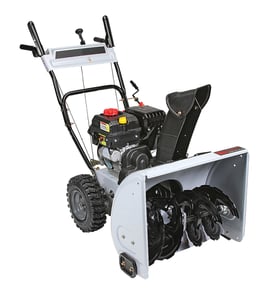



What is the typical lifespan of a gas snowblower?
A typical gas snowblower lasts 10 to 20 years. For the Craftsman 247886700 26-inch dual-stage snow thrower, lifespan lands at the high end when you follow the maintenance and storage steps in the owner's manual, use fresh fuel, and keep fasteners and wear items in good condition.
Typical lifespan ranges (what to expect)
Most gas, two-stage machines like this Craftsman model fall into these real-world ranges:
- 8 to 12 years: heavy use, minimal off-season care
- 12 to 20 years: normal residential use with routine maintenance
- 20+ years: light use, excellent storage practices, timely repairs
| Usage and care level | Typical lifespan | What usually ends it |
|---|---|---|
| Heavy use, limited maintenance | 8 to 12 years | drivetrain wear, corrosion, fuel system issues |
| Normal use, routine maintenance | 12 to 20 years | belts, bearings, cables, carburetor wear |
| Light use, excellent storage | 20+ years | age-related wear, parts availability, rust |
What matters most for extending life
The manual calls out several habits that directly prevent premature wear and damage:
- Use fresh gasoline; stale fuel is a common cause of hard starting and rough running.
- Run the machine a few minutes after throwing snow to help prevent auger and impeller freeze-up.
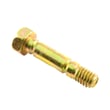
- Check fasteners often (shear bolts, engine mounting bolts, etc.) for tightness.
- Store safely and correctly; let the engine cool before storing, and avoid storing with fuel indoors.
- Do end-of-season storage steps such as draining fuel and protecting internal engine parts (oil in the cylinder) when storing long-term.
Why it matters
A snowblower’s “lifespan” is usually limited by preventable issues: fuel varnish in the carburetor, rust from damp storage, and wear parts (belts, bearings, shear bolts) that were allowed to run past their service life. Following the maintenance and storage guidance keeps your Craftsman 247886700 reliable season after season.
Last updated: February 2026
Should I spray my snowblower with WD-40?
Yes, you can use WD-40 on your Craftsman 247886700 snowblower, but we recommend using it sparingly and only on the right areas. Apply it to help prevent snow sticking and to protect bare metal from rust; keep it off hot engine parts, belts, and any friction-drive surfaces.
Where it’s OK to spray (and where it’s not)
Use a light coat on snow-contact and rust-prone metal surfaces:
- Inside the discharge chute and chute opening
- Auger housing interior (where snow packs)
- Impeller area (with the engine off and spark plug wire disconnected)
- Exposed metal fasteners and linkages for off-season rust protection
Avoid spraying WD-40 in these areas:
- Muffler, cylinder head, or any hot engine surfaces (fire risk)
- Belts, pulleys, and drive system components
- Friction disc and friction plate area (it can cause slipping and loss of drive)
- Near the fuel cap and any spilled gasoline (wipe spills before starting)
Best practice for applying it
- Shut the engine off and let it cool.
- Disconnect the spark plug wire before reaching near the auger/impeller.
- Clean packed snow and ice first; spray works best on a dry surface.
- Apply a thin coat, then wipe any overspray that could reach belts or the drive system.
WD-40 vs silicone spray (quick comparison)
| Option | Best use on a snowblower | Notes |
|---|---|---|
| WD-40 | Light rust protection, short-term water displacement | Can attract grime; avoid drive/friction areas |
| Silicone spray | Non-stick coating for chute and housing | Typically lasts longer for snow-shedding |
| Light oil (storage) | Off-season rust prevention on metal parts | Apply after cleaning and drying |
Why it matters
On the 247886700, keeping the chute and auger housing slick helps reduce clogging, and protecting metal helps prevent off-season corrosion. The owner’s manual also calls out coating metal parts with a light oil or silicone to help prevent rust during storage. See the owner's manual for maintenance and storage guidance.
Last updated: February 2026
Is a 3 stage snow blower better than a 2 stage?
A 3-stage snow blower is better than a 2-stage when you regularly deal with deep, heavy, or icy snow because the extra “accelerator” helps break up and feed snow faster. For typical driveway snow, a 2-stage is usually the better value and easier to handle. For operating and setup details on your Craftsman 247886700, use the owner's manual.
What changes from 2-stage to 3-stage
Both designs throw snow with an impeller, but a 3-stage adds a front accelerator to chew through dense snow and move it into the auger faster.
- 2-stage: auger gathers snow, impeller throws it
- 3-stage: accelerator pulls in snow, auger moves it, impeller throws it
- 3-stage typically clears faster in wet, packed, or end-of-driveway plow berms
- 2-stage typically feels more maneuverable and is simpler to maintain
Which one fits your conditions
Use this quick comparison to decide what is “better” for your property.
| Your typical conditions | Better choice | Why |
|---|---|---|
| 4 to 12 inches, normal powder | 2-stage | Plenty of capacity without extra complexity |
| 12+ inches, wet/heavy snow | 3-stage | Faster intake and less bogging |
| Frequent icy, packed snow or plow berms | 3-stage | Accelerator helps break up dense snow |
| Tight spaces, lots of turning | 2-stage | Usually lighter and easier to steer |
Why it matters for your Craftsman 247886700
Your 247886700 is a 26-inch snow blower designed for serious driveway work. No matter the stage count, performance depends heavily on correct operation and adjustments.
- Run the engine at full throttle for best throwing efficiency
- Use a slower ground speed for wet, heavy, or deep snow (reduce speed if wheels slip)
- Adjust the weight transfer lever for packed, normal, or light snow conditions
- Set skid shoes about 1/4 inch below the scraper bar for normal surfaces; adjust for gravel or packed snow
- After clearing, run the machine a few minutes to help prevent auger/impeller freeze-up
Maintenance and parts considerations
3-stage machines can have more wear points, but either style benefits from routine checks.
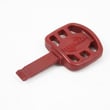
- Tighten fasteners periodically; for example, replace missing hardware like a snowblower ignition key 35062 if starting becomes impossible
- Inspect belts, bearings, and shear hardware each season
- Keep controls moving freely and clear packed snow from the housing after use
Last updated: February 2026
Is it worth fixing a snowblower?
Yes, it’s worth fixing a Craftsman 247886700 gas snowblower when the problem is routine wear (belt, shear bolts, hardware, ignition key) and the machine is otherwise solid; those repairs restore reliability for far less than replacing the whole 26-inch snow blower. Use the owner's manual to match symptoms to the correct adjustment or part.
Quick way to decide (repair vs. replace)
We use these practical checkpoints for model 247886700:
- Repair when the issue is a normal wear item (belt, shear bolt, fastener, key) or a simple adjustment.
- Repair when the snowblower ran well recently and the failure is sudden (for example, auger stops after hitting ice).
- Repair when the machine has no major structural damage (auger housing, frame, chute base).
- Replace when the engine has persistent major problems (low compression, heavy smoking, repeated no-start after fuel system service).
- Replace when you are facing multiple big repairs at once (engine plus drive system plus auger gearbox).
Common “worth fixing” repairs on this model
These are frequent, high-value fixes for a gas snowblower like the 247886700:
- Auger won’t turn after a jam: shear bolts are designed to break to protect the auger and drivetrain.
- Drive or auger stops moving: a worn or stretched belt is a common cause; inspect belt condition and tension.
- Hard starting or no crank: verify the ignition key is fully seated and not damaged; replace if worn using key 35062.
- Poor scraping or uneven clearing: adjust skid shoes so the scraper bar height matches your surface (pavement vs. gravel).
Typical cost-to-value guide
| Repair type | What it usually means | Usually worth it? |
|---|---|---|
| Shear bolt replacement | Protection part did its job after impact | Yes |
| Belt replacement | Normal wear item | Yes |
| Skid shoe adjustment | Setup issue, not a failure | Yes |
| Major engine overhaul | High labor and parts cost | Often no on older units |
Safety and “why it matters”
A snowblower can throw debris and has rotating parts; we always stop the engine and disconnect the spark plug wire before adjustments or repairs. Fixing the right wear part (instead of forcing operation) prevents bigger damage, especially to the auger/impeller and drive system.
Last updated: February 2026