Owner’s manual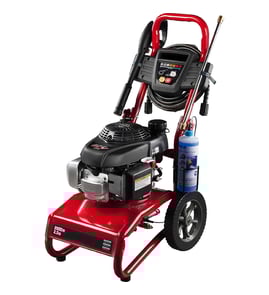




What kind of gas goes in a Craftsman 3000 PSI pressure washer?
For the Craftsman pressure washer model 580768350, we use clean, fresh unleaded gasoline with a minimum 87 octane (87 AKI) rating. Refuel only after the engine cools, and handle gasoline away from sparks, flames, or smoking.
Fuel type and what to avoid
Use regular unleaded fuel; it helps the engine run correctly and reduces starting and performance problems.
Avoid these common fuel mistakes:
- Using old gas that has been sitting for months
- Mixing oil into the gasoline (this model uses a 4-cycle engine)
- Overfilling the tank (leave room for expansion)
- Refueling while the engine is hot
- Storing fuel in unapproved containers
Safe refueling steps (recommended)
Gasoline vapors can ignite easily, so we follow a consistent routine:
- Shut the engine off and let it cool
- Move the pressure washer to a well-ventilated outdoor area
- Clean dirt/debris away from the fuel cap area
- Fill slowly to reduce splash and vapor buildup
- Tighten the cap securely before restarting
Quick reference table
| Item | What to use | Why it matters |
|---|---|---|
| Gasoline type | Unleaded | Correct combustion and reliable starting |
| Minimum octane | 87 (AKI) | Helps prevent knock and power loss |
| Fuel freshness | Fresh, clean | Reduces carburetor and starting issues |
Why it matters
Using the right fuel helps your Craftsman 580768350 start easier, run at governed speed more consistently, and reduces common issues like surging, power loss, and hard starting. For model-specific safety and operating details, follow the owner's manual.
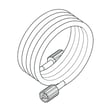
If you need replacement parts while servicing the unit (for example, a leaking or damaged water line), you can order model-matched items like the hose 84006753 from the parts list for this model, or search by model number on Sears PartsDirect.
Last updated: February 2026
Where to find model number on Craftsman pressure washer?
On the Craftsman pressure washer model 580768350, the model number is printed on the rating label. You’ll typically find that label on the frame, most often on the top or back side of the lower frame, or on the top or back side of the upper frame; confirm the exact location using the owner's manual.
Common places to check on model 580768350
Look for a silver or white sticker or plate with a barcode and text such as “Model No. 580.768350”:
- Top of the lower frame (near the rear)
- Back of the lower frame (near the wheels or base)
- Top of the upper frame (near the handle area)
- Back of the upper frame (behind the handle)
- Near the pump mounting area on the frame rail
Tips to read the label successfully
If the label is dirty or faded, these steps usually help:
- Wipe the area with a damp cloth and mild soap; avoid pressure-washing the label
- Use a flashlight at an angle to make embossed text easier to see
- Take a close-up photo and zoom in to read small characters
- Write the model number exactly as shown (for this unit it appears as 580.768350 in the manual)
Why the model number matters
We use the model number to match the correct parts and diagrams for your exact pressure washer configuration. That helps you avoid ordering the wrong items, especially for high-fit parts like a pump B5685A or hose 84006753.
Model number vs. engine number (quick comparison)
| What you’re looking at | What it identifies | When it’s used |
|---|---|---|
| Pressure washer model number (580768350) | The complete Craftsman unit | Ordering chassis, pump, hose, and frame-related parts |
| Engine model/type/code | The engine only | Engine-specific tune-up and fuel/ignition parts |
You can order replacement parts for Craftsman model 580768350 from the parts list for this model, or search by model number on Sears PartsDirect.
Last updated: February 2026
Why does my gas pressure washer have no pressure?
Your Craftsman 580768350 gas pressure washer usually has no pressure when the water supply is restricted, air is trapped in the pump, or the nozzle or inlet filter is clogged. Purge air first, then verify steady water flow and clean the nozzle and in-line filter as outlined in the owner's manual.
Quick fixes to restore pressure
- Connect the garden hose and fully open the spigot.
- Confirm the inlet screen at the hose connection is clean and not blocked.
- With the engine off, squeeze the spray gun trigger until water flows steadily (this helps purge trapped air).
- Remove the spray tip and test flow briefly; a restricted tip can feel like “no pressure.”
- If the spray pulses, clean the nozzle and the in-line filter in the wand assembly.
Nozzle and filter cleaning (common cause)
A clogged nozzle is a primary cause of excessive pump pressure and pulsing; it can also make output seem weak or inconsistent. Use the cleaning tool method described in the manual:
- Shut off the engine and turn off the water supply.
- Remove the nozzle from the nozzle extension.
- Remove the in-line filter from the other end of the nozzle extension.
- Clear debris from the nozzle opening, then reinstall the filter and nozzle.
“No pressure” troubleshooting chart
| What you notice | Most likely cause | What to do next |
|---|---|---|
| Little or no spray, engine sounds normal | Water supply restriction or air in pump | Purge air at the gun; verify full-flow hose/spigot |
| Pulsing at the trigger | Nozzle or filter restricted | Clean nozzle and in-line filter |
| Pressure drops under load | Pump issue or internal bypass/unloader behavior | Inspect pump condition; consider pump replacement if worn |
Parts that commonly affect pressure
If you find leaks, damaged fittings, or a worn pump, these model-matched parts are commonly involved:
- Hose 84006753 (cracked hose, collapsed liner, or leaking coupler can reduce flow)
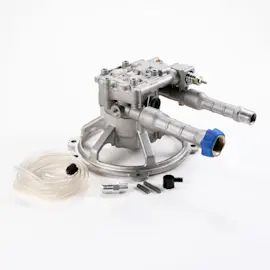
- Pump B5685A (worn pump can’t build or hold pressure)
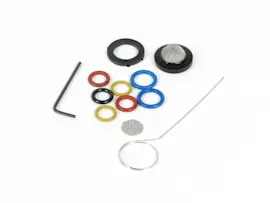
- Washer 50190 (a missing or damaged sealing washer can cause leaks and pressure loss)
Why it matters
Running the engine without all hoses connected and the water turned ON can damage the pump. Restoring steady water flow first protects the pump and helps you avoid repeat pressure problems.
You can order replacement parts for model 580768350 from the parts list for this model, or search by model number on Sears PartsDirect.
Last updated: February 2026
Are Craftsman gas pressure washers any good?
Yes. Craftsman gas pressure washers like model 580768350 are solid performers for typical home cleaning when they’re used and maintained correctly; the operator’s guidance emphasizes safe operation, proper water supply to the pump, and routine maintenance to prevent avoidable failures (see the 580768350 owner's manual).
What “good” usually means for this model
This Craftsman unit is designed as a homeowner-grade gas pressure washer with strong cleaning output for driveways, decks, siding, and equipment.
From the manual for model 580768350:
| Spec type | What you can expect |
|---|---|
| Pressure | 2400 PSI |
| Flow rate | 2.2 GPM |
| Engine rating | 5.5 horsepower |
Strengths customers typically like
When a gas pressure washer is set up correctly (water on first, correct nozzle, no leaks), it tends to feel “powerful” and “fast” compared to electric units.
- Strong cleaning performance for outdoor grime
- Quick setup once you learn the hose, gun, and nozzle routine
- Good reach and mobility for driveway and patio work
- Works well with the right spray tip and technique
Common issues and what to check first
Most “not good” experiences come from a few predictable problem areas: water supply restrictions, hose leaks, pump wear, and vibration loosening hardware.
- Pump damage from running dry: Always confirm steady water flow before starting the engine.
- Hose leaks or wear: Inspect the high-pressure hose and fittings; replace a damaged hose with the correct hose 84006753.
- Excess vibration: Check mounting hardware and isolators; a worn vibration mount G027007 can increase shaking.
- Low pressure or surging: Clogs, worn seals, or valve issues can cause pulsing; follow solving pressure washer problems for a structured diagnosis.
- Hard starting or stalling: Fuel quality, choke position, and maintenance items matter; use pressure washer won't start for step-by-step checks.
Why it matters
A gas pressure washer can last for years when the pump always has water, the engine runs at governed speed, and you store it correctly. Skipping those basics often leads to the “durability” complaints people report.
Parts and support for this model
We list model-specific replacement parts for Craftsman 580768350 on this page (for example, the hose, pump, and vibration mount). For broader model lookups and ordering, use Sears PartsDirect.
Last updated: February 2026
Is it worth repairing a pressure washer?
Yes, repairing a pressure washer is worth it when the problem is a common wear item (leaks at connections, a damaged hose, loose hardware) or a single replaceable component. For a Craftsman pressure washer model 580768350, replacement makes more sense when the engine or pump has major internal damage and the repair cost approaches half the price of a comparable new unit.
Quick decision checklist
Repair is the better choice when:
- The unit starts and runs normally, but you have leaks at fittings or the spray gun connection (often an O-ring or washer issue).
- The high-pressure hose is cracked, blistered, or leaking (see hose 84006753).
- The pump issue is limited to external leaks or a straightforward pump swap (see pump B5685A).
- The machine is otherwise in good shape (frame, wheels, wand, and fittings intact).
- You can confirm the correct procedure and maintenance steps in the owner's manual.
Replace (or stop investing) when:
- The engine has low compression, severe smoking, or repeated no-start problems after basic tune-up items.
- The pump has internal scoring or catastrophic failure and you also need multiple other parts.
- The unit has frequent breakdowns from neglect (running without water, dirty inlet screen, old fuel).
Typical repair cost comparison (rule-of-thumb)
| Scenario | Typical parts cost impact | Usually worth it? |
|---|---|---|
| Hose or connection leak | Low to moderate | Yes |
| Small hardware or vibration issue | Low | Yes |
| Pump replacement | High | Depends on overall condition |
| Engine replacement/major engine work | Very high | Usually no |
Why it matters
Pressure washers fail most often from preventable causes: running the pump without water, clogged inlet filtration, worn seals/O-rings, and fuel-related engine issues. Fixing a targeted problem restores performance; chasing multiple major failures quickly becomes uneconomical.
Repair tips that protect your investment
- Always turn on the water supply before starting the engine.
- Inspect hose connections for worn O-rings and washers; replace at the first sign of seepage.
- Keep the water inlet screen clean to prevent pump cavitation.
- Store with proper winterizing steps to prevent freeze damage.
- Use safe fueling practices and operate outdoors with ventilation (review safety rules in the manual).
You can order replacement parts for model 580768350 from the parts list for this model, or search by model number on Sears PartsDirect.
Last updated: February 2026