 Installation guide
 Owner’s manual
 Error Codes




What's the average lifespan of a KitchenAid dishwasher?
Most KitchenAid dishwashers last 10 to 14 years with normal household use. For the KitchenAid KUDD03DTSS2 drawer dishwasher, consistent cleaning, correct detergent use, and fixing small issues early are what most often determine whether you land closer to 10 years or closer to 14.
What affects lifespan the most
- Water quality (hard water speeds up scale buildup on heating and wash components)
- How often you run it (daily use wears pumps, seals, and racks faster)
- Loading habits (overloading strains the drawer slides and spray system)
- Maintenance routine (filter and spray-path cleaning prevents motor strain)
- Heat and drying performance (overheating events can stress safety parts)
Maintenance that helps you reach the high end of the range
Use the care and troubleshooting guidance in the KUDD03DTSS2 owner's manual to keep performance steady.
- Keep the wash system clear; remove debris so water can circulate freely
- Use only automatic dishwasher detergent and avoid over-dosing (helps prevent suds and leaks)
- Refill rinse aid when the indicator shows low (improves drying and reduces spotting)
- If draining slows, clean the drain air gap (if your setup has one)
- If the home will be unoccupied in freezing conditions, shut off water and power; winterize as needed
Parts that commonly limit service life (and what they do)
These are examples of wear or protection parts that can become relevant as the unit ages:
| Part | What it impacts | Common symptom when failing |
|---|---|---|
| Dishwasher thermal fuse 99003624 | Protects wiring/control from overheating | Dishwasher won’t run or stops unexpectedly |
| Thermostat 99003623 | Helps regulate water temperature | Poor cleaning, cycle issues tied to heating |
| Inlet valve WPW10186746 | Controls water fill | Not filling, slow fill, or fill-related stopping |
Why it matters
A drawer dishwasher like the KUDD03DTSS2 relies on tight sealing, correct fill and drain, and stable heating. When maintenance slips, the machine works harder each cycle, which shortens the life of the motor, pumps, and electrical protection components.
Last updated: February 2026
What is the most common problem with a KitchenAid dishwasher?
For the KitchenAid KUDD03DTSS2 drawer dishwasher, the most common issues we see are poor wash results (food left on dishes) and draining problems (water left in the drawer). These are usually caused by a clogged filter area, blocked spray paths, or a restriction in the drain system; the KUDD03DTSS2 owner's manual troubleshooting section walks through the key checks.
Most common symptoms and what they usually mean
- Dirty dishes after a cycle: spray arm holes or filter area blocked, overloading, or low water temperature.
- Standing water in the drawer: drain hose restriction, air gap blockage (if used), or a drain pump issue.
- Cycle stops or won’t start: drawer not closed tightly, Start/Resume timing, or a tripped breaker.
- Long run times: normal on some cycles; can also happen when incoming water is not hot enough.
- Moisture/odor concerns: ventilation or drying airflow issues.
Quick checks we recommend first (no parts swapping)
- Confirm the drawer closes fully and you press Start/Resume, then close the drawer within about 4 seconds (a common “won’t resume” cause).
- Check the home breaker or fuse if the dishwasher is dead or stops mid-cycle.
- If it is not draining well, clean the drain air gap (when installed) and inspect for kinks or clogs in the drain path.
- Run hot water at the sink before starting a cycle to improve wash performance.
Parts that commonly relate to these problems
| Symptom | What to inspect | Example part for this model |
|---|---|---|
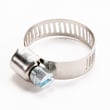
| Not draining, water left behind | Drain path restrictions, clamps, pump connections | Drain hose clamp WP596669 |
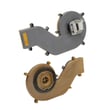
| Poor drying or excess moisture | Venting and airflow components | Dishwasher vent fan motor assembly WPW10155595 |
| No heat, weak cleaning, odd cycle behavior | Heating control and safety devices | Thermostat 99003623, thermal fuse 99003624 |
Why it matters
Poor cleaning and drainage problems tend to snowball: leftover soil can redeposit on dishes, and standing water can lead to odors and repeat clogs. Catching restrictions early helps protect the pump and keeps cycles consistent.
Last updated: February 2026
How to fix rubber seal on KitchenAid dishwasher?
On the KitchenAid KUDD03DTSS2 drawer dishwasher, a “rubber seal” issue is usually the drawer lid/door seal not sitting evenly in its channel. We fix it by cleaning the channel, pressing the seal in evenly end-to-end, and then running a quick rinse to confirm there are no leaks.
Quick fix steps (most common)
- Turn off power to the dishwasher at the breaker.
- Open the drawer and inspect the seal area for food debris, glass, or detergent buildup.
- Wipe the seal and the channel with a damp cloth; dry both so the seal grips.
- Starting at one corner, press the seal firmly into the channel a few inches at a time.
- Work all the way around; make sure there are no twists, waves, or sections sticking out.
- Close the drawer fully and keep it closed for a while so the seal “sets” in place.
What to check if it still leaks
Seal seating and drawer closing
- The drawer must close squarely; a rack or tall item can prevent full closure.
- Look for a section of seal that is flattened, torn, or pulled out of the groove.
- Check that the drawer slides move smoothly and evenly on both sides.
Loading habits that damage seals
The manual warns that sharp items can damage the door seal. Use these loading habits to prevent repeat problems:
- Keep knives and sharp utensils from contacting the seal area
- Avoid overloading so items do not press against the drawer front
- Do not let long utensils protrude where they can catch the seal
When replacement is the right repair
If the seal is torn, permanently deformed, or will not stay in the channel, replacement is the lasting fix. Use the diagrams and part listing for your exact configuration in the KUDD03DTSS2 owner's manual.
| Condition you see | What it usually means | Best next step |
|---|---|---|
| Seal pops out in one spot | Debris in channel or seal not fully seated | Clean and re-seat evenly |
| Seal looks ripped or chunk missing | Physical damage | Replace the seal |
| Leak only with certain loads | Drawer not closing fully | Re-load, check obstructions |
Why it matters
A properly seated seal keeps wash water inside the drawer, protects surrounding cabinetry from moisture, and helps the dishwasher maintain correct wash performance.
Last updated: February 2026
How do I tell what model KitchenAid dishwasher I have?
On the KitchenAid drawer dishwasher model KUDD03DTSS2, the model and serial number are printed on the rating label inside the unit. For this style, the label is located on the left-hand side of the upper drawer, so you can confirm your exact model before ordering parts.
Where to find the model number label
- Pull the upper drawer open.
- Look along the left interior side wall of the drawer opening.
- Find the rating label and copy the model number and serial number exactly.
If the label is hard to read, use a flashlight and wipe the area with a damp cloth, then dry it.
What to write down (and why)
- Model number (example: KUDD03DTSS2) to match parts diagrams and fit.
- Serial number to confirm production details when troubleshooting.
- Any suffix letters/numbers; they can change the correct part.
- The brand (KitchenAid) and appliance type (drawer dishwasher).
Quick check: model number vs. serial number
| Item | What it tells us | Used for |
|---|---|---|
| Model number | Exact design and parts fit | Ordering parts, diagrams |
| Serial number | Build sequence/date coding | Service support, verification |
Why it matters
KitchenAid dishwashers often share similar-looking drawers and panels, but internal components like the inlet valve, wire harness, or thermal fuse can vary by model. Using the exact model number from the label helps ensure the replacement part matches your dishwasher the first time.
For diagrams and additional identification notes, use the KUDD03DTSS2 owner’s manual.
Last updated: February 2026





