Owner’s manual
 Error Codes


How to find model of LG dryer?
On an LG dryer like model DLGX8901B, we find the model number on the appliance’s rating label, most often on the door opening (cabinet frame) or on the back of the dryer near the top. Use that exact model number when ordering parts or checking error codes.
Where to look on the dryer
- Open the dryer door and check the cabinet frame around the door opening
- Check the inside edge of the door itself
- Look on the back panel near the top
- If the label is worn, use a flashlight and take a close-up photo to zoom in
What to write down (and why)
Record these items exactly as shown on the label:
| Item on label | Example | Why it matters |
|---|---|---|
| Model number | DLGX8901B | Ensures parts fit and procedures match your dryer |
| Serial number | (varies) | Helps confirm production version and service info |
| Fuel type | Gas or electric | Changes wiring, heating system, and troubleshooting steps |
Why it matters
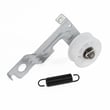
LG dryers often share similar styling across model families, but parts like the control board, thermistor, igniter, and belt can vary by model and revision. Using the correct model number prevents ordering the wrong component and speeds up diagnosis.
Helpful next steps
- Confirm your operating and maintenance details in the DLGX8901B owner’s manual
- If you’re troubleshooting a display code, match it to the correct guide for LG dryers using LG dryer error codes
Last updated: February 2026
How to tell if an LG dryer heating element is bad?
On LG model DLGX8901B, a bad heating element typically shows up as no heat or weak heat even though the drum tumbles normally. The most reliable check is a continuity/resistance test with a multimeter after disconnecting power; a failed element often reads open (no continuity).
Quick symptoms to look for
- Clothes stay damp after a full cycle; cycle time seems normal
- Dryer runs and tumbles, but there is little to no warm air
- Heat starts briefly, then stops (can also be airflow or thermostat related)
- Repeated long dry times (often caused by vent restriction, not the element)
- Burning smell or unusual odor (stop using the dryer and follow safety guidance in the DLGX8901B owner's manual)
How we test the heating circuit (safe, practical steps)
- Unplug the dryer (electric) or disconnect power at the breaker; for gas models, also close the gas shutoff before opening panels.
- Access the heater assembly as shown in the DLGX8901B owner's manual.
- Set a multimeter to ohms (Ω).
- Test the heating element terminals:
- A good element commonly measures around 10 to 30 Ω (many read near 20 Ω).
- Open/infinite resistance indicates a failed element.
- If the element tests good, check common heat-control parts that can stop heating:
Heating element vs. airflow problem
| What you see | More likely cause | What to do next |
|---|---|---|
| No heat at all, element reads open | Heating element failed | Replace heater assembly/element (model-specific procedure in manual) |
| Heat is weak, long dry times, lint buildup | Restricted venting or lint blockage | Clean lint screen, duct, and vent run; confirm strong airflow |
| Heat cycles off too soon, temps seem erratic | Thermistor or high-limit thermostat | Test sensors/thermostats; replace if out of spec |
Why it matters
A failed heating element stops proper drying, but restricted airflow can mimic the same symptom and can also overheat the dryer and trip safety thermostats. Checking resistance and airflow together prevents replacing the wrong part.
Last updated: February 2026
What is the most common problem with LG dryers?
The most common problem we see with LG dryers like model DLGX8901B is poor drying or no heat, and the root cause is usually restricted airflow (lint filter or venting) or a failed temperature-safety component. Drum noise and no-tumble issues are also frequent.
Most common symptoms and what they usually mean
- Takes too long to dry: lint filter clogged, vent restricted, or blower airflow problem
- No heat or weak heat: thermostat/thermal protection issue, sensor issue, or gas ignition problem (gas models)
- Stops and shows vent-related codes: exhaust too long, too many turns, or blocked
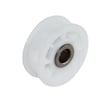
- Loud rumbling/squealing: worn rollers or idler pulley
- Won’t start: Control Lock enabled, door switch issue, or power supply problem
Start with airflow and lint filter maintenance (fastest fix)
LG calls out that proper airflow is critical, and you should never run the dryer without the lint filter installed. If the lint filter is coated with fabric softener residue, wash it in warm, soapy water and dry it completely before reinstalling (details in the DLGX8901B owner's manual).
Quick airflow checklist
- Clean the lint screen every load; deep-clean if it looks “waxy”
- Inspect the vent hood outside for weak airflow or a stuck flap
- Check for crushed, kinked, or excessively long venting
- Clean lint buildup in the duct and blower area if airflow stays weak
Common parts involved (when it’s not just the vent)
| Problem area | What you notice | Example model-matched part |
|---|---|---|
| Temperature sensing | Heat is erratic; may trigger tE codes | Dryer thermistor AGM30045804 |
| Overheat protection | Dryer shuts heat off; overheating symptoms | Dryer high-limit thermostat 6931EL3003C |
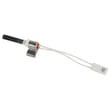
| Gas ignition (gas dryers) | No flame; no heat | LG dryer burner igniter 5318EL3001A |
| Drum support | Thumping/rumbling while tumbling | Dryer drum support roller assembly 4581EL2002H |
Error codes that point to the “most common” causes
Vent restriction and temperature-sensor faults are among the most common code-driven issues:
- d80/d90/d95: exhaust restriction (do not keep running until venting is cleaned/repaired)
- tE1 through tE7: temperature sensor failure (service is typically required)
For code meanings and next steps, use our LG dryer error codes guide.
Why it matters
Airflow problems do more than slow drying; they can overheat the dryer, trip high-limit thermostats, and shorten the life of parts like the blower wheel, burner igniter, and control components.
Last updated: February 2026
How to hard reset LG sensor dryer?
To hard reset your LG DLGX8901B sensor dryer, turn the dryer off, cut power at the breaker (or unplug it) for 1 minute, then restore power and turn it back on. This clears the control and forces the sensor cycles to restart their normal logic.
Quick reset steps (safe and effective)
- Press Power to turn the dryer off.
- Unplug the dryer or switch the circuit breaker off.
- Wait 60 seconds.
- Restore power (plug in or breaker on).
- Press Power, then start a cycle.
If the dryer still acts “stuck” after a reset
A reset helps, but it will not fix airflow or heating problems that make sensor cycles end early or run long.
- Clean the lint filter before every load; a clogged filter can cause poor drying results.
- Check the vent path for restrictions (crushed flex duct, lint buildup, blocked exterior hood).
- Avoid very small loads on Sensor Dry; add a few items or use a Manual Dry cycle.
- If the dryer is not heating consistently, test the heating circuit components.
Common parts tied to sensor-dry performance
| Symptom | What to check first | Example part for this model |
|---|---|---|
| Long dry times | Airflow and lint filter | LG dryer lint screen ADQ73373201 |
| Overheating or shuts off | Safety thermostats | Dryer high-limit thermostat 6931EL3003C |
| Temperature swings | Temperature sensing | Dryer thermistor AGM30045804 |
Why it matters
Sensor Dry cycles use moisture sensing to adjust time and temperature automatically. When airflow is restricted or the load is too small, the control can misread conditions and drying results suffer even after a reset.
For cycle behavior, options, and Sensor Dry details, follow the DLGX8901B manual.
Last updated: February 2026