Owner’s manual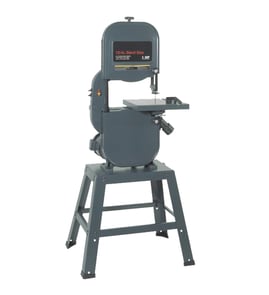

What is the 3-tooth rule for bandsaws?
The 3-tooth rule means you choose a band saw blade (TPI) so at least three teeth are in the cut at all times. On your Craftsman 113243311 12" band saw sander, this helps prevent tooth snagging and stripping, improves chip clearance, and produces a smoother, safer cut.
How to apply the 3-tooth rule (quick method)
- Measure the material thickness (the direction the blade teeth travel through).
- Pick a blade where 3 or more teeth span that thickness.
A practical shortcut is:
- Minimum teeth in cut: 3
- If you hear grabbing or see tooth damage: increase TPI (finer teeth)
- If the cut burns, loads up, or wanders in thick stock: decrease TPI (coarser teeth)
Common TPI choices by material thickness
Use this as a starting point; then fine-tune based on hardness and cut quality.
| Material thickness | Typical blade choice | Why it works |
|---|---|---|
| 1/8 in. and thinner | 18 to 24 TPI | Keeps 3+ teeth engaged in thin stock |
| 1/4 to 1/2 in. | 10 to 14 TPI | Balanced chip clearance and control |
| 3/4 to 2 in. | 6 to 10 TPI | Clears chips in thicker cuts |
| Over 2 in. | 3 to 6 TPI | Prevents gullets from packing with sawdust |
Setup checks that make the rule work
Even with the right TPI, setup determines whether the blade tracks and cuts correctly.
- Unplug the saw before adjustments.
- Set the blade with teeth pointing down toward the table.
- Tension the blade for its width (the manual notes this saw accepts 1/8 in. to 1/2 in. blades; a 1/4 in. blade is commonly used).
- Track the blade near the center of the tire before cutting.
- Set the upper blade guides to just clear the workpiece; adjust guides before turning the saw on.
- Keep the work supported and avoid cutting pieces too small to hold safely.
For the model-specific blade install, tension, tracking, and guide adjustments, follow the owner's manual.
Why it matters
Keeping at least three teeth engaged spreads cutting forces across multiple teeth. That reduces tooth breakage, improves control (less grabbing), and helps your Craftsman 113243311 cut straighter with less vibration.
To look up diagrams and replacement items for your saw by model number, start with the parts list for Craftsman 113243311 or search on Sears PartsDirect.
Last updated: February 2026
How do I know the size of my bandsaw blade?
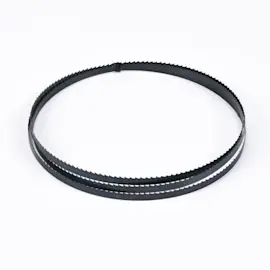
For your Craftsman 113243311 12-inch band saw sander, blade size means the blade’s length, width, and TPI (teeth per inch). You can measure those on your current blade; the owner's manual also confirms this saw accepts 1/8 inch to 1/2 inch blade widths, and it originally came with a 1/4 inch blade.
What to measure (the 3 specs that matter)
- Length: the total loop length of the blade
- Width: from the tooth tip to the back edge of the blade
- TPI: count how many teeth are in 1 inch (higher TPI for smoother cuts, lower TPI for faster cuts)
How to measure blade length safely
- Unplug the saw and open the wheel covers.
- Remove the blade (or measure a spare blade).
- Wear safety goggles and gloves; a blade can spring open when uncoiled.
- Lay the coiled blade on the floor, mark a starting point (the weld is easiest).
- Use a tape measure along the blade edge; roll the blade as you measure until the mark returns.
- The total distance is your blade length.
Quick reference: width and tension scale (model-specific)
The manual notes this saw uses blades from 1/8 inch to 1/2 inch wide, and a 1/4 inch blade was included. Set tension using the saw’s tension scale for the blade width you install.
| Spec | How to check | Why it matters |
|---|---|---|
| Width | Measure tooth tip to back | Must match guide and tension setup |
| Length | Measure full loop | Must fit the wheel spacing |
| TPI | Count teeth in 1 inch | Controls cut speed vs finish quality |
Why it matters
Using the correct blade size helps the blade track near the center of the tire, keeps the blade guides set correctly, and reduces common problems like blade breakage, stalling, and rough cuts.
Ordering the right blade
Once you have length, width, and TPI, use your model number (113243311) to search blades and related parts on Sears PartsDirect.
Last updated: February 2026
What is the 4 inch rule for bandsaw?
The 4-inch rule for a band saw means we keep our hands and fingers at least 4 inches away from the moving blade during every cut. On the Craftsman 113243311 12" band saw sander, that means using push tools, jigs, and proper guide height so hands never enter the danger zone.
How to follow the 4-inch rule
- Use a push stick or push block anytime your hands would drift inside the 4-inch zone.
- For short, narrow, or irregular pieces, use a sled, clamp, or jig to control the work.
- Feed the work steadily; do not force the cut.
- Shut the saw off and wait for the blade to stop before clearing offcuts.
Set up the saw to reduce risk
The Craftsman 113243311 manual emphasizes stable mounting, correct setup, and personal protection.
- Bolt the band saw securely to a stand or bench (and to the floor if it tends to move).
- Stand out of line with the blade.
- Wear ANSI Z87.1 safety goggles; use hearing protection for extended cutting.
- Do not wear gloves; secure loose clothing and roll sleeves above the elbow.
- Adjust the upper blade guides so they just clear the workpiece, then lock the guide bar (see the 113243311 owner's manual).
Quick guide: what to use
| Cutting situation | Best way to keep hands 4 inches away |
|---|---|
| Narrow rip cuts | Push stick or push block |
| Small parts | Sled or jig with a backer |
| Irregular shapes | Clamp to a carrier board or use a fixture |
| Clearing scraps | Power off, wait for full stop |
Why it matters
A band saw blade can pull material unexpectedly; keeping a 4-inch buffer and using push tools helps prevent a slip from turning into a hand-to-blade contact.
Last updated: February 2026
What is the specs of the Craftsman 12 inch bandsaw 113243311?
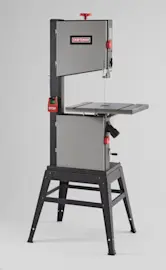
The Craftsman 12-inch band saw/sander model 113243311 is a vertical band saw designed for general woodworking cuts and sanding-belt use. For the exact factory specifications (capacities, adjustments, electrical requirements, and setup), we use the 113243311 owner's manual.
Key specs and features to confirm in the manual
These are the spec areas that matter most for the 113243311 and are typically listed in the first pages of the manual and in the setup sections:
- Cutting capacity: maximum cut height and throat capacity (distance from blade to frame)
- Table details: table size and tilt range for bevel cuts
- Blade details: blade length and recommended blade widths for different cuts
- Motor and power: motor rating, voltage, and circuit/fuse sizing
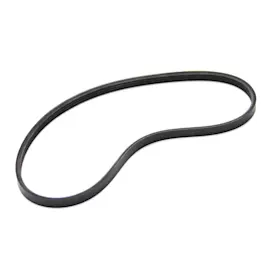
- Drive system: belt and pulley configuration (important for speed and vibration)
- Guide adjustments: blade guide and thrust bearing adjustment points
What we can confirm from the model documentation
The documentation for this tool identifies it as a Craftsman 12-inch band saw/sander, model 113243311 and includes a parts list, exploded views, and a wiring diagram reference.
Documented items you will see referenced
| Item | What it affects | Why you care |
|---|---|---|
| Parts lists and exploded views | Identifying components correctly | Helps match the right replacement part by part number |
| Wiring diagram reference | Electrical troubleshooting | Helps trace power, switch, and motor connections |
| Motor notes and connection steps | Safe electrical hookup | Prevents miswiring and shock risk |
Why it matters
Band saw “specs” are not just marketing numbers; they determine what stock you can cut safely, what blade you should run, and what electrical circuit you need. Using the correct blade size, tension, and circuit protection reduces drift, stalling, and nuisance breaker trips.
Ordering parts and matching the right version
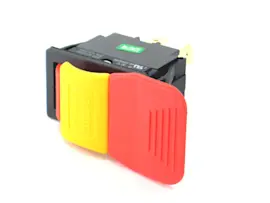
When you are ready to replace a wear item (blade, tires, bearings, belt, switch, or cord), match by model number 113243311 and the exact part number shown in the diagrams. If you are searching beyond the parts list, we use Sears PartsDirect to look up parts by model number.
Last updated: February 2026