Installation guide
 Owner’s manual
 Error Codes


How many cubic feet is my Kenmore refrigerator by model number?
For Kenmore model 10653084300, the most accurate way to get the cubic-foot capacity is to look up the specifications in the 10653084300 owner's manual. The model and serial label inside the fresh food compartment is also the best place to confirm you are matching the correct unit to the correct spec.
Use these methods in order; they prevent mix-ups with similar Kenmore 106-series refrigerators.
- Check the specifications section in the 10653084300 owner's manual.
- Confirm the full model number on the model and serial number label inside the refrigerator compartment.
- If you are comparing listings or parts, match the exact model number (10653084300) before trusting a capacity value.
- If you are measuring for fit, remember capacity (cu. ft.) is different from exterior dimensions and clearances.
Cubic feet is the interior storage volume of the refrigerator and freezer combined. It matters when you are:
- Replacing a refrigerator and trying to keep similar storage space
- Comparing side-by-side models with different shelf and bin layouts
- Planning airflow and loading so the evaporator fan can circulate cold air properly
| Item | What it tells you | Where to confirm |
|---|---|---|
| Cubic feet (capacity) | Interior storage volume | 10653084300 owner's manual |
| Clearance needs | Space around the cabinet for ventilation and door swing | Installation guide |
| Exterior dimensions | Whether it fits your opening | Installation guide |
Even with the right cubic feet, installation space still matters. For this style of refrigerator, proper ventilation and door swing clearance are called out in the documentation; using the installation guide helps you avoid tight installs that can reduce cooling performance.
Last updated: February 2026
Where is the model number on a Kenmore side by side refrigerator?
On Kenmore side-by-side refrigerator model 10653084300, the model number is printed on the model and serial number label located on the inside wall of the refrigerator (fresh food) compartment. Use that label to record both the model and serial number for parts and service reference.
- Open the refrigerator (fresh food) door
- Look along the inside side walls of the compartment
- Check near the upper side wall and around the crisper area
- Look for a label that lists Model and Serial
- Write the numbers down exactly as shown (letters and numbers)
Most Kenmore refrigerators show both identifiers together on the same sticker.
| Item on label | What it’s used for | Example format |
|---|---|---|
| Model number | Ensures you get the correct diagrams and parts | 10653084300 |
| Serial number | Identifies the production unit and date coding | Letters plus numbers |
We use the model number to match the correct parts list and diagrams for your exact refrigerator configuration (ice maker, dispenser, shelving, and wiring can vary by model). Using the label inside the fresh food compartment helps prevent ordering the wrong part.
Once you confirm the model number, you can match common replacements by description and ID, such as the refrigerator inlet valve W10408179 if you are troubleshooting water dispenser or ice maker water supply issues.
For additional label details and recording information, follow the owner's manual.
Last updated: February 2026
How to clean the coils on a Kenmore side by side refrigerator?
Cleaning the condenser coils on your Kenmore 10653084300 side-by-side refrigerator means removing dust and pet hair so the refrigerator can release heat properly. When coils are dirty, the compressor runs longer and cooling performance can drop; regular coil cleaning helps prevent that.
- Unplug the refrigerator (or switch off power at the breaker).
- Pull the refrigerator straight out to avoid damaging the water line.
- Remove the base grille (many models pull off from the bottom corners).
- Keep the doors closed while you work so temperatures stay stable.
- With the base grille off, locate the condenser coil area (typically behind the grille at the bottom front, or underneath).
- Use a coil brush to loosen packed dust from the coil fins and surrounding frame.
- Vacuum slowly with a crevice tool to capture debris as you brush.
- If dust is heavy, repeat brush then vacuum until the fins look clear.
- Reinstall the base grille, move the refrigerator back into place, then restore power.
Most homes do well with coil cleaning every 6 months; if you have pets or a dusty environment, clean every 3 months.
| Home condition | Recommended coil cleaning interval |
|---|---|
| Low dust, no pets | Every 6 to 12 months |
| Average dust | Every 6 months |
| Pets or heavy dust | Every 3 months |
- Refrigerator seems to run constantly or runs much longer than normal
- Cabinet sides feel unusually warm
- Freezer or fresh food temperatures drift warmer
- You see a mat of dust behind the base grille
Your manual notes that dirty condenser coils prevent proper heat transfer and make the motor work harder. Keeping coils clean reduces strain on the sealed system and helps your Kenmore refrigerator cool efficiently. See the 10653084300 owner's manual for model-specific cleaning and maintenance guidance.
Last updated: February 2026
Where is the filter located on a side by side refrigerator?
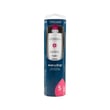
On the Kenmore 10653084300 side-by-side refrigerator, the water filter is located in the base grille below the freezer compartment door. Depending on the filter style, it either sits behind the base grille or installs through the base grille for front access (see the owner's manual).
Look at the bottom front of the unit (the toe-kick area):
- Find the base grille directly below the freezer door
- Check for a round filter cap or a filter head opening in the grille
- If you do not see the filter immediately, the filter is likely behind the grille panel
- The water filter status light (if your model has one) is located at the top of the refrigerator compartment and helps you track replacement timing
Your model can use one of two common base-grille filter layouts.
| Filter layout | What you will see | How you access it |
|---|---|---|
| Behind the base grille (Style 1) | No filter body visible until grille is removed | Remove the base grille, then rotate and pull the cartridge out |
| Through the base grille (Style 2) | Filter cap or cartridge end visible in the grille | Turn the cartridge/cap at the grille opening and pull it out |
- Dispense and discard 2 to 3 gallons of water after installing a new filter to flush the system
- Expect a little water to spill from the old cartridge during removal
- Replace the filter when water flow drops or when the indicator changes to red (if equipped)
- If you are troubleshooting leaks or poor flow, also inspect the refrigerator inlet valve W10408179 and the filter head area for cracks or loose connections
Knowing the exact filter location helps you replace it on schedule, restore normal dispenser flow, and reduce ice maker issues caused by restricted water supply.
Last updated: February 2026
What are the most common problems with Kenmore refrigerators?
The most common problems we see on Kenmore refrigerators like model 10653084300 are cooling issues, ice maker and water dispenser troubles, water leaks, door sealing or closing problems, and normal but surprising operating noises. Many of these come down to airflow, defrost performance, or water supply components.
- Not cooling well: blocked airflow, dirty condenser area, or a defrost problem causing frost buildup
- Freezer cold but fridge warm: weak airflow from the evaporator fan area or iced-over evaporator
- Ice maker not making ice: water supply issue, inlet valve problem, or ice maker failure
- Water leaking or puddles: clogged defrost drain, loose water line, or dispenser/ice maker supply leak
- Doors not sealing or hard to open: dirty or sticky door gaskets; leveling issues can also affect closing
- Noises (buzzing, sizzling, gurgling, popping): often normal operation, especially during ice maker fill and defrost cycles
- Confirm temperature settings and allow 24 hours after any adjustment.
- Make sure vents inside the refrigerator and freezer are not blocked by food packages.
- Listen for fan operation; fan and compressor sounds can change as doors open and temperatures change.
- Inspect door gaskets for dirt or stickiness; clean them per the owner's manual.
- If the ice maker or dispenser is weak, verify the household water supply valve is fully open.
| Problem area | What you notice | Parts that often apply on 10653084300 |
|---|---|---|
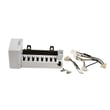
| Ice maker system | No ice, small cubes, intermittent harvest | Ice maker assembly - refrigerator ice maker by whirlpool 4317943 |
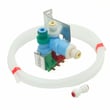
| Water supply to ice/dispenser | No water, slow fill, no ice fill | Refrigerator inlet valve W10408179 |
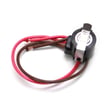
| Defrost system | Frost buildup, warm fridge, poor airflow | Refrigerator defrost bi-metal WPW10225581 |
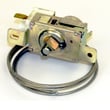
| Temperature control | Temps swing, runs too warm or too cold | Refrigerator thermostat WP2198202 |
Cooling, leaking, and ice maker complaints are usually connected: restricted airflow or a defrost issue can warm the fresh food section, while a water supply problem can stop ice production and cause leaks. Addressing the root cause prevents repeat failures and food spoilage.
Last updated: February 2026