Owner’s manual
 View engine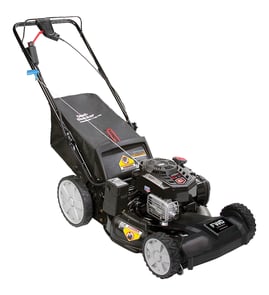



How to find Craftsman model number?
On the Craftsman gas walk-behind lawn mower model 917377660, the model number is typically printed on a sticker on the rear of the mower deck, near the lower handle mounting area. Once you find it, match it exactly when ordering parts or using the 917377660 owner's manual.
Where to look on the mower
Check these common label locations on Craftsman walk-behind mower decks:
- Back of the deck (rear-facing side), between or near the lower handle mounts
- Rear discharge door area (look just above or beside the door hinge)
- Top of the deck near the engine mounting area (less common)
- Under the rear flap or bagger opening (use a flashlight)
Tips to read the label successfully
If the sticker is dirty or faded, these steps usually make it readable:
- Wipe the area with a damp rag and mild soap; avoid soaking the label
- Use a flashlight at an angle to highlight faint printing
- Take a close-up photo and zoom in to read the characters
- Write the number down exactly as shown (including dots or dashes if present)
Model number vs. serial number (quick guide)
Use the model number for parts lookup; the serial number is mainly for manufacturing identification.
| Item | What it’s used for | Example format |
|---|---|---|
| Model number | Finding diagrams and correct replacement parts | 917.377660 or 917377660 |
| Serial number | Production tracking and date coding | Varies by manufacturer |
Why it matters
Craftsman walk-behind mowers often share similar decks and handles across multiple models, but parts like the drive system, handle hardware, and gearcase components can differ. Using the exact model number helps ensure the right fit the first time.
Last updated: January 2026
Is it cheaper to repair or replace a lawn mower?
For a Craftsman gas walk-behind lawn mower model 917377660, it’s usually cheaper to repair when the problem is routine maintenance or a single worn part; it’s usually cheaper to replace when the repair involves major drivetrain or engine damage, or when total repair cost approaches about half the price of a comparable new mower.
Quick rule of thumb we use
- Repair if it’s a tune-up item (blade, belt, cable, fasteners) or a simple adjustment.
- Replace if the engine crankshaft is bent, the mower has repeated major failures, or the repair estimate is close to 50% of a new mower.
- Repair first when the mower is otherwise in good shape and you can do the work yourself.
Common repairs that are usually worth it
These are typical on walk-behind mowers and often restore performance quickly:
- Sharpen or replace a dull/bent blade (a sharp blade improves cut quality and reduces strain)
- Clean grass buildup under the deck (helps with hard-to-push and poor bagging)
- Fix loss of drive by checking the drive belt and drive control adjustment
- Replace a worn/broken drive cable
- Clean rear drive wheels if they stop turning freely due to debris
For model-specific maintenance steps and torque guidance, follow the 917377660 owner’s manual.
Repairs that often push you toward replacement
Major issues can be expensive because they involve labor, special tools, or multiple parts:
- Bent engine crankshaft (often happens after a blade strike)
- Persistent “won’t start” problems after fuel system and ignition basics are addressed
- Repeated drive system failures (belt, pulleys, and control system all worn)
Cost comparison guide
| Situation | Typical best choice | Why |
|---|---|---|
| Blade dull, mower vibrates, uneven cut | Repair | Usually a single maintenance fix |
| Loss of drive or slowing drive speed | Repair | Often belt/cable/adjustment related |
| Bent crankshaft or severe engine damage | Replace | High labor and parts cost |
| Multiple major problems at once | Replace | Total cost stacks up fast |
Why it matters
Repairing the right problem keeps your 917377660 cutting safely and efficiently. The manual also calls out safety steps like disconnecting the spark plug wire before blade service and using the correct blade-bolt torque, which helps prevent repeat failures.
Last updated: January 2026
What is the life expectancy of a gas lawn mower?
A typical gas walk-behind lawn mower lasts 8 to 10 years with normal residential use and consistent maintenance. For your Craftsman 917377660, following the maintenance schedule in the Craftsman 917377660 owner's manual helps the engine run cooler, start easier, and last longer.
What most affects mower lifespan
- Oil care: check oil before each use; change oil on schedule
- Air filter condition: clean or replace when dirty (dusty mowing shortens life)
- Spark plug service: replace at the start of each season or every 100 hours
- Deck and engine cleaning: built-up grass makes the engine run hotter
- Storage habits: avoid storing with fuel indoors; keep the mower dry and covered
Maintenance timeline we recommend
| Task | Typical interval | Why it matters |
|---|---|---|
| Check engine oil level | Before each use | Prevents rapid engine wear |
| Clean underside of deck | After each use | Reduces corrosion and drag |
| Clean under drive cover | At least twice per season | Helps self-propel system work smoothly |
| Replace spark plug | Each season or 100 hours | Improves starting and power |
| Replace/clean air filter | At least yearly (more in dust) | Protects engine from dirt |
Signs your mower is nearing end-of-life
- Hard starting even with fresh fuel and a good spark plug
- Noticeable loss of power in normal grass
- Excessive vibration (often tied to blade or adapter wear)
- Persistent smoking or oil consumption
- Drive system slipping or not pulling consistently
Why it matters
Most “worn out” gas mowers fail early from heat, dirty air intake, or neglected oil changes. Keeping the deck clean and staying on top of tune-up items extends the service life and reduces expensive engine or drive repairs.
Last updated: January 2026