Owner’s manual




Can you still get parts for Kenmore appliances?
Yes. You can still get replacement parts for Kenmore appliances, including the Kenmore washer model 11031652020, by matching the exact model number to the correct diagrams and part listings, then ordering the OEM replacement part that fits your unit.
How to make sure you get the right Kenmore part
Using the full model number is the key because Kenmore appliances were built by multiple manufacturers over the years, and parts vary by design.
- Find the model tag on the washer cabinet (often under the lid or along the rim)
- Match the model number exactly: 11031652020
- Use the parts list and diagrams to identify the correct component
- Confirm the part ID and description before ordering
- Keep your serial number handy if multiple revisions exist
For model-specific identification and maintenance guidance, use the 11031652020 owner's manual.
Common washer parts customers replace on this model
These are examples of parts available for Kenmore 11031652020 that often come up during troubleshooting:
- Washer water inlet valve W11165546 (fill problems, slow fill, no hot or cold water)
- Lid lock-sol W11700916 (won’t start, lid won’t lock or unlock)
- Pump asm, dr W11396717 (won’t drain, water left in tub)
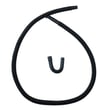
- Hose asm - d W11244231 (leaks at drain hose, cracked hose)
Quick symptom-to-part starting points
| Symptom | Most common checks | Parts that often relate |
|---|---|---|
| Won’t fill | Faucets on, inlet screens clear, hoses not kinked | Water inlet valve, inlet hoses |
| Won’t start/spin | Lid closes fully, lid strike not broken | Lid lock, lid strike |
| Won’t drain | Drain hose height/routing, clogs | Drain pump, drain hose |
| Excess vibration | Washer level, load balance | Dampers, suspension parts |
Why it matters
Ordering by model number prevents wrong-part returns and speeds up repair. It also helps you target the real failure point (for example, a “no fill” complaint can be a clogged screen, not a bad valve).
Last updated: February 2026
Does my Kenmore top load washer have a filter?
Yes. Kenmore top-load washers like model 11031652020 typically do not use a removable lint filter you clean after every load; instead, they rely on the drain pump and internal trapping areas. For routine upkeep, follow the cleaning and care steps in the 11031652020 owner's manual.
What “filter” means on this washer
On many top-load designs, “filter” can refer to different things. Here are the most common places debris gets caught:
- Drain pump area (coins, hair pins, small socks can restrict draining)
- Drain hose (kinks or clogs can mimic a “blocked filter”)
- Tub and washplate area (lint and residue buildup over time)
- Dispenser system (detergent and softener buildup)
How to tell if you have a drain restriction
If the washer is slow to drain or leaves water behind, a restriction is more likely than a dirty lint filter.
| Symptom | Most likely cause | What to check first |
|---|---|---|
| Won’t drain or drains slowly | Pump obstruction or hose restriction | Drain hose routing and standpipe height |
| Loud humming during drain | Pump jammed | Pump area and impeller path |
| Water left in tub after cycle | Partial clog | Hose kinks, clogs, or pump debris |
| Must restart to finish | Intermittent drain issue | Pump performance and wiring connections |
Maintenance we recommend (prevents odor and buildup)
Your manual calls out regular washer care; doing this reduces residue that people often mistake for a “lint filter problem.”
- Run the Clean Washer cycle monthly (or about every 30 cycles)
- Use HE detergent and avoid over-dosing
- Use warm or hot washes sometimes (not only cold)
- Leave the lid open between loads to help the tub dry
- Clean the dispenser components as outlined in the manual
When a part is the fix
If the washer is not filling correctly or not draining correctly, a failed component can look like a “filter” issue.
- For fill problems (no water, slow fill), check the washer water inlet valve W11165546
- For drain problems (won’t drain, loud drain), the drain pump assembly is a common suspect (match by model)
- For lid-related no-start/no-spin symptoms, inspect the lid lock and strike
Why it matters
A true removable lint filter is uncommon on top-load washers, so focusing on drain performance, hose routing, and monthly cleaning usually solves the problem faster and prevents repeat issues.
Last updated: February 2026
How to identify a Kenmore washer model?
To identify your Kenmore washer model, look for the model/serial tag on the cabinet or around the lid or door opening. For Kenmore model 11031652020, the exact tag location options and label format are shown in the 11031652020 owner's manual.
Where to look on the washer
Check these common label locations first (the tag is usually a sticker or metal plate):
- Top-load washers: under the lid, around the lid opening, or on the rim of the tub opening
- Back of the control panel: on the rear panel behind the console
- Main cabinet: on the side panel, often near the lower front edge
- Front-load washers: inside the door opening, on the door jamb, or behind the door
What to write down (and why)
Record the full model number and serial number exactly as printed.
- Model number (example: 11031652020) identifies the correct parts list and diagrams
- Serial number helps match production changes that can affect part fit
- Letter suffixes and extra digits matter; copy everything
Quick checklist
- Take a clear photo of the tag before it wears or peels
- Match every digit exactly (no spaces added or removed)
- Use the model number when ordering parts like a lid lock, drain hose, or water inlet valve
Model number vs. serial number
| Item | What it tells us | Used for |
|---|---|---|
| Model number | Design and parts family | Correct replacement parts and diagrams |
| Serial number | Build date/sequence | Version changes and service history |
Why it matters
Kenmore washers can look similar across multiple series, but internal components (like the lid lock, drive system, and control) can differ. Using the exact model number prevents ordering the wrong part and reduces repeat repairs.
Last updated: February 2026
How to unclog drain hose on Kenmore washer?
For Kenmore washer model 11031652020, we unclog the drain hose by safely disconnecting it, clearing the blockage, then reinstalling it using the correct standpipe depth (about 4.5 in.) to prevent siphoning and repeat clogs. See the routing details in the 11031652020 owner's manual.
Step-by-step: unclog the drain hose
- Unplug the washer.
- Pull the washer forward and place towels and a shallow pan under the hose connection.
- Disconnect the drain hose from the home drain (standpipe or laundry tub) first.
- If needed, disconnect the hose from the washer and drain any remaining water into a bucket.
- Flush the hose with hot water; for buildup, soak the clogged end in hot water plus vinegar for 30 minutes, then flush again.
- Clear the standpipe or laundry tub drain too; a clear hose will still back up if the house drain is restricted.
Reinstall correctly (prevents siphoning and slow drains)
The drain setup matters as much as the clog removal.
- Keep the drain hose form in place for standpipe or laundry tub installations.
- Insert no more than 4.5 in. (114 mm) of hose into the standpipe.
- Do not force extra hose down into the standpipe or lay the hose on the bottom of a laundry tub.
- Secure the hose so it cannot slip deeper during spin.
| Drain setup | Key requirement | What goes wrong if ignored |
|---|---|---|
| Standpipe | About 4.5 in. hose insertion | Siphoning, gurgling, repeat drain issues |
| Laundry tub | Tub rim height typically 39 to 96 in. from washer bottom | Overflow risk or poor draining |
| Floor drain | Drain hose form removed (special setup) | Leaks, improper drain routing |
When the hose should be replaced
Replace the hose if it is kinked, split, soft, or still restricted after flushing. For this model, the correct replacement is the washer drain hose W11244231.
Why it matters
A partially clogged drain hose can cause slow draining, standing water, and spin problems. Correct hose depth and routing also prevents siphoning, which can mimic a “won’t drain” complaint.
Last updated: February 2026
What is the capacity of the Kenmore washer 11031652020?
The exact wash capacity for Kenmore washer model 11031652020 is listed in the product specifications section of the 11031652020 owner's manual. For washers in this Kenmore/Whirlpool-built platform, capacity is typically in the 3.0 to 4.8 cu. ft. range depending on the exact variant and basket design.
How to find the capacity in the manual
Check these common spots in the 11031652020 owner's manual:
- Specifications or Product features page
- Model and serial information section
- Cycle guide pages (sometimes notes “IEC capacity”)
- Any page that lists dimensions, electrical, and water requirements together
Why capacity matters
Capacity affects how much you can wash per load, how well items move through the wash action, and how likely you are to see out-of-balance spinning with bulky loads.
Quick load-sizing guide (works well for this model type)
Use these practical limits to avoid poor cleaning and spin issues:
- Fill the basket loosely, not packed down
- Keep loads below the top row of holes (if visible) or leave a hand’s width at the top
- Wash bulky items (comforters, jackets) one at a time when possible
- Mix large and small items to balance the load
- If the washer struggles to spin, reduce the load and re-distribute
Typical capacity ranges by washer style
These are common industry ranges to help you sanity-check what you see in the manual:
| Washer type | Typical capacity (cu. ft.) | Best for |
|---|---|---|
| Compact top-load | 1.5 to 2.8 | Small households, tight spaces |
| Standard top-load | 3.0 to 4.0 | Everyday mixed loads |
| High-efficiency top-load | 4.0 to 5.5 | Larger loads, fewer cycles |
Related troubleshooting if loads seem “too small” or “too big”
If the washer is not filling, not agitating, or not spinning correctly, capacity can feel “off.” These parts commonly affect performance:
- Washer water inlet valve W11165546 (controls hot/cold fill)
- Lid lock-sol W11700916 (prevents spin with an unlocked lid)
- Pump asm, dr W11396717 (drains water so the washer can spin)
Last updated: February 2026
What is the life expectancy of a Kenmore washer?
A Kenmore washer typically lasts 10 to 15 years. For Kenmore model 11031652020, lifespan depends most on load size, how often you run cycles, and routine care like using HE detergent and replacing wear items (especially water hoses) on schedule.
Typical lifespan and what affects it
Most washers fall into a predictable range when they are installed correctly and maintained.
- Typical life expectancy: 10 to 15 years
- Heavy use (large family, daily loads): often closer to 8 to 12 years
- Light use (few loads per week): often reaches the upper end of the range
- Maintenance quality: strongly impacts pump, suspension, and drive wear
Maintenance that extends washer life
Our best longevity gains come from preventing leaks, reducing vibration, and keeping detergent residue under control.
- Use High Efficiency (HE) detergent and avoid overdosing
- Keep loads balanced; avoid consistently washing heavy single items alone
- Level the washer on a solid floor to reduce cabinet and suspension stress
- Inspect hoses regularly for bulges, cracks, or leaks
- Replace inlet hoses every 5 years (mark the date when you replace them)
For model-specific care and cleaning steps, follow the 11031652020 washer installation & care manual.
Common “wear-out” areas (and what they look like)
These are the parts and systems that most often determine whether a washer is worth repairing as it ages.
| Area | What you notice | Typical fix type |
|---|---|---|
| Water fill | Slow fill, no fill, hot or cold not working | Valve or hose service |
| Drain | Won’t drain, water left in tub | Pump or drain hose service |
| Spin and balance | Thumping, walking, off-balance shutdowns | Suspension or leveling |
| Lid safety | Won’t start or won’t spin with lid closed | Lid lock or strike |
If you are troubleshooting a no-fill or inconsistent fill issue that shortens cycle performance, the washer water inlet valve W11165546 is a common replacement part for this model.
Why it matters
Knowing the 10 to 15 year lifespan helps you decide when maintenance is the smart move (hoses, leveling, cleaning) versus when repeated major repairs (drive, tub, control) start to outweigh the value of keeping the washer.
Last updated: February 2026