Owner’s manual
 View engine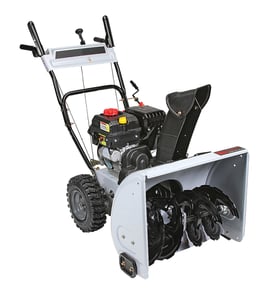



How to read Craftsman snowblower serial number?
For Craftsman snowblower model 536881230, the most reliable way to “read” the identification is to use the product identification label: it lists the model number and the serial number you will need for parts lookup and service. Use the model number to match diagrams, then use the serial number to confirm production details.
On most Craftsman snow throwers, the model and serial information is printed on a product identification label attached to the machine.
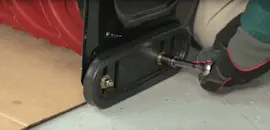
- Look on the rear area of the unit near the wheel axle and frame base
- Wipe off snow, salt, and grime so every character is readable
- Copy the characters exactly as printed (including any dashes)
- Take a clear photo of the label for future reference
- Use the model number first when ordering parts; use the serial number to avoid version mismatches
Once you have the label information, match it to the correct diagrams and common wear items (belts, shear bolts, skid shoes, scraper blade, and cables).
- Use the model number (536881230) to select the correct parts list and exploded views
- Use the serial number to confirm the correct revision when a part changed mid-production
- If you are troubleshooting chute rotation or chute looseness, inspect the chute ring hardware and retainers
| What you have | What it’s used for | Example for this unit |
|---|---|---|
| Model number | Picks the correct parts diagrams | 536881230 |
| Serial number | Confirms exact build/version | From your label |
Snowblower parts are often model- and revision-specific. Entering the correct model and serial information helps prevent ordering the wrong chute parts, drive components, or engine tune-up items.
For additional label and identification details, use the 536881230 owner's manual.
Last updated: January 2026
How do I tell what year my snowblower is?
For a Craftsman snow thrower like model 536881230, the most reliable way to estimate the year is to identify the engine make and model and then decode the engine date code (often stamped on the blower housing, valve cover, or near the starter). Use the 536881230 owner's manual to confirm where your model’s ID labels and engine information are located.
Check these common spots on a 12.5-hp snow thrower:
- Engine shroud/blower housing: stamped code or label
- Valve cover area: sticker or stamped numbers
- Recoil starter housing: label nearby
- Frame/auger housing: model and serial tag (helps confirm the unit identity)
- Under the handle panel: sometimes a product label is mounted there
Many small engines use a numeric code where part of the number indicates the year and often the month/day. For example, some formats use the first two digits for the year, followed by month and day.
- Identify the engine brand (commonly Briggs & Stratton, Tecumseh, etc.)
- Find the engine model/type/code (or similar label fields)
- Decode the manufacture date from that code
- Use the snowblower’s serial tag to confirm you are reading the correct unit
The serial number can still help narrow the production range, but the engine manufacture date is usually the fastest way to pin down the year.
| What you found | What it tells you | Best next step |
|---|---|---|
| Engine date code | Engine build date (often exact) | Decode by engine brand format |
| Snowblower serial tag | Unit identity and production clues | Match to parts diagrams/manual |
| Missing/illegible labels | Harder to date accurately | Clean area, use flashlight, take a photo |
Knowing the year helps us match the correct Craftsman parts (belts, shear pins, chute hardware) and avoid ordering look-alike parts that do not fit your 536881230.
Last updated: January 2026
What is the most common problem with snow blowers?
The most common snow blower problem is a no-start condition. On the Craftsman 536881230 (12.5-hp snow thrower), this is usually tied to fuel issues, carburetor varnish from storage, or ignition maintenance such as a worn or incorrectly gapped spark plug; the 536881230 owner's manual also emphasizes safe shutdown steps before any inspection.
- Old fuel or water-contaminated fuel (especially after off-season storage)
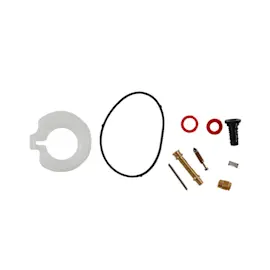
- Dirty carburetor or clogged fuel passages
- Spark plug worn, fouled, or cracked porcelain
- Incorrect spark plug gap (spec is 0.030 inch)
- Frozen moisture in controls or around the carburetor cover in cold conditions
- Move the machine outside; never run the engine indoors.
- Confirm the throttle and choke are set for starting.
- Inspect the spark plug; clean or replace if pitted/burned/cracked.
- Set spark plug gap to 0.030 inch; tighten firmly (18 to 23 ft-lbs if you use a torque wrench).
- If it still will not start, drain old fuel and clean the carburetor bowl and jets.
We follow these steps any time we inspect, unclog, adjust, or repair:
- Release the auger and traction drive levers
- Move the throttle to STOP
- Remove the ignition key (do not turn it)
- Disconnect the spark plug wire and keep it away from the plug
- Keep hands away from the auger and discharge chute; use a pry bar to clear jams
| Symptom | Most likely cause | Best first action |
|---|---|---|
| Pull cord feels normal but engine will not fire | Spark plug or fuel issue | Check plug condition and 0.030 inch gap; refresh fuel |
| Starts then dies | Carburetor restriction | Clean carburetor; verify fuel flow |
| Hard starting only in very cold weather | Moisture, thick oil, control icing | Clear snow/moisture from controls; warm storage if possible |
| Excess vibration | Loose/damaged auger or impeller components | Stop engine and inspect before restarting |
A no-start problem is usually a simple maintenance fix, but forcing starts or skipping safe shutdown steps can damage the engine, belts, or auger drive components and can create serious safety risks.
Last updated: January 2026
Is it cheaper to repair or replace a snowblower?
For the Craftsman snow thrower model 536881230, repairing is usually cheaper when the problem is limited to normal-wear items (belts, shear pins, tune-up parts) and the machine is otherwise solid. Replacing makes more sense when repair cost approaches about half the price of a comparable new snowblower.
- Repair if it is a single, clear failure (won’t move, won’t throw snow, hard starting) and the fix is a belt, cable adjustment, or tune-up.
- Repair if the auger and drive system still feel tight (no excessive vibration, no grinding).
- Replace if multiple major systems need work at once (engine + drive + auger).
- Replace if the frame/auger housing is heavily rusted or bent (structural issues drive labor cost up fast).
- Repair if you can do the work yourself using the steps in the 536881230 owner's manual.
| Scenario | What it usually involves | Best value choice |
|---|---|---|
| Won’t throw snow | Auger belt replacement and belt guide check | Repair |
| Won’t move forward | Traction belt/cable check; friction wheel adjustment or replacement | Repair |
| Hard starting | Spark plug service; fuel system cleaning; tune-up | Repair |
| Multiple failures | Several parts plus significant labor time | Replace |
Your manual calls out common service items like belt replacement and friction wheel adjustment/replacement, which are typical, cost-effective repairs on this type of Craftsman 12.5-hp snow thrower.
- If the machine won’t discharge snow, the manual points to the auger drive belt as a key suspect.
- If it won’t move forward, the manual has steps to check the traction system and adjust the friction wheel position.
- If it is hard to start, the manual covers spark plug inspection and setting the gap to 0.030 inch.
A snowblower’s “replace vs repair” decision is mostly about labor time and how many systems are affected. Fixing one wear item (belt, pulley, cable, tune-up parts) restores performance cheaply; stacking multiple repairs quickly pushes you into replacement territory.
Last updated: January 2026