Error Codes



How long should a Jenn air stove last?
A Jenn-Air range like model JDS8850AAS typically lasts 15 to 20 years with normal household use. Regular cleaning, correct burner ignition, and replacing wear items (like heating elements or door seals) on time are what most often determine whether it reaches the high end of that range.
Typical lifespan and what affects it
Most ranges fall into a predictable lifespan window, but usage and maintenance move you up or down.
- Cooking frequency (daily cooking shortens lifespan faster than occasional use)
- Heat stress (frequent self-clean cycles and high broil use accelerate wear)
- Ventilation and spill control (grease and moisture can damage switches and wiring)
- Prompt repairs (fixing small issues prevents bigger failures)
- Power and gas stability (surges and poor flame quality strain components)
Common parts that extend the life of a range
Replacing a few high-wear parts is often the difference between a range that lasts 12 years and one that lasts 18+.
| Symptom | Common wear item | Example part for JDS8850AAS |
|---|---|---|
| Oven not heating evenly or at all | Bake element | Bake element WP74010750 |
| Heat leaking, long preheat times | Door gasket | Door gasket WPW10162384 |
| Burners clicking or not sparking reliably | Spark module | Spark module WPW10475147 |
Why it matters
A range can keep working for decades, but efficiency and safety depend on tight door sealing, stable ignition, and consistent oven heat. Addressing those issues early helps protect the control components, wiring connections, and cooking performance.
Quick care checklist (5 minutes at a time)
- Wipe spills after the cooktop cools to prevent burner and igniter contamination
- Keep burner ports clear so the flame stays even and blue
- Avoid slamming the oven door; it stresses hinges and glass
- Use self-clean sparingly; high heat is hard on insulation and electronics
- If you smell gas or suspect a leak, shut off gas and have a technician check the range
Last updated: February 2026
Is JennAir considered high end?
Yes. Jenn-Air is widely considered a high-end (premium) appliance brand; it is known for upscale design, strong cooking performance, and feature-rich ranges like model JDS8850AAS.
What “high end” typically means for a range
High-end ranges usually focus on premium materials, tighter fit and finish, and cooking features that support better results.
Common high-end traits include:
- More precise oven temperature control and even baking
- Higher-output surface burners and better simmer control
- Heavier-duty knobs, door hinges, and racks
- More specialized cooking modes (broil performance, convection options, etc.)
- Higher parts and service costs compared to entry-level models
How this affects parts and repairs
Because premium ranges often use higher-grade components, choosing the correct replacement part for your exact model matters.
If you are maintaining or repairing your JDS8850AAS, these parts are commonly associated with performance and reliability:
- Bake element WP74010750 (restores proper baking heat)
- Spark module WPW10475147 (supports burner ignition on gas cooktops)
- Door gasket WPW10162384 (helps seal heat in the oven)
Quick comparison: premium vs. standard ranges
| Category | Premium (high end) | Standard (mid/entry) |
|---|---|---|
| Build quality | Heavier components, more robust hardware | Lighter-duty hardware |
| Features | More cooking modes and performance options | Basic cooking functions |
| Repair costs | Parts can cost more | Parts often cost less |
| Ownership | More emphasis on appearance and performance | More emphasis on value |
Why it matters
Knowing Jenn-Air is high end helps set expectations: replacement parts (like an oven rack, igniter system components, or door hardware) can be more specialized, and using model-matched parts helps protect cooking performance and safety.
Last updated: February 2026
What if I can't find my part on Sears PartsDirect?
If you cannot find a part for your JDS8850AAS range, we recommend confirming the full model number and then searching by the part name or part ID; if it still does not appear, contact our parts specialists with your model and serial number so we can match the correct replacement.
Quick checks that usually solve it
- Recheck the model number on the appliance rating label; use JDS8850AAS exactly.
- Search using a shorter term (example: “bake element” instead of “oven heating element”).
- If you have it, search by the part ID (example: WP74010750) or the manufacturer part number (example: 74003039).
- Look under related assemblies; some items are listed under “door,” “cooktop,” or “wiring” sections.
- Compare your symptom to common parts; for example, no oven heat often points to a bake element WP74010750.
Common “hard to find” part situations
| What you have | Best way to search | Example for JDS8850AAS |
|---|---|---|
| Symptom only | Search by part name tied to the symptom | “spark module,” “door gasket” |
| Old part number | Search by manufacturer part number | 74003039 |
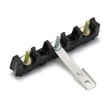
| You see the part on the range | Search by the part name | “terminal block,” “oven rack” |
| You have the ID from a diagram/list | Search by part ID | WPW10245259 |
Why it matters
Using the exact model number and a precise identifier (part ID or manufacturer part number) prevents ordering a look-alike part that does not fit your wiring, burner ignition, or oven cavity. That saves time and avoids return delays.
Last updated: February 2026
Which Jenn air range do I have?
Your Jenn-Air range is identified by the model number on the appliance data tag. For the JDS8850AAS series, you’ll typically find that tag on the right side of the oven frame behind the storage drawer or on the right side of the bottom oven frame.
Where to find the model and serial tag
Check these common locations on Jenn-Air ranges like model JDS8850AAS:
- Pull out the storage drawer and look on the right side of the oven frame
- Look on the right side of the bottom oven frame (near the lower front area)
- Wipe the tag gently; grease and heat discoloration can hide characters
- Write down the full model number and the full serial number (take a photo too)
How to read what you find
Once you locate the tag, match the model number exactly, including any letters.
| What you see | What it tells you | Why we need it |
|---|---|---|
| Model number (example: JDS8850AAS) | The exact range version | Ensures parts fit and diagrams match |
| Serial number | Production run details | Helps confirm compatible revisions |
Why it matters
Jenn-Air ranges often have multiple versions that look the same but use different parts (for example, an igniter, bake element, or spark system). Using the exact model number prevents ordering the wrong component.
If the tag is missing or unreadable
Use these practical checks to narrow it down while you confirm the model tag:
- Compare your oven and cooktop features to the parts list for JDS8850AAS
- If you’re troubleshooting ignition, confirm whether your range uses a spark module like the spark module WPW10475147
- If you’re troubleshooting baking performance, confirm the oven uses a bake element like the bake element WP74010750
Last updated: February 2026
Why does my Jenn air oven take so long to preheat?
If your Jenn-Air range model JDS8850AAS takes a long time to preheat, the most common causes are a weak bake heating circuit (bake element not heating fully), heat loss at the door, or a temperature control problem that makes the oven “think” it is warming up correctly when it is not.
Quick checks we recommend first
- Confirm you are using Bake (not Delay Start, Sabbath mode, or a low-temp setting).
- Watch the lower element during preheat; it should glow red hot in cycles.
- Check whether the oven door closes firmly and evenly all the way around.
- Remove heavy foil or liners from the oven bottom; they can restrict airflow and slow preheat.
- If preheat is slow and baking is uneven, suspect a heating or sensing issue.
Parts that commonly cause slow preheat on this model
Bake heat is weak or intermittent
A failing bake element can still heat, but not strongly enough to reach temperature quickly.
- Consider replacing the bake element WP74010750 if it is blistered, cracked, or heats unevenly.
Heat is escaping from the oven door
A worn gasket lets heat leak out, which extends preheat time and can cause temperature swings.
- Inspect for gaps, tears, or hardened spots; replace the door gasket WPW10162384 if it is not sealing.
Temperature sensing or control issues (common symptoms)
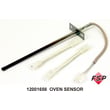
Even without a visible failure, a sensor or control problem can cause long preheat times.
- Preheat takes much longer than normal and the oven never seems to “settle”
- Food bakes too slowly or inconsistently
- Temperature overshoots or undershoots after preheat
What to expect (normal vs. not normal)
| What you see | Usually normal | Usually points to a problem |
|---|---|---|
| Preheat time | 10 to 20 minutes (typical) | 25+ minutes repeatedly |
| Bake element behavior | Cycles on and off | Rarely glows or glows weakly |
| Door seal | Even contact all around | Visible gaps or heat leaking |
Why it matters
Long preheat times usually mean the oven is losing heat or not producing full bake heat. Fixing the root cause improves cooking results, reduces energy waste, and helps protect other components from extended high-heat run time.
Last updated: February 2026