View engine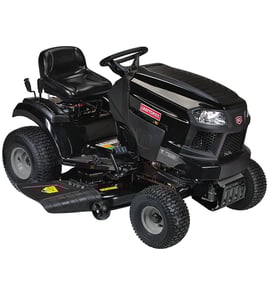

What brand engine does Craftsman use?
Craftsman riding mowers and lawn tractors (including model 917250540) have been built with engines from several major manufacturers over the years, most commonly Briggs & Stratton, plus Kohler and Kawasaki on some models. The exact engine brand on your tractor depends on the engine currently installed.
How to identify the engine brand on your 917250540
Check the engine itself; the brand and model are typically printed on the blower housing (top cover) or on an ID label near the valve cover or starter.
- Look for a brand badge (Briggs & Stratton, Kohler, Kawasaki)
- Find the engine model and type code on the ID label
- Match the label to what you see on the tractor (single-cylinder vs V-twin, etc.)
- If the label is missing, use the shape and location of the air filter box and muffler as clues
- Confirm the engine is original; repowers and swaps are common on older tractors
Why the engine brand matters
The engine brand determines the correct tune-up parts and service specs (spark plug, air filter, fuel system parts, and charging system). It also affects troubleshooting steps for no-start, clicking, or no-crank symptoms.
Quick comparison: common Craftsman engine brands
| Engine brand | Where you’ll usually see it | Typical strengths |
|---|---|---|
| Briggs & Stratton | Many Craftsman lawn tractors | Simple parts availability, common service procedures |
| Kohler | Some mid to higher-end tractors | Strong torque, robust charging systems |
| Kawasaki | Some premium tractors | Smooth running, strong reliability |
Related troubleshooting help
If your tractor is having starting issues, use our DIY guidance for common symptoms:
- Riding lawn mower engine clicks but doesnt turn over video
- Riding lawn mower engine spins but wont start video
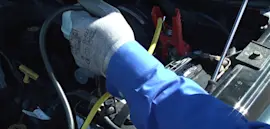
- Jump starting a riding lawn mower battery video
Parts that often come up during engine and starting repairs
Even when the engine brand varies, these tractor-side parts are commonly involved in starting and PTO complaints:
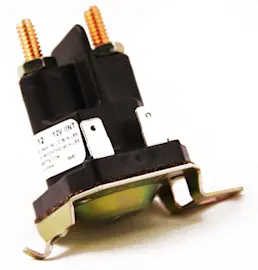
- Solenoid 532146154 (starter circuit)
- Molded ignition key 532140403 (ignition switch/key issues)
- Switch 582107601 (PTO engagement)
Last updated: February 2026
When was the Craftsman 917250540 made?
Craftsman model 917250540 is a front-engine lawn tractor model number used across multiple production runs, so the exact build year is determined by the tractor’s serial number and product label, not the model number alone. We use the model and serial together to match the correct parts and diagrams.
How to find the build date on your tractor
Look for the product identification label, then record both the model and serial.
- Check under the seat pan or seat deck area
- Look on the frame rail near the engine
- Check near the rear fender or transaxle area
- Wipe the label clean; dirt and oil can hide digits
- Write down the full serial number exactly as shown
What to do with the serial number
Once you have it, use it to confirm the correct parts listing for your exact production run.
| What you have | What it tells you | Why it matters |
|---|---|---|
| Model number (917250540) | Tractor family and configuration | Gets you to the right parts diagrams group |
| Serial number | Production run and build sequence | Pins down the correct version of parts |
| Engine model/type | Engine-specific tune-up parts | Helps match filters, plugs, and fuel parts |
Why it matters
Craftsman tractors can keep the same model number while parts change between runs (for example, wiring, PTO switch style, belts, or steering components). Using the serial number prevents ordering a part that fits a different revision.
Parts that commonly vary by production run
If you are troubleshooting or replacing wear items, these are often revision-sensitive:
- PTO and safety switches (example: switch 582107601)
- Starting circuit components (example: solenoid 532146154)
- Deck and drive pulleys (example: lawn tractor idler pulley 532139245)
- Ground drive and deck belts
- Steering linkage and front axle hardware
Last updated: February 2026
What motor is in a Craftsman 917250540?
The Craftsman 917250540 front-engine lawn tractor was commonly equipped with a single-cylinder, vertical-shaft gasoline engine in the 18 HP class (often a Briggs and Stratton Intek OHV on LT-series tractors). To match the exact engine on your unit, use the engine’s model-type-code tag on the blower housing.
How to identify the exact engine on your tractor
Look for the engine ID label (usually on the top of the blower housing, valve cover area, or near the starter). Record the full ID exactly as shown.
- Clean the label area so all digits are readable
- Write down the model, type, and code (Briggs and Stratton format) or the full engine model (other brands)
- Compare the engine ID to the tractor’s parts diagrams when selecting tune-up or starting parts
- If the label is missing, use the engine’s physical features (carb location, air box style, muffler style) to narrow it down
- For starting issues while you’re identifying the engine, check the battery cables and starter circuit first
Quick checks that help confirm you have the right “motor”
These checks do not require disassembly and help you avoid ordering the wrong parts.
| What to check | What you’re looking for | Why it helps |
|---|---|---|
| Engine ID tag | Model-type-code (or full engine model) | Most accurate match |
| Shaft orientation | Vertical crankshaft | Confirms lawn tractor engine style |
| Starting behavior | Clicks vs. cranks vs. cranks-no-start | Points to solenoid, battery, fuel, or ignition |
| PTO engagement | Electric PTO switch present | Helps confirm electrical configuration |
Why it matters
Engine families share similar horsepower ratings, but parts like the carburetor, ignition coil, starter, and charging system vary by engine model and type. Using the engine ID tag prevents wrong-part returns and speeds up repairs.
Parts on this model page that often relate to “engine won’t start” complaints
If your 917250540 clicks or won’t crank, these model-listed parts are common suspects:
- Solenoid 532146154 (starter solenoid)
- Molded ignition key 532140403 (key worn or damaged)
- Switch 582107601 (PTO switch that can affect starting on some setups)
For a step-by-step diagnosis, use our DIY video: riding lawn mower engine clicks but doesnt turn over video.
Last updated: February 2026
What are the common problems with Craftsman lawn mowers?
Common problems on a Craftsman riding mower like model 917250540 are no-start or no-crank conditions, rough running from fuel issues, blades that will not engage, uneven cutting, and drive or deck belt wear. Most fixes start with fuel, battery, and safety interlock checks, then move to ignition and belt-driven components.
Most common symptoms and likely causes
- Engine clicks but won’t crank: weak battery, corroded cables, bad starter solenoid, poor ground
- Cranks but won’t start: stale fuel, clogged carburetor jets, dirty air filter, fouled spark plug
- Starts then dies: fuel cap venting issue, debris in fuel tank, failing safety switch circuit
- Blades won’t engage: faulty PTO switch, damaged belt, idler pulley problem
- Poor cut quality: dull blades, deck out of level, spindle or mandrel wear
Quick checks we recommend first (in order)
- Use fresh fuel; drain old fuel if it smells sour or looks dark.
- Confirm the brake pedal is fully depressed and the PTO is off (interlock must be satisfied).
- Clean and tighten battery terminals; check for a solid frame ground.
- Inspect belts for glazing, cracking, or slack.
- If you hear a single click at the key, test or replace the starter solenoid.
Parts that commonly solve these issues on 917250540
If troubleshooting points to a failed component, these are common replacements for this model:
| Problem you see | Part to check/replace | What it does |
|---|---|---|
| Single click, no crank | Solenoid 532146154 | Sends battery power to the starter when you turn the key |
| Blades won’t engage | Switch 582107601 | Controls PTO power to engage the mower deck |
| Deck squeal, belt slips | Lawn tractor idler pulley 532139245 | Maintains belt tension for blade drive |
| Drive issues, belt wear | Lawn tractor V-belts | Transfers power to deck or ground drive |
Why it matters
Most “won’t start” and “won’t mow” complaints come down to basic maintenance (fuel quality, battery connections) or normal wear items (switches, pulleys, belts). Catching these early prevents repeated no-starts and reduces belt and spindle damage.
Helpful DIY guidance
- Use riding lawn mower engine clicks but doesnt turn over video for click-no-crank diagnosis.
- Use riding lawn mower engine spins but wont start video for crank-no-start troubleshooting.
- Use how to tune up a riding lawn mower video to prevent recurring starting and running problems.
Last updated: February 2026
Is it worth replacing a lawn mower engine?
Yes, replacing the engine on your Craftsman 917250540 front-engine lawn tractor is worth it when the tractor’s deck, steering, and drive system are still solid and the total engine-swap cost stays well below the cost of replacing the whole tractor. It is a poor value when the frame, deck, or drivetrain is already worn out.
Quick decision checklist
- The mower deck is not rusted through and the spindles turn smoothly.
- The transmission/drive pulls strongly and does not slip or whine.
- Steering is tight enough to track straight (no excessive play).
- You can source the correct engine and any required pulleys, wiring, and throttle/choke hookups.
- The total cost (engine + incidentals) is clearly less than replacing the tractor.
Cost and condition guide (practical rule)
| What you see on the tractor | Engine swap value | Why |
|---|---|---|
| Deck and drivetrain are in good shape | Good | You keep the expensive components you already own |
| Multiple systems are failing (drive, steering, deck) | Poor | You will keep chasing repairs after the swap |
| You can do the work yourself | Better | Labor is usually the biggest cost |
| You must pay for full installation | Depends | Total cost can approach replacement value |
What to inspect before you spend money
- Deck and blade drive: Check belt condition, idler action, and pulley wobble. A worn idler can cause poor cut and belt throw; the lawn tractor idler pulley 532139245 is one example of a common wear item.
- Starting and electrical: If the “bad engine” symptom is actually a no-crank issue, test the battery, cables, and solenoid first. A clicking starter circuit often points to the solenoid 532146154 rather than the engine.
- Fuel system basics: Old fuel and a leaking cap can mimic engine failure; inspect the tank, lines, and the fuel cap 581075501.
Why it matters
An engine swap only pays off when you are extending the life of a tractor that is otherwise mechanically sound. If the deck, drivetrain, and steering are healthy, a new engine can restore reliable mowing for years; if those systems are worn, the swap just delays a bigger replacement.
Helpful DIY guidance
- Use our video guide: how to tune up a riding lawn mower video
- For no-crank symptoms: riding lawn mower engine clicks but doesnt turn over video
- For cranks-but-wont-start symptoms: riding lawn mower engine spins but wont start video
Last updated: February 2026