Owner’s manual
 View engine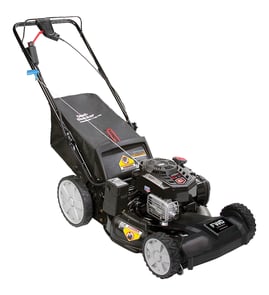



Are gas lawn mowers being phased out?
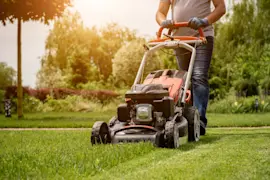
Gas walk-behind mowers like the Craftsman 917374090 are not being phased out everywhere at once; the shift is happening gradually, with some areas restricting new gas equipment sales while many other regions continue to sell and service gas mowers normally. For safe operation and maintenance, follow the 917374090 owner's manual.
What “phased out” usually means
Most changes target new product sales, not the mower you already own. In practical terms, you can typically still:
- Maintain and repair your existing gas mower
- Buy common wear parts (blade, belt, wheels, cables)
- Use the mower where gas equipment is allowed
- Service the engine (oil, spark plug, air filter)
What to do if you plan to keep this mower long-term
A gas mower lasts longer when you stay ahead of routine maintenance and safety checks (especially around the blade and discharge area).
- Keep the underside of the deck clean after mowing (built-up grass hurts performance)
- Replace the spark plug at the start of each season or every 100 hours
- Inspect the muffler and replace it if corroded
- Check the grass catcher and deflector parts for wear or damage
- Use correct blade service practices (blades are sharp; use gloves)
Helpful parts to know for this model
| Maintenance need | Example part for Craftsman 917374090 | What it affects |
|---|---|---|
| Cutting performance | Husqvarna lawn mower 22-inch deck 3-in-1 blade 532421825 | Cut quality, mulching, bagging |
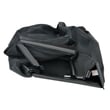
| Bagging | Grass bag | Collection and airflow |
| Drive system | Ground drive belt | Self-propel function |
Why it matters
Even as electric options grow, gas mowers remain common for homeowners who want fast refueling and strong cutting in thicker grass. The best way to protect your investment is to keep the mower safe and well-maintained using the procedures in the manual.
Last updated: January 2026
How many HP is a 200cc lawn mower?
A 200cc walk-behind lawn mower engine is typically in the 5 to 7 HP range, depending on the engine design and governed RPM. On Craftsman model 917374090, the most accurate HP rating is the one listed on the engine’s own ID label and in the specifications section of the 917374090 manual.
What “200cc” tells you (and what it does not)
“200cc” is engine displacement (cylinder volume). It does not convert to a single fixed horsepower number because manufacturers tune engines differently.
- Governed RPM and governor settings
- Torque curve and valve timing
- Carburetor jetting and muffler design
- Emissions calibration
- How the maker reports output (HP vs torque)
Quick reference: typical power by displacement
| Engine size | Typical torque range | Typical HP range |
|---|---|---|
| 160cc | 6 to 8 ft-lb | 3.5 to 5.5 HP |
| 190cc to 200cc | 8 to 10+ ft-lb | 5 to 7 HP |
| 223cc | 10 to 12+ ft-lb | 6.5 to 8 HP |
How to confirm the HP on your mower
Use these steps on your Craftsman 917374090 to match the correct engine spec:
- Find the engine model/type/code label on the engine shroud, blower housing, or valve cover.
- Record the mower model and serial from the rear housing decal (the manual notes this location).
- Use the specifications and identification guidance in the 917374090 manual to support correct parts and service procedures.
- Keep the engine in tune; a dull blade or clogged deck makes any engine feel underpowered.
Why it matters
HP is useful for setting expectations in thick or wet grass, but real-world cutting performance depends heavily on blade sharpness, deck cleanliness, and drive system condition.
If cut quality is poor or the mower bogs down, start with the blade. A bent or worn blade should be replaced with the correct part for this platform, such as the lawn mower 22-inch deck 3-in-1 blade 532421825.
Last updated: January 2026
What gas do I put in my lawn mower?
For the Craftsman lawn mower model 917374090, use fresh regular unleaded gasoline (most owners use E10). Avoid old fuel and avoid higher-octane “premium” gas unless your engine label or the 917374090 owner's manual specifically calls for it.
What to use (and what to avoid)
- Use fresh, clean, regular unleaded gasoline from a busy station.
- E10 (up to 10% ethanol) is the most common and works for most walk-behind mower engines.
- Avoid stale gas (typically anything that has been sitting more than 30 days without stabilizer).
- Avoid E15/E85; higher ethanol blends can cause hard starting and fuel-system issues.
- Never mix oil into the gas unless the engine is a 2-cycle design (this Craftsman walk-behind mower is typically a 4-cycle style that uses engine oil in the crankcase).
Quick fuel guidance table
| Fuel type | Use it? | Why |
|---|---|---|
| Regular unleaded (E0) | Yes | Clean burn, good storage stability |
| Regular unleaded (E10) | Yes | Common pump fuel; works for most mowers |
| Premium/high-octane | Usually not needed | Higher octane does not add power in small engines |
| E15/E85 | No | Too much ethanol for most small-engine fuel systems |
Why it matters
Using the right gasoline helps your mower start easier, run smoother, and reduces carburetor varnish and fuel-line deterioration during storage.
Related maintenance tips that help fuel problems
- Add fuel stabilizer before storage; see how to keep lawn mower gas from going bad.
- Keep the mower clean and avoid spraying water into the engine area; the manual warns water intrusion can shorten engine life.
- If performance drops after bad fuel, drain the tank and refill with fresh gas; then check the spark plug and air filter.
Last updated: January 2026